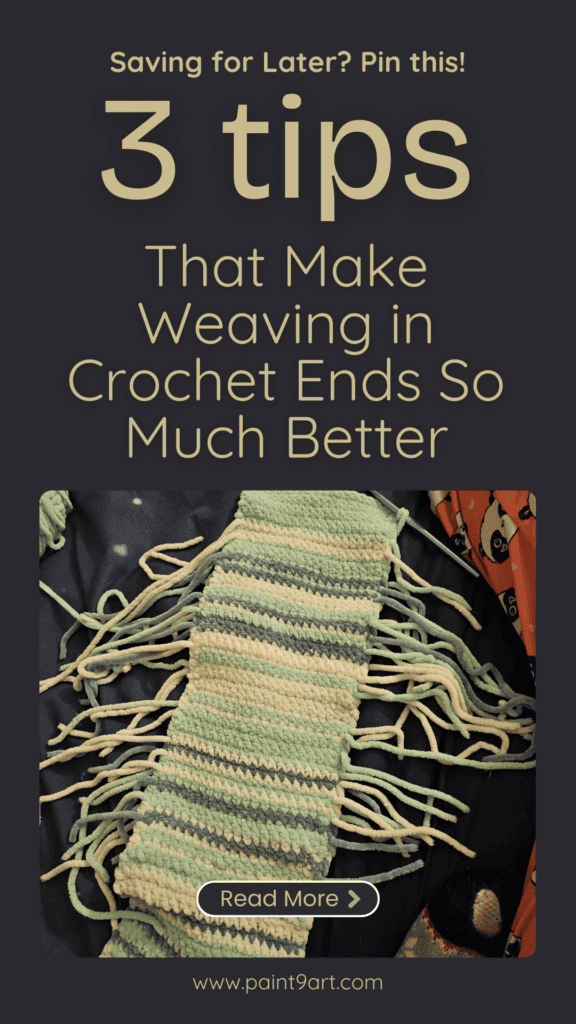
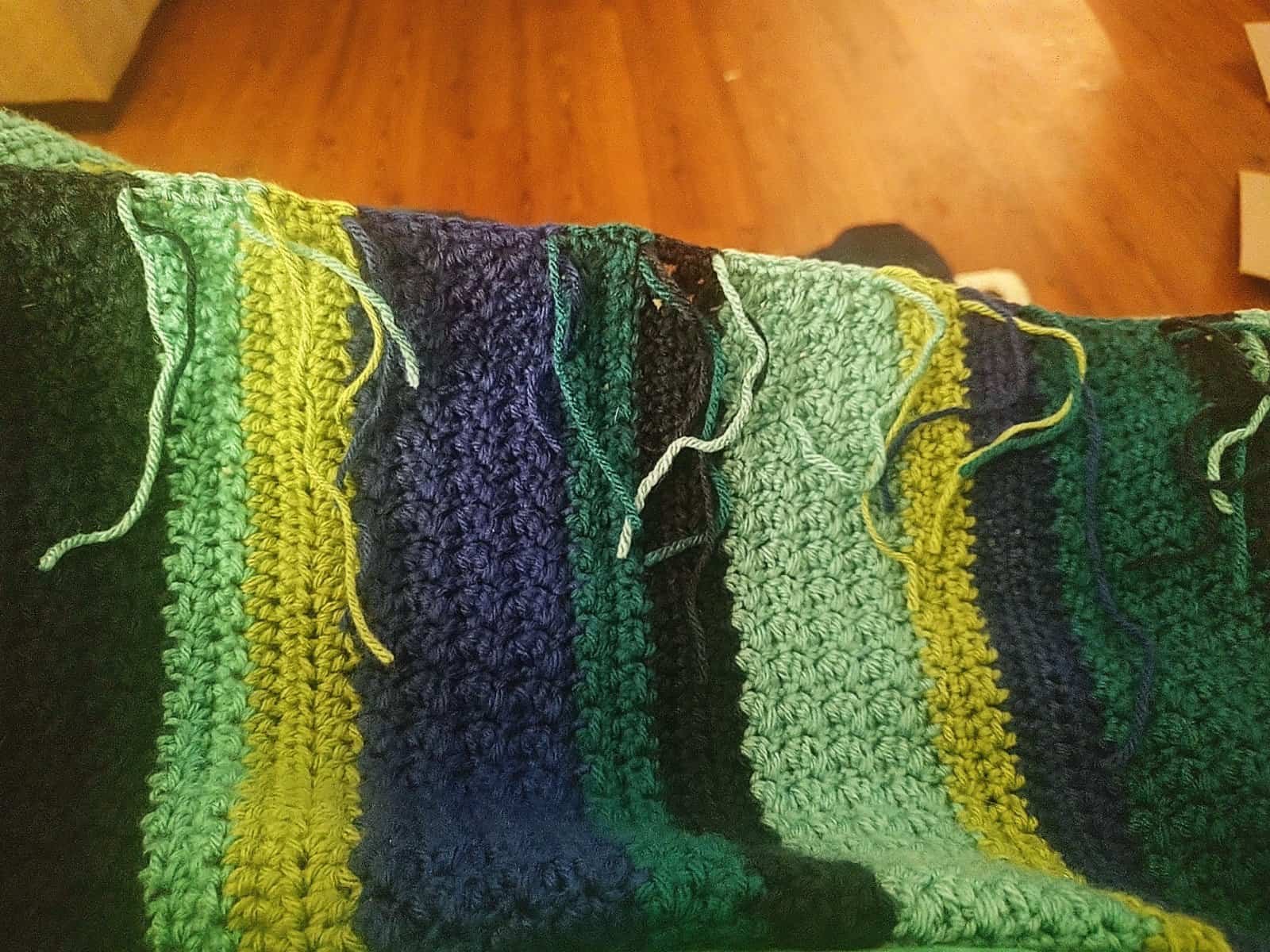
If weaving in ends makes you quietly reconsider starting a colorful crochet project, you’re not alone.
In this helpful and refreshingly honest guide, Play Hooky with Me shares three small changes that completely transformed how she feels about finishing yarn tails.
These tips won’t magically make weaving ends everyone’s favorite activity—but they will make it faster, easier, and far less annoying. And honestly, that’s a win.
Contents
Why Weaving in Ends Feels So Hard
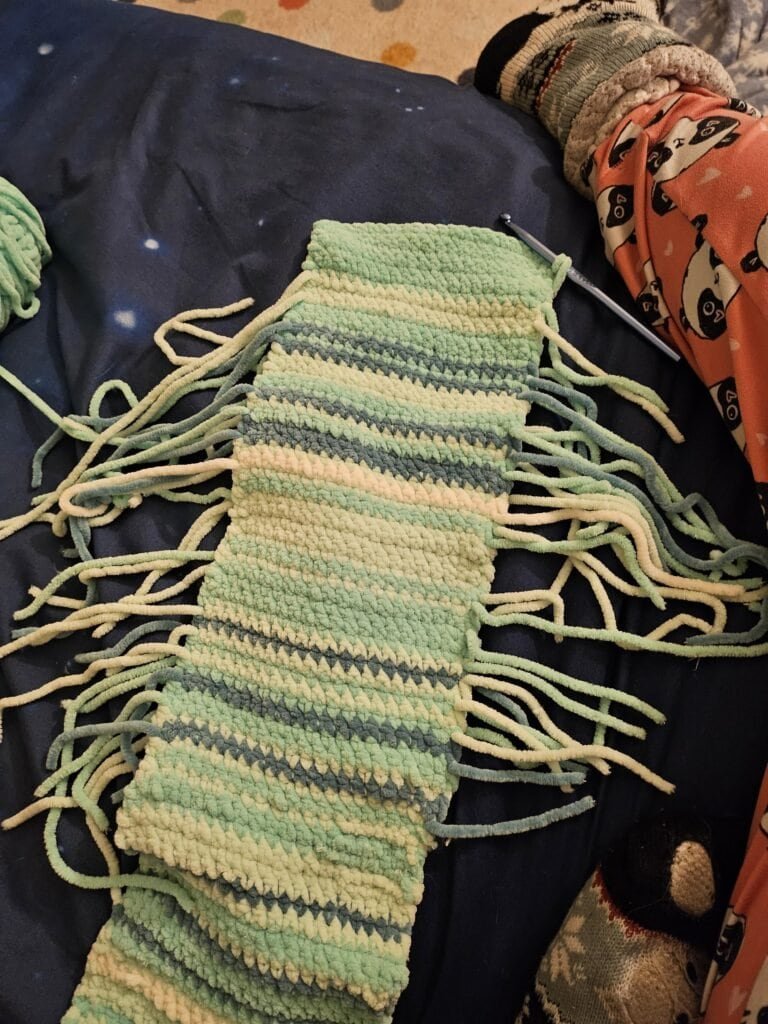
For many crocheters, weaving in ends isn’t difficult—it’s exhausting. After finishing a project, especially one with lots of color changes, motivation tends to disappear right when the last stitch is made. Play Hooky with Me points out that this burnout is often what makes weaving ends feel worse than it really is.
The good news? A few small habit changes can flip the script.
Tip #1: Weave in Ends as You Go
Yes, this one sounds obvious—and yes, it works.
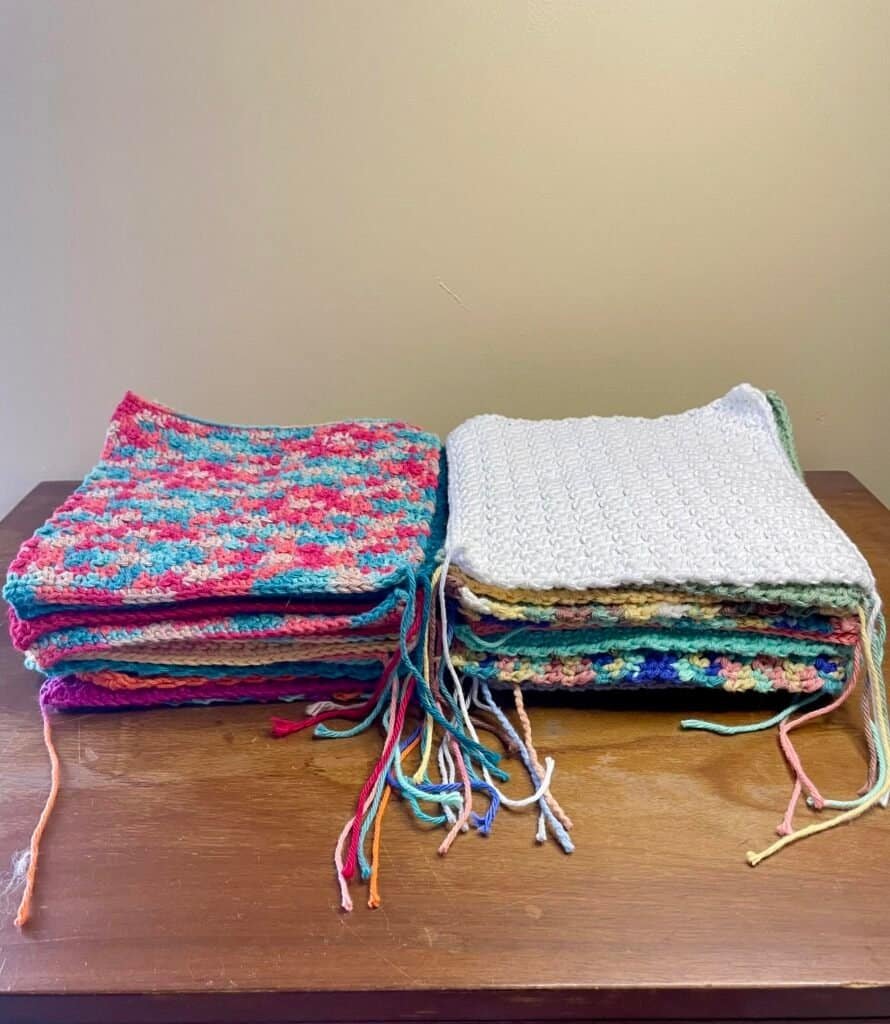
Play Hooky with Me admits she avoided weaving in ends while crocheting because it felt like it slowed her down. But leaving them all for the end actually cost more time thanks to procrastination and burnout. Once she started weaving as she went, finishing a project meant actually being finished—and that feeling is incredibly satisfying.
An added time-saver is catching yarn tails into the stitches while working. Just make sure the tails are long enough, especially if they’re only carried in one direction. Short tails have a sneaky way of popping back out later. Don’t ask why. I’m just the messenger.
Tip #2: Use a Needle You Actually Like
If weaving in ends feels bad, it’s often because the tools feel bad.
Choosing a needle that glides smoothly and feels comfortable can make a surprising difference. Play Hooky with Me shares two favorites:
- Canvas needles with a sharper tip that slide easily through fibers and allow splitting yarn for extra security.
- Susan Bates plastic finishing needles, which have a long eye that makes threading easy—even with short tails or thicker yarns.
The takeaway is simple: when the tool feels good, the task feels easier. Keeping several favorite needles nearby also removes the “I can’t find my needle” excuse, which we all know is very real.
Tip #3: Keep the Technique Simple (The Rule of Three)
Weaving in ends doesn’t need to be elaborate.
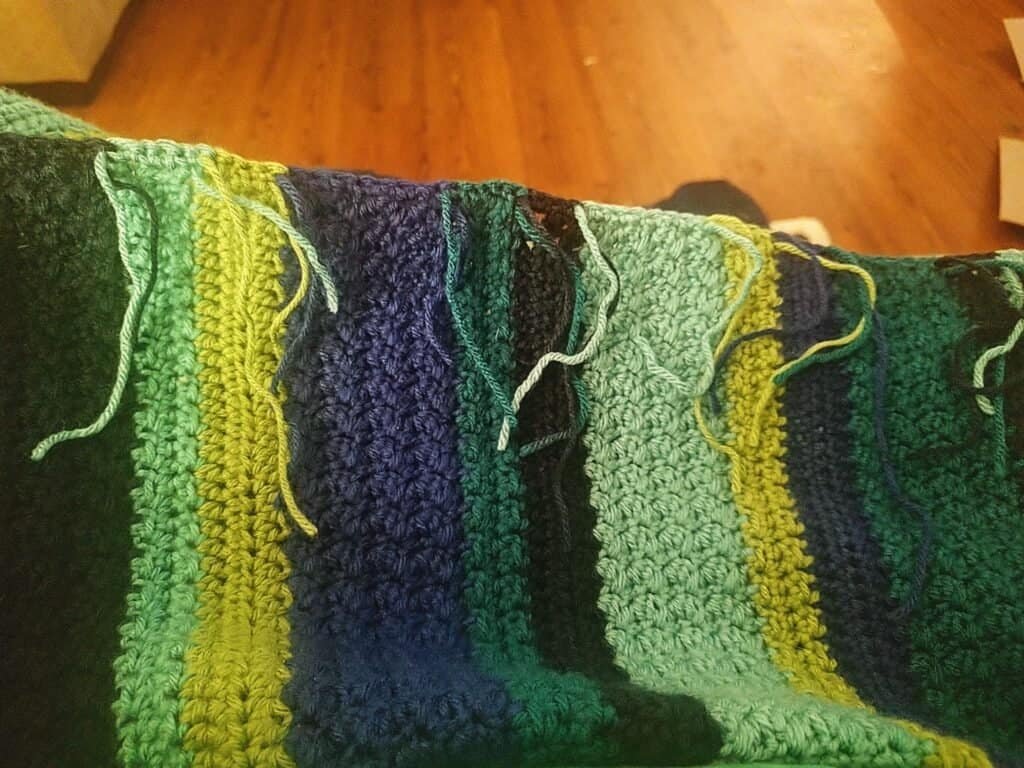
Play Hooky with Me uses the rule of three: weave the yarn back and forth in three different directions, using three passes. That’s it. No spiraling across the project, no overthinking. Three passes securely lock the yarn in place without adding bulk.
If yarn was carried along while crocheting, it’s still a good idea to reserve a bit of tail and weave it back in the opposite direction at least once. This extra step helps prevent ends from escaping later.
A Bonus Hack: Reducing Ends with the Magic Knot
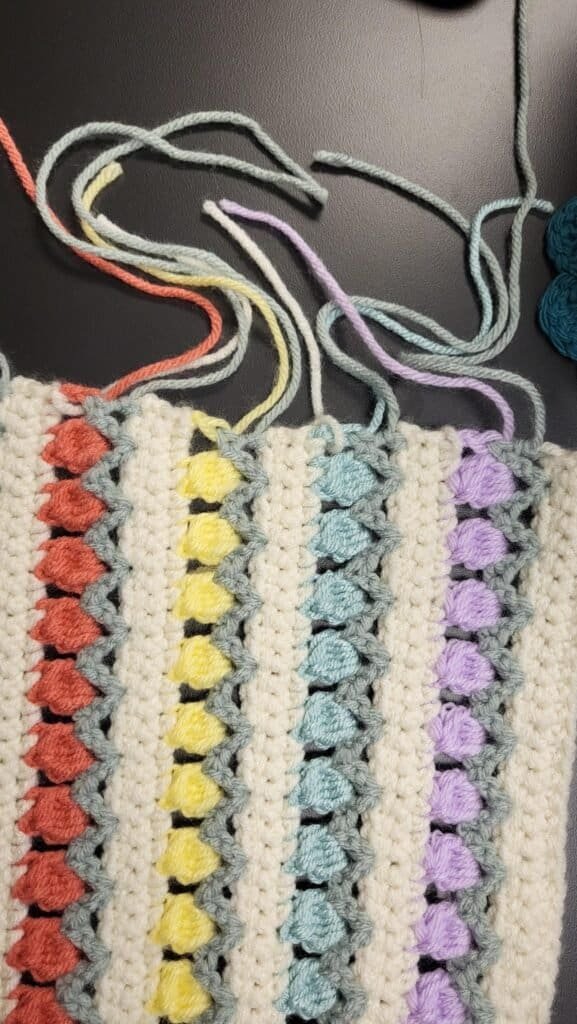
For projects worked in rows with frequent color changes, Play Hooky with Me shares an optional hack using the magic knot (also known as a fisherman’s knot). This technique joins old and new yarns directly, eliminating a tail altogether.
By carefully placing the knot at the edge of the work—often hidden later by a border—it’s possible to dramatically reduce the number of ends that need weaving. While it’s not ideal for fixing existing tails, it can be incredibly useful when planned ahead.
Final Thoughts
Weaving in ends may never become the highlight of a crochet project—but it doesn’t have to be the worst part either. By weaving as you go, choosing tools that feel good, and keeping the technique simple, finishing becomes faster and far less draining.
Play Hooky with Me’s approach is realistic, encouraging, and refreshingly judgment-free. Crochet is supposed to be enjoyable, and even the finishing steps deserve a little kindness. With these tips, weaving in ends becomes less of a roadblock and more of a routine—and that’s progress worth celebrating.