Hi,
Bring a touch of whimsy to your sketchbook with these 35 funny farm animal watercolor ideas. Whether it’s a piglet in rain boots or a cow wearing oversized glasses, these prompts focus on character and personality over technical perfection.
These ideas are designed to help you practice expressive washes and vibrant colors while keeping the mood lighthearted and fun.
35 Funny Farm Animals Watercolor Ideas
Funny Ostrich Portrait
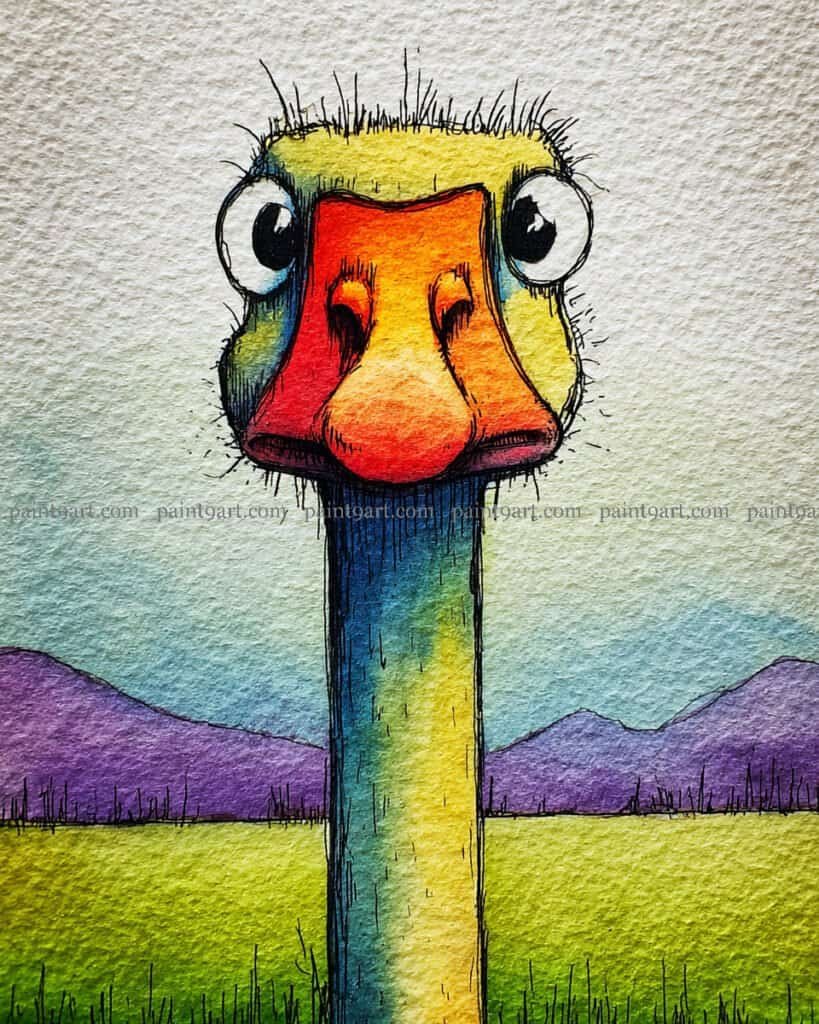
To paint “Funny Ostrich Portrait 1” begin with a whimsical line drawing using a waterproof fine-liner, focusing on the large, expressive eyes and the broad, textured beak.
Use a wet-on-wet technique for the background sky and distant hills, blending soft teals and deep purples to create a dreamlike, atmospheric setting.
For the ostrich’s long neck, apply a graduated wash of bright yellow that transitions into a cool teal and deep blue near the base to suggest vibrant, reflected light.
Build the intense colors of the beak using a wet-on-dry application of saturated orange and red, allowing the pigments to remain bold against the softer background.
Finally, add fine, wispy ink strokes around the head to represent stray feathers and use deep black for the pupils to bring the character’s curious expression to life.
Recommended Pigment Palette
| Element | Recommended Pigments |
| Sky & Distant Hills | Cobalt Teal for the upper sky and Dioxazine Purple mixed with Ultramarine Violet for the hazy mountains. |
| Vibrant Beak | Cadmium Orange and Pyrrol Scarlet to achieve the intense, sun-lit red and orange focal points. |
| Neck & Head Highlights | Hansa Yellow for the brightest highlights, transitioning into Phthalo Blue for the cool-toned shadows on the neck. |
| Grassy Foreground | Sap Green and Lemon Yellow to create a bright, sun-drenched meadow at the base. |
| Eyes & Pen Details | Mars Black for the solid pupils and a waterproof Black fine-liner for the feather textures and outlines. |
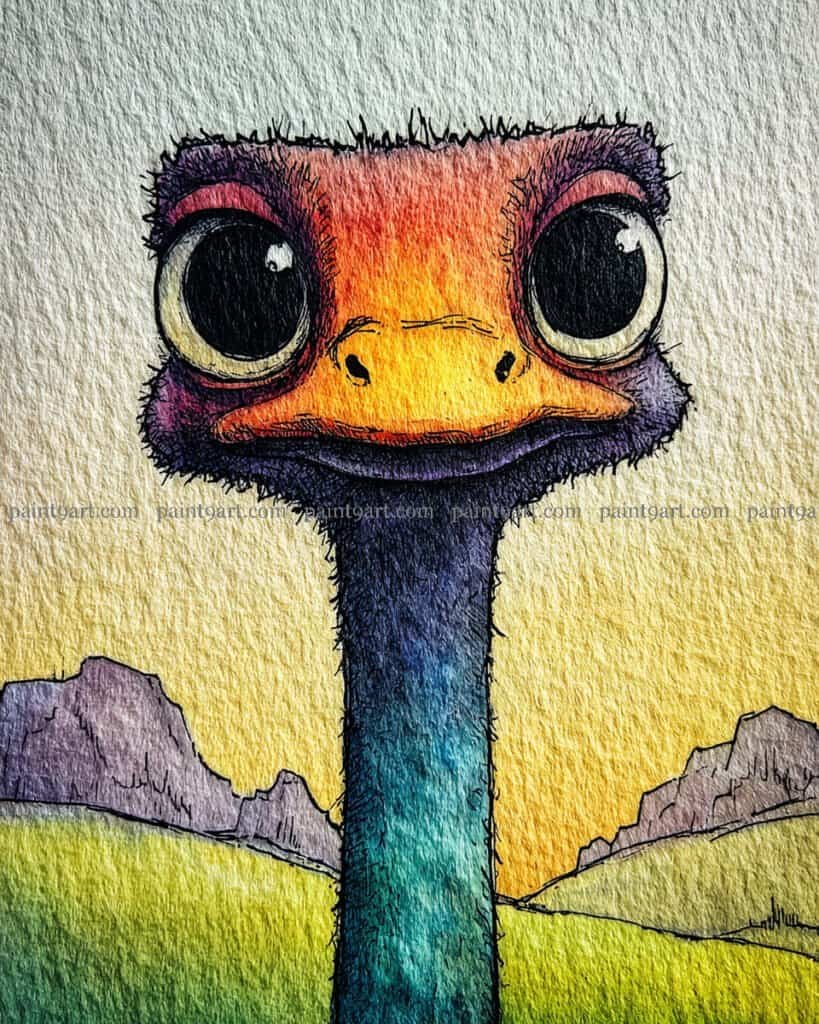
To paint this charming portrait, start with a detailed pencil sketch focusing on the large, circular eyes and the broad, smiling beak to capture its quirky character.
Use a wet-on-wet technique for the background, blending a warm golden yellow for the sky into a vibrant spring green for the meadow, while keeping the distant mountains a soft, desaturated purple.
For the ostrich’s neck, apply a variegated wash that transitions from a deep indigo at the base to a bright teal and finally a warm orange-red near the head to simulate a colorful, reflected glow.
Use a line and wash approach by defining the tiny, wispy feathers and the textured beak with a waterproof fine-liner before layering saturated pigments to make the features pop.
Finally, use a highly concentrated black for the pupils to create a glossy, expressive look, leaving small white dots of the paper for the life-giving highlights.
Recommended Pigment Palette
| Element | Recommended Pigments |
| Sky & Meadow | New Gamboge for the warm background glow and Sap Green mixed with Azo Yellow for the bright field. |
| Distant Mountains | Ultramarine Violet mixed with a touch of Payne’s Gray for a soft, receding hazy effect. |
| Colorful Neck | Phthalo Blue and Cobalt Teal for the cool transition; Pyrrol Scarlet for the warm top tones. |
| Smiling Beak | Yellow Ochre as a base with Burnt Sienna for the shaded, textured crevices. |
| Eyes & Ink Details | Mars Black for the deep, solid pupils and a waterproof Black fine-liner for the feathery textures. |
Relax and unwind with Funny Farm Animals Printable Coloring Pages (PDF Download), perfect for peaceful, creative moments. Enjoy charming designs that bring joy and a touch of country fun to your day.
Curious Black Sheep
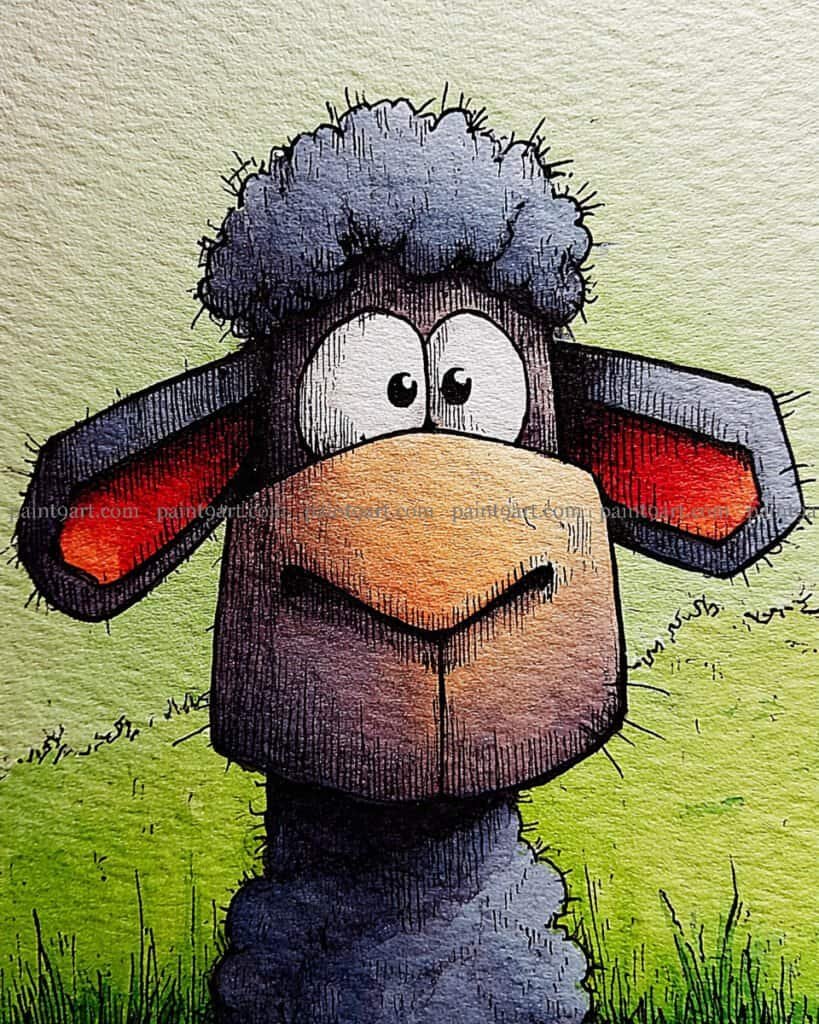
To paint this quirky portrait, start with a bold line drawing using a waterproof fine-liner to define the sheep’s blocky snout, large expressive eyes, and woolly texture.
Use a wet-on-wet technique for the background, blending a soft, pale yellow into a vibrant spring green to create a simple, sun-drenched meadow effect.
For the wool, apply a variegated wash of deep violet and cool gray, using dabbing motions to suggest the fluffy, shadowed curls on the head and neck.
Build the snout’s warm tones using a graduated wash of golden ochre that transitions into a muted purple at the base, adding fine cross-hatching ink lines to enhance the sense of volume.
Finally, use a highly saturated red for the inner ears to create a striking contrast against the dark wool, and place small white gouache dots in the pupils to give the sheep its startled, lifelike expression.
Recommended Pigment Palette
| Element | Recommended Pigments |
| Woolly Curls | Dioxazine Purple mixed with Payne’s Gray for the deep, textured shadows of the fleece. |
| Snout & Face | Yellow Ochre for the warm highlights, blending into Ultramarine Violet for the shaded muzzle. |
| Inner Ears | Cadmium Red or Pyrrol Scarlet to achieve that intense, vibrant pop of color. |
| Grassy Background | Azo Yellow and Sap Green (highly diluted) for a soft, out-of-focus meadow. |
| Details & Eyes | Mars Black for the pupils and a waterproof Black fine-liner for the wool and snout textures. |
Enjoy calming, creative time with Funny Farm Animals Printable Coloring Pages (PDF Download), designed for relaxing moments at home. These charming illustrations make coloring simple, joyful, and stress-free.
Happy Woolly Friend
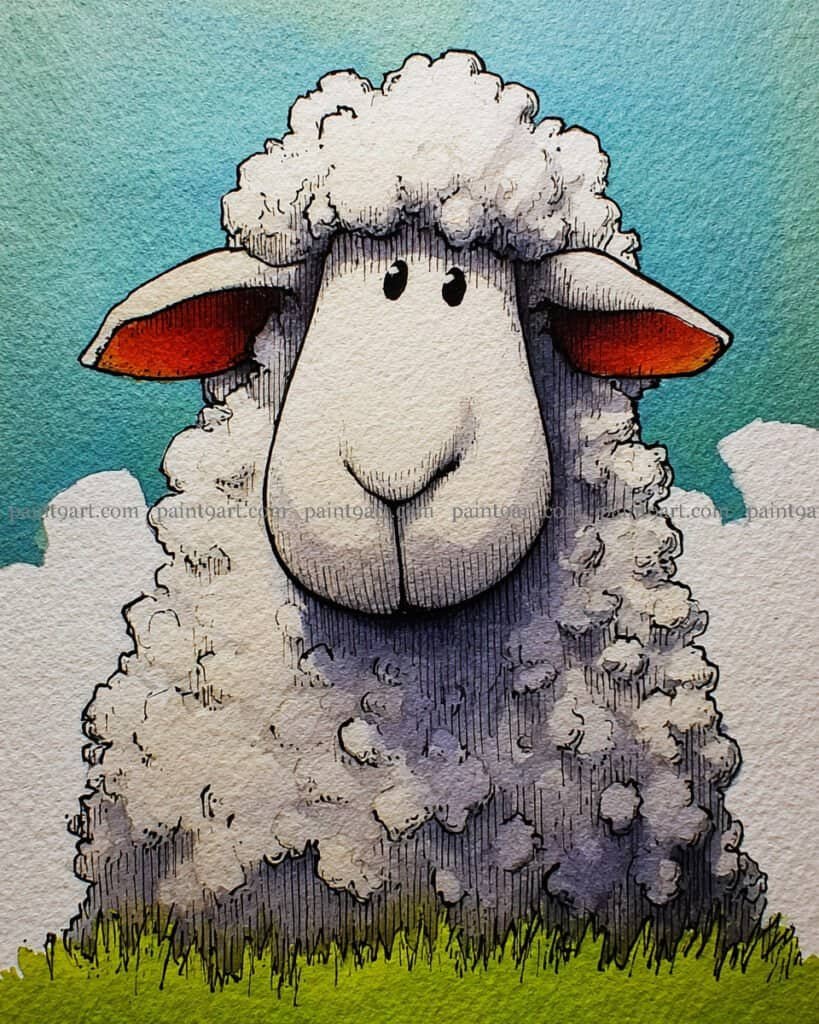
To paint this adorable portrait, start with a light pencil sketch followed by a waterproof fine-liner to define the sheep’s soft, rounded muzzle and the cloud-like clusters of its fleece.
Use a wet-on-wet technique for the background sky, blending vibrant teals and soft greens while leaving the white of the paper for the large, puffy cloud formations.
For the wool, apply very light, variegated washes of pale violet and soft gray, using vertical ink hatching to suggest the depth and shadow within the fluffy texture.
Build the inner ears with a highly saturated, warm orange-red to create a bold pop of color that contrasts with the cooler tones of the fleece.
Finally, keep the sheep’s face very bright by using a minimal, diluted wash of cream, and use a concentrated black ink for the small, joyful eyes to complete its friendly expression.
Recommended Pigment Palette
| Element | Recommended Pigments |
| Sky & Clouds | Cobalt Teal or Phthalo Turquoise for the sky; leave the white of the paper for the brilliant clouds. |
| Inner Ears | Cadmium Orange or Pyrrol Scarlet to achieve that intense, vibrant focal point. |
| Woolly Shadows | Ultramarine Violet mixed with a touch of Payne’s Gray for the soft, textured fleece shadows. |
| Face & Highlights | Yellow Ochre (highly diluted) for a warm glow and Neutral Tint for subtle muzzle definition. |
| Grass & Details | Sap Green for the foreground highlights and a waterproof Black fine-liner for all hatching and outlines. |
Add a little fun and relaxation to your day with Funny Farm Animals Printable Coloring Pages (PDF Download). Delight in easy, cheerful designs perfect for quiet, cozy coloring time.
Cheery Alpaca Portrait

To paint this delightful portrait, start with a precise line drawing using a waterproof fine-liner to define the alpaca’s fluffy head, perky ears, and wide, friendly muzzle.
Use a wet-on-wet technique for the soft background, applying a very diluted, warm cream wash to keep the focus entirely on the character.
For the fur, apply a variegated wash of pale green and soft violet, using delicate ink hatching to suggest the dense, woolly texture around the neck and crown.
Build the intense colors of the nose and inner ears using a wet-on-dry application of saturated orange and red, allowing these vibrant focal points to pop against the cooler fur tones.
Finally, use a highly concentrated black for the large, glossy eyes, leaving a crisp white highlight of the paper in each to create an immediate sense of life and curiosity.
Recommended Pigment Palette
| Element | Recommended Pigments |
| Vibrant Nose & Ears | Cadmium Red and Cadmium Orange to achieve the intense, sun-lit focal points. |
| Muzzle & Face | Yellow Ochre (highly diluted) for the warm skin tones and Burnt Sienna for the shaded creases. |
| Woolly Fur | Ultramarine Violet mixed with Cobalt Teal (diluted) for the colorful, shadowed fleece. |
| Background | Raw Sienna or Naples Yellow (highly diluted) to create a soft, neutral atmosphere. |
| Eyes & Ink Details | Mars Black for the deep, solid pupils and a waterproof Black fine-liner for the fur textures. |
Shaggy Golden Alpaca
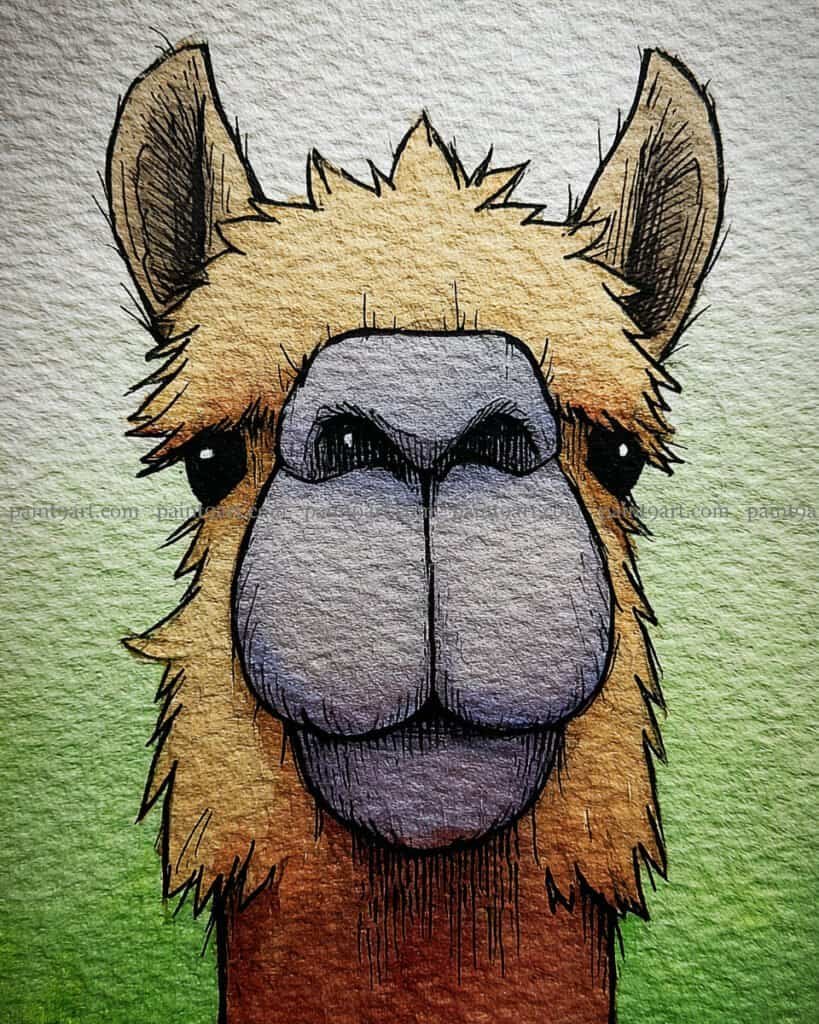
To paint this characterful portrait, start with a confident line drawing using a waterproof fine-liner to capture the dense, shaggy fur and the prominent, rounded muzzle.
Use a wet-on-wet wash for the background, blending a soft spring green into a pale cream to keep the focus entirely on the alpaca’s warm tones.
For the fur, apply a variegated wash of golden ochre and burnt sienna, using vertical ink hatching and short, jagged strokes to suggest the thick, layered texture of the coat.
Build the muzzle using a graduated wash of cool lavender-gray, adding fine cross-hatching with your pen to create volume and depth in the snout.
Finally, use a highly concentrated black for the eyes to create a glossy, soulful look, and use a dry brush technique to add wispy, stray hairs around the ears and crown for a realistic finish.
Recommended Pigment Palette
| Element | Recommended Pigments |
| Shaggy Fur | Yellow Ochre for the primary golden tones and Burnt Sienna for the deeper, warm shadows. |
| Muzzle & Nose | Ultramarine Violet mixed with Neutral Tint (highly diluted) for the soft, cool-toned snout. |
| Background | Sap Green and Naples Yellow to create a soft, sun-drenched pastoral atmosphere. |
| Eyes & Details | Mars Black for the deep pupils and a waterproof Black fine-liner for the fur and facial textures. |
| Shadows | Raw Umber for the dark, recessed areas around the neck and behind the ears. |
Relax and unwind with Funny Farm Animals Printable Coloring Pages (PDF Download), perfect for peaceful, creative moments. Enjoy charming designs that bring joy and a touch of country fun to your day.
Surprised Garden Bunny
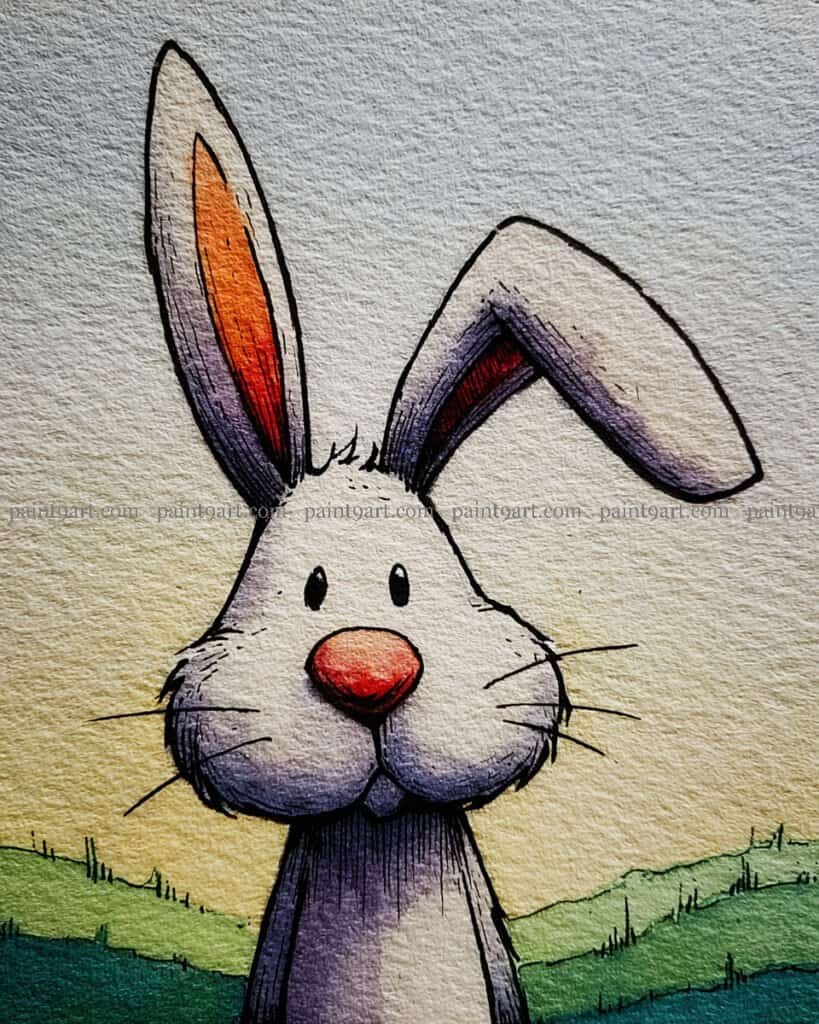
To paint this adorable character, start with a light pencil sketch followed by a waterproof fine-liner to define the bunny’s large, rounded cheeks and its uniquely lopsided, expressive ears.
Use a wet-on-wet technique for the background, softly blending a warm golden yellow into a vibrant spring green to create a simple, sun-drenched meadow atmosphere.
For the bunny’s fur, apply a very diluted wash of cool violet and soft gray, using delicate ink hatching to suggest depth in the shadows of the face and ears.
Build the intense color of the nose and the inner upright ear using a wet-on-dry application of saturated orange and red, making these focal points pop against the neutral fur.
Finally, use a highly concentrated black for the tiny, wide-set eyes and add long, thin whiskers with your pen to complete its startled, lifelike expression.
Recommended Pigment Palette
| Element | Recommended Pigments |
| Vibrant Nose & Ear | Cadmium Red and Cadmium Orange to achieve the intense, sun-lit red-orange focal points. |
| Bunny Fur & Shadows | Ultramarine Violet mixed with a touch of Neutral Tint (highly diluted) for the cool, shadowed fleece. |
| Meadow Background | Azo Yellow for the warm horizon glow and Sap Green for the bright, sun-drenched foreground. |
| Puffy Cheeks & Face | Yellow Ochre (highly diluted) for a warm glow and the white of the paper for the brightest highlights. |
| Eyes & Ink Details | Mars Black for the solid pupils and a waterproof Black fine-liner for the fur textures and whiskers. |
Colorful Turkey Strut

To paint this vibrant bird, start with a clear line drawing using a waterproof fine-liner to define the segmented tail feathers, the layered body plumage, and the characteristic wattle.
Apply a wet-on-dry technique for the tail, using a graduated wash that transitions from bright yellow at the tips to saturated orange, red, and finally a deep violet at the base.
For the body, use a variegated wash of cool teal and lavender-gray, allowing the colors to mingle on the paper to suggest the iridescent sheen of real feathers.
Build the grassy foreground using dabbing motions with vibrant greens, adding small, dark ink strokes to represent textured blades of grass and grounding the turkey’s bright red legs.
Finally, use highly concentrated pigments for the wattle and beak to create a strong focal point, ensuring the eyes remain a simple, glossy black to emphasize the bird’s playful character.
Recommended Pigment Palette
| Element | Recommended Pigments |
| Vibrant Tail Feathers | Hansa Yellow, Cadmium Orange, Pyrrol Scarlet, and Dioxazine Purple for the bold gradients. |
| Body Plumage | Cobalt Teal and Ultramarine Violet mixed with Neutral Tint for a colorful, shadowed effect. |
| Wattle & Legs | Cadmium Red or Permanent Alizarin Crimson for the intense, warm focal points. |
| Meadow & Bushes | Sap Green and Lemon Yellow for the sun-drenched grass; Hooker’s Green for the shaded foliage. |
| Ink Details | A waterproof Black fine-liner for all structural outlines, feather patterns, and the eye. |
Enjoy calming, creative time with Funny Farm Animals Printable Coloring Pages (PDF Download), designed for relaxing moments at home. These charming illustrations make coloring simple, joyful, and stress-free.
Mighty Horned Ram
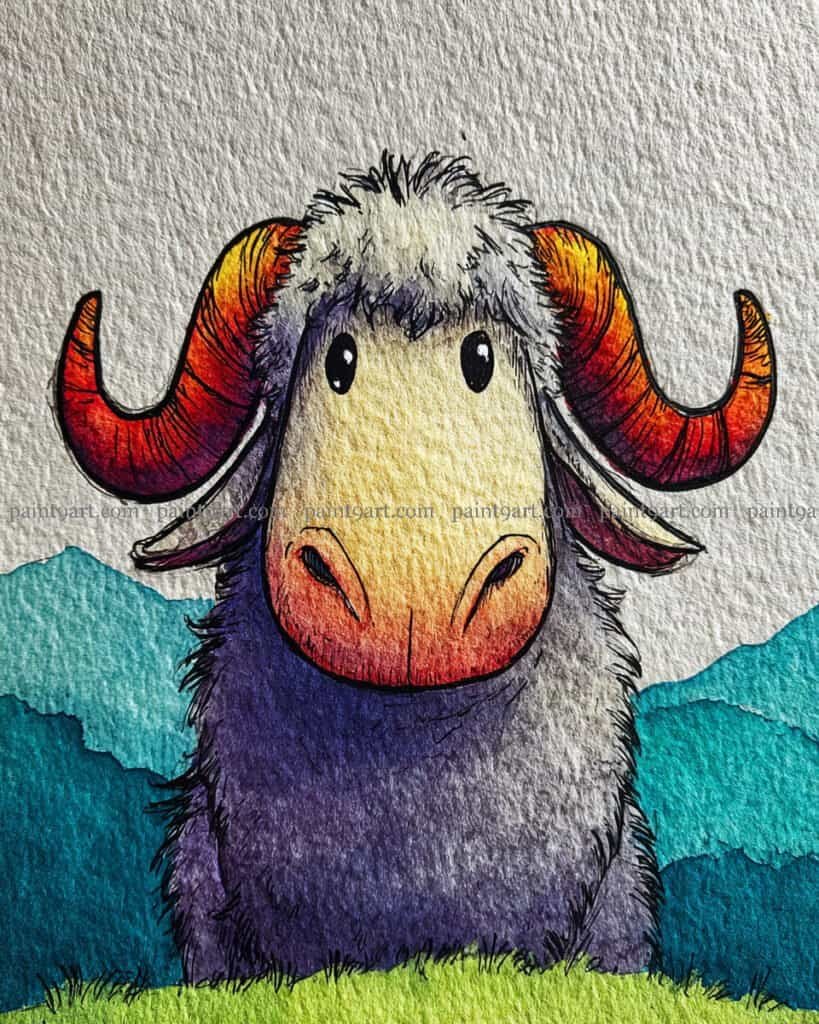
To paint this characterful portrait, start with a detailed line drawing using a waterproof fine-liner to define the massive, curved horns and the dense, shaggy texture of the dark fleece.
Use a wet-on-wet technique for the background, blending vibrant teals and deep blues to create a cool, atmospheric mountain setting that makes the subject stand out.
For the horns, apply a graduated wash of bright yellow that transitions into saturated orange, red, and finally a deep violet at the tips to suggest a fiery, sun-lit glow.
Build the sheep’s face using a warm cream wash, adding fine cross-hatching with your pen to create volume and emphasize the large, expressive nostrils.
Finally, use a highly concentrated black for the eyes to create a glossy, soulful look, and use a dry brush technique to add wispy, stray hairs around the crown for a realistic, textured finish.
Recommended Pigment Palette
| Element | Recommended Pigments |
| Fiery Horns | Hansa Yellow, Cadmium Orange, Pyrrol Scarlet, and Dioxazine Purple for the bold color gradient. |
| Shaggy Fleece | Indigo mixed with Ultramarine Violet to achieve the deep, cool-toned dark purple textures. |
| Face & Muzzle | Yellow Ochre (highly diluted) for the warm highlights and Burnt Sienna for the shaded snout details. |
| Mountain Background | Phthalo Blue and Cobalt Teal to create the vibrant, receding alpine atmosphere. |
| Eyes & Ink Details | Mars Black for the deep pupils and a waterproof Black fine-liner for the fur and horn textures. |
Pudgy Blue Duckling
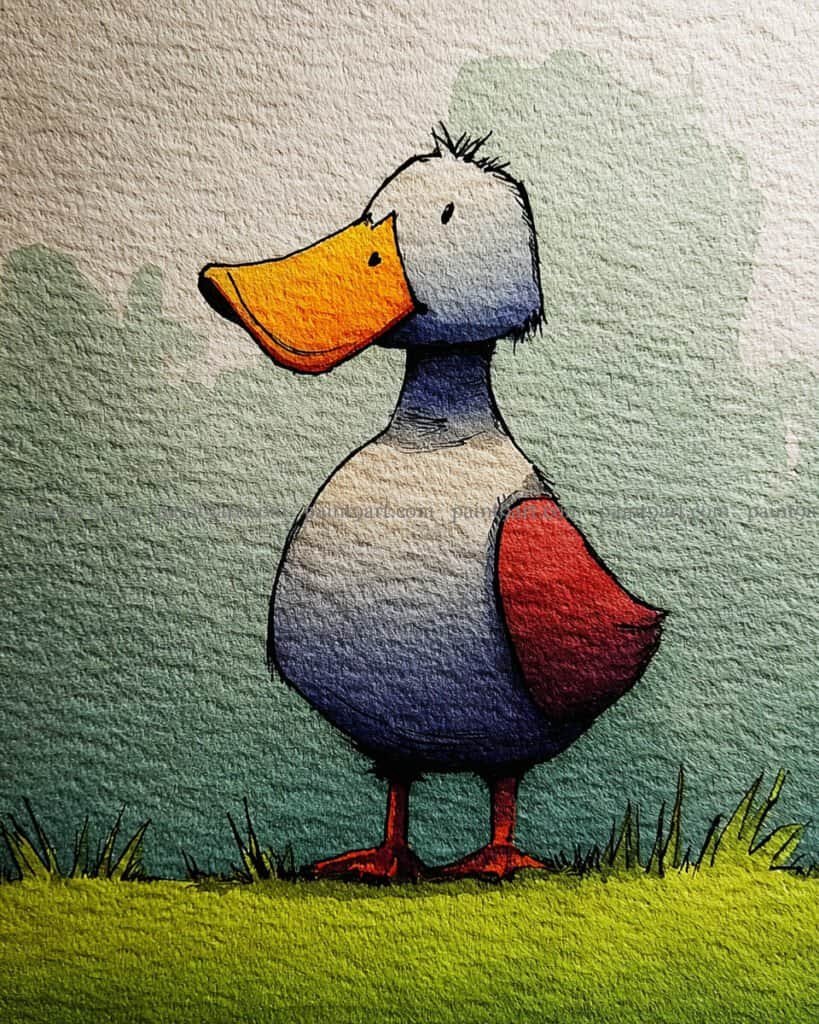
To paint this charming waterfowl, start with a simple line drawing using a waterproof fine-liner to define its round body, wide beak, and singular expressive wing.
Apply a wet-on-wet wash for the background, blending soft sage greens and muted grays to create a hazy, out-of-focus meadow that keeps the duck as the central focus.
For the duckling’s body, use a variegated wash of cool blue-violet and soft gray, leaving a bright white patch on the chest to suggest volume and light.
Build the intense colors of the beak and the wing using a wet-on-dry application of saturated orange and deep red, creating high-contrast focal points against the cooler body tones.
Finally, use a dry brush technique to add fine, feathery textures around the head and use a concentrated black ink for the tiny, inquisitive eye to bring its personality to life.
Recommended Pigment Palette
| Element | Recommended Pigments |
| Vibrant Beak & Wing | Cadmium Orange and Pyrrol Scarlet for the intense, warm focal points. |
| Body & Head | Ultramarine Violet mixed with Payne’s Gray (highly diluted) for the cool, shadowed plumage. |
| Misty Background | Hooker’s Green (highly diluted) and Neutral Tint to create the soft, receding foliage. |
| Grassy Foreground | Sap Green mixed with Azo Yellow for a bright, sun-drenched meadow base. |
| Ink Details | A waterproof Black fine-liner for the structural outlines, feathers, and the small, glossy eye. |
Add a little fun and relaxation to your day with Funny Farm Animals Printable Coloring Pages (PDF Download). Delight in easy, cheerful designs perfect for quiet, cozy coloring time.
Playful Goat Portrait

To paint this adorable character, begin with a light pencil sketch followed by a waterproof fine-liner to define the goat’s triangular face, curved horns, and perky, wide-set ears.
Use a soft wet-on-wet wash for the background, blending muted lavenders and soft teals to create a hazy, atmospheric setting that allows the subject to pop.
For the goat’s fur, apply a very diluted wash of cool gray, leaving the center of the face as the pure white of the paper to represent bright, direct light.
Build the intense color of the inner ears and nose using a wet-on-dry application of saturated orange and red, creating vibrant focal points against the neutral fur.
Finally, add sharp details to the horns and the tuft of hair on the chin using short, textured ink strokes, and use a concentrated black for the tiny, inquisitive eyes to complete its friendly expression.
Recommended Pigment Palette
| Element | Recommended Pigments |
| Vibrant Ears & Nose | Cadmium Orange mixed with Pyrrol Scarlet for the intense, sun-lit focal points. |
| Goat Fur & Shadows | Payne’s Gray (highly diluted) for the cool masonry-like shadows and soft textures. |
| Misty Background | Ultramarine Violet and Cobalt Teal to create the soft, receding mountain atmosphere. |
| Grassy Foreground | Sap Green mixed with Lemon Yellow for the bright, sun-drenched meadow base. |
| Horns & Details | Burnt Umber for the horn ridges and a waterproof Black fine-liner for all facial textures. |
Curious Meadow Mouse

To paint this endearing character, begin with a precise line drawing using a waterproof fine-liner to define the large, circular ears, the twitching nose, and the delicate whiskers.
Use a wet-on-wet technique for the background, softly blending a vibrant turquoise into a bright spring green to create a simple, sun-drenched hillscape.
For the mouse’s fur, apply a variegated wash of cool violet and soft gray, leaving the top of the head as the pure white of the paper to represent a bright, direct light source.
Build the intense color within the ears and the tip of the nose using a graduated wash of golden yellow that transitions into a saturated orange-red.
Finally, use a highly concentrated black for the large, glossy eyes, ensuring you leave crisp white highlights to give the mouse its wide-eyed, inquisitive expression.
Recommended Pigment Palette
| Element | Recommended Pigments |
| Vibrant Ears & Nose | Hansa Yellow and Cadmium Orange for the warm glow; Pyrrol Scarlet for the deep red accents. |
| Mouse Fur & Shadows | Ultramarine Violet mixed with Payne’s Gray (highly diluted) for the cool, textured fur shadows. |
| Colorful Background | Phthalo Turquoise for the sky; Sap Green mixed with Lemon Yellow for the sunlit meadow. |
| Face & Highlights | Yellow Ochre (highly diluted) for subtle warmth and the white of the paper for the brightest highlights. |
| Eyes & Ink Details | Mars Black for the solid pupils and a waterproof Black fine-liner for the fur textures and whiskers. |
Relax and unwind with Funny Farm Animals Printable Coloring Pages (PDF Download), perfect for peaceful, creative moments. Enjoy charming designs that bring joy and a touch of country fun to your day.
Happy Hedgehog Meadow
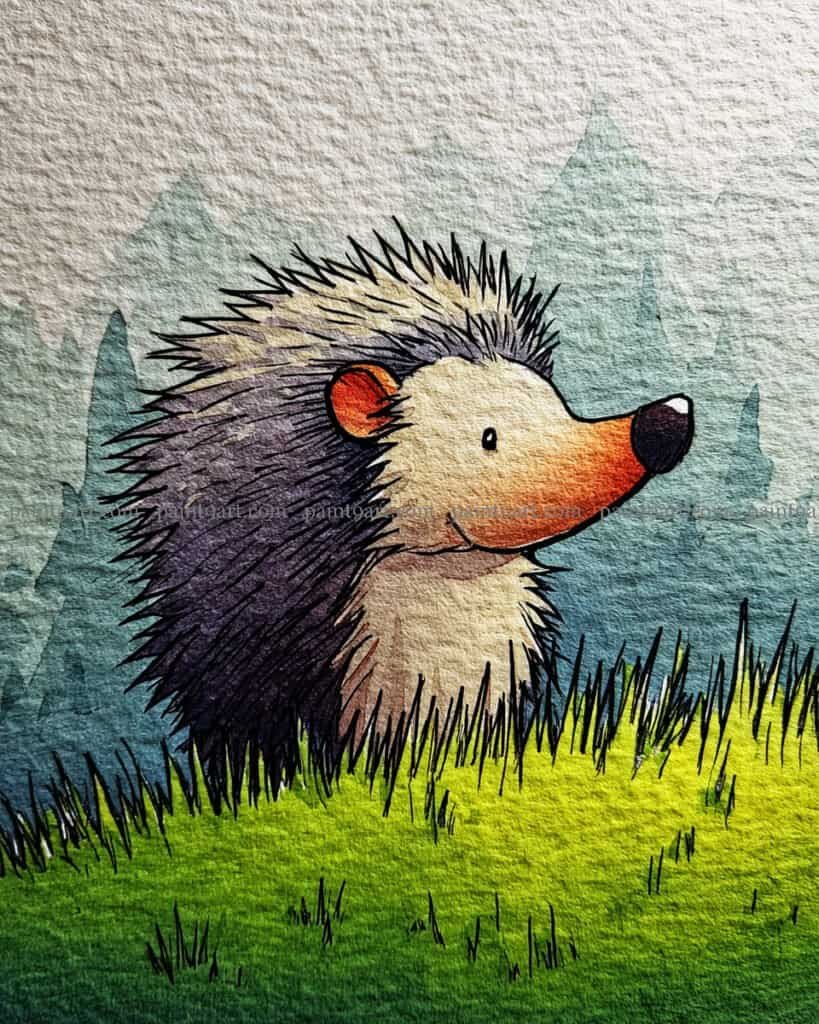
To paint this charming portrait, begin with a light pencil sketch of the hedgehog’s rounded body and prominent snout, using a waterproof fine-liner to define the sharp, layered quills and friendly facial expression.
Use a wet-on-wet technique for the background, blending soft teals and muted greens to create a hazy, out-of-focus mountain silhouette.
For the hedgehog’s face, apply a warm cream wash that transitions into a saturated orange-red at the tip of the nose, leaving a small white highlight on the nostril for a glossy effect.
Build the dense texture of the quills by layering variegated washes of deep purple and cool gray, using rapid, flicking ink strokes to suggest their sharp, needle-like quality.
Finally, use a vibrant spring green for the grassy foreground and add a concentrated black for the tiny, sparkling eye to bring the character to life.
Recommended Pigment Palette
| Element | Recommended Pigments |
| Spiky Quills | Dioxazine Purple mixed with Payne’s Gray for the deep, shadowed textures of the spines. |
| Snout & Face | Yellow Ochre (diluted) for the face; Cadmium Orange and Pyrrol Scarlet for the vibrant nose. |
| Misty Mountains | Cobalt Teal and Neutral Tint (highly diluted) to create the soft, receding background peaks. |
| Grassy Foreground | Sap Green mixed with Azo Yellow for the bright, sun-drenched meadow at the base. |
| Eyes & Ink Details | Mars Black for the eye and a waterproof Black fine-liner for the quills and facial outlines. |
Grumpy Little Owl

To paint this characterful portrait, start with a bold line drawing using a waterproof fine-liner to capture the bird’s stern, downward-sloping beak and its intense, wide-set yellow eyes.
Use a wet-on-wet technique for the background, blending vibrant teals and deep blues to create a cool, atmospheric mountain silhouette that makes the warm-toned subject stand out.
For the owl’s body, apply a variegated wash that transitions from a sun-lit golden yellow on the left to a deep, shadowed violet on the right.
Use a line and wash approach by adding fine, vertical ink strokes over the dry paint to suggest the dense, soft texture of the feathers.
Finally, use a highly saturated yellow for the irises to create a sharp, piercing gaze, and ground the bird with a vibrant spring green wash for the grassy foreground.
Recommended Pigment Palette
| Element | Recommended Pigments |
| Owl’s Body | Yellow Ochre for sunlit areas, Burnt Sienna for mid-tones, and Dioxazine Purple for deep shadows. |
| Beak & Eyes | Hansa Yellow for the intense eyes; Payne’s Gray mixed with Indigo for the dark, sharp beak. |
| Misty Mountains | Phthalo Blue and Cobalt Teal to create the vibrant, receding alpine atmosphere. |
| Grassy Foreground | Sap Green mixed with a touch of Azo Yellow for the bright, textured meadow. |
| Ink Details | A waterproof Black fine-liner for the structural outlines, feathered textures, and the pupils. |
Enjoy calming, creative time with Funny Farm Animals Printable Coloring Pages (PDF Download), designed for relaxing moments at home. These charming illustrations make coloring simple, joyful, and stress-free.
Wise Old Tortoise
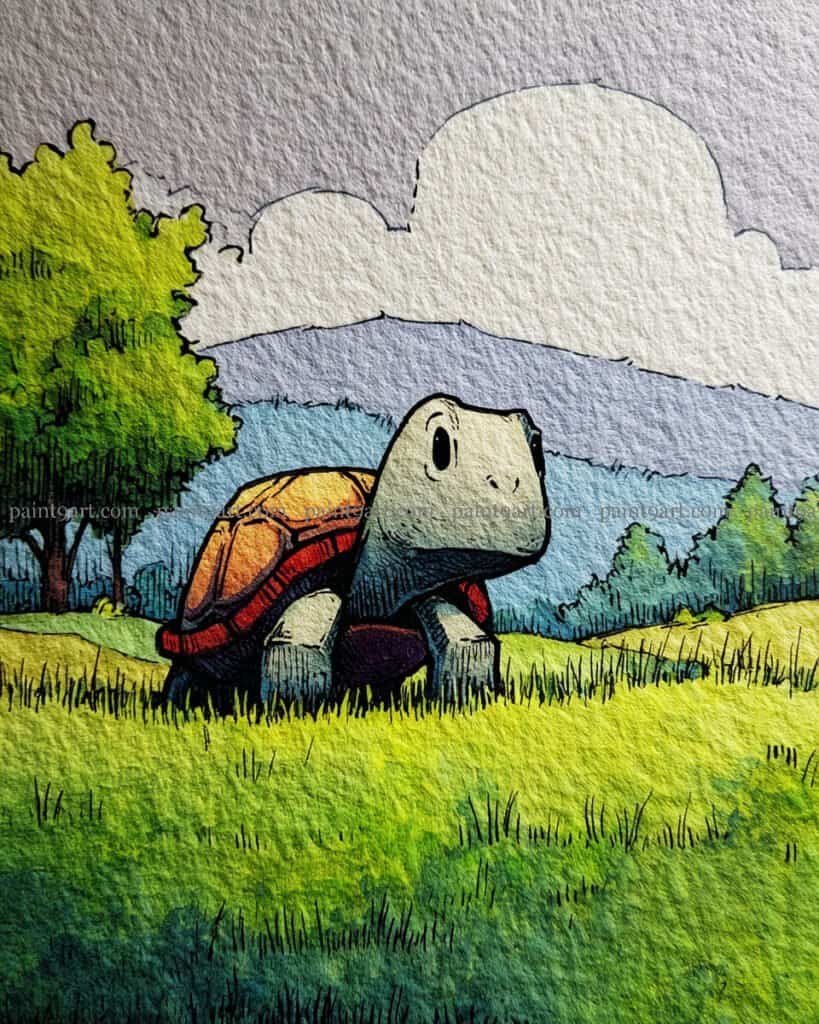
To paint this serene scene, start with a confident line drawing using a waterproof fine-liner to define the tortoise’s heavy shell, textured skin, and the rolling hills in the background.
Apply a wet-on-wet wash for the expansive sky, blending soft grays and leaving the white of the paper for the large, puffy clouds to create a sense of scale.
For the shell, use a variegated wash of golden yellow and burnt sienna, adding a striking band of saturated red along the lower edge for a bold pop of color.
Build the lush, grassy meadow using dabbing motions with vibrant greens and yellows, allowing the colors to bleed together for a natural, organic feel.
Finally, use a dry brush technique to add weathered textures to the tortoise’s legs and use a concentrated black ink for the small, observant eye to bring its peaceful character to life.
Recommended Pigment Palette
| Element | Recommended Pigments |
| Sky & Clouds | Payne’s Gray (highly diluted) for the atmosphere; leave the white of the paper for the brilliant clouds. |
| Tortoise Shell | Yellow Ochre and Burnt Sienna for the plates; Cadmium Red for the vibrant lower trim. |
| Skin & Shadows | Neutral Tint mixed with a touch of Indigo for the cool, textured shadows on the head and legs. |
| Meadow & Trees | Sap Green and Azo Yellow for the sun-drenched grass; Hooker’s Green for the shaded tree canopy. |
| Distant Hills | Ultramarine Violet (highly diluted) to create a soft, receding mountain silhouette. |
Pudgy Guinea Pig
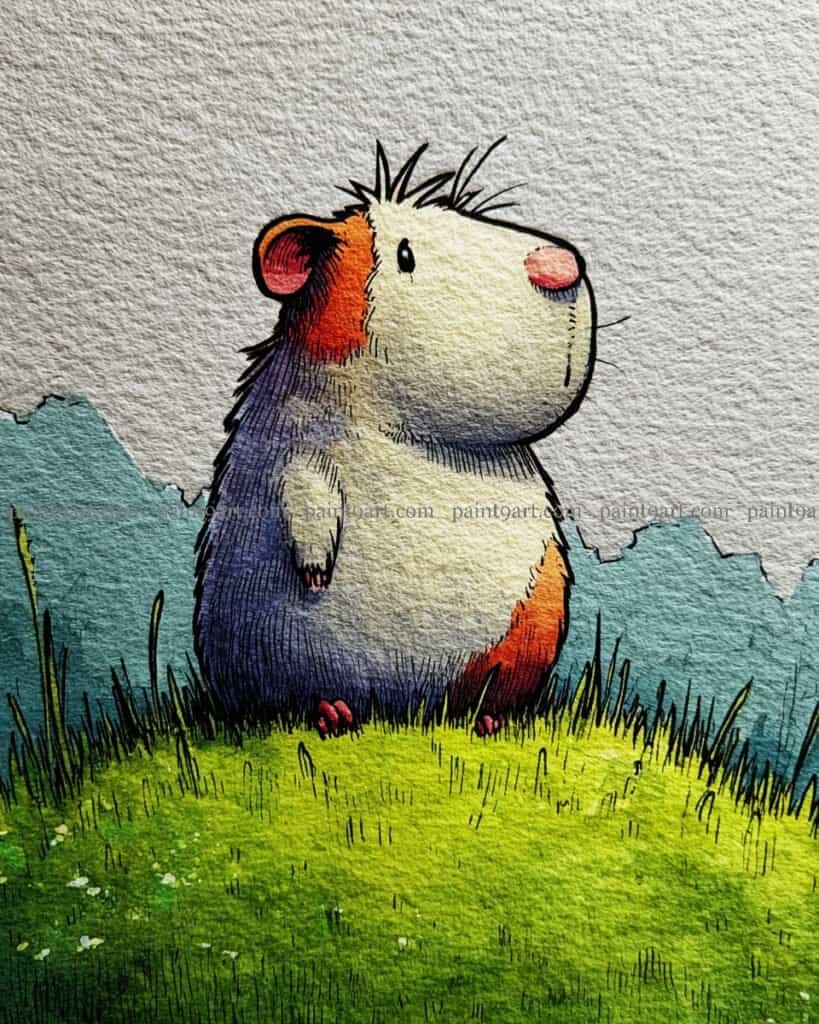
To paint this adorable subject, begin with a clean line drawing using a waterproof fine-liner to define the rounded body, the tiny paws, and the tufted hair on top of the head.
Use a wet-on-wet technique for the background, blending soft teals and muted grays to create a hazy mountain silhouette that recedes behind the bright green meadow.
For the guinea pig’s fur, apply a variegated wash that transitions from a bright orange-red at the ear and rump to a cool violet-gray along the back, leaving the face and belly a warm, pale cream.
Build texture by adding fine, vertical ink hatching over the dry paint to suggest the density of the coat and the soft roundness of the cheeks.
Finally, use a concentrated black for the tiny, glistening eye and add vibrant green dabs in the foreground to ground the character in its sun-drenched environment.
Recommended Pigment Palette
| Element | Recommended Pigments |
| Vibrant Fur Patches | Cadmium Orange and Pyrrol Scarlet for the intense, warm focal points on the head and rear. |
| Shadowed Fur | Dioxazine Purple mixed with Payne’s Gray (highly diluted) for the cool, textured shadows. |
| Face & Body Base | Yellow Ochre (highly diluted) or Naples Yellow for the warm, sunlit cream tones. |
| Meadow & Hills | Sap Green and Lemon Yellow for the grass; Cobalt Teal for the misty background peaks. |
| Details & Eyes | Mars Black for the eye and a waterproof Black fine-liner for the fur textures and whiskers. |
Add a little fun and relaxation to your day with Funny Farm Animals Printable Coloring Pages (PDF Download). Delight in easy, cheerful designs perfect for quiet, cozy coloring time.
Majestic Mountain Stallion
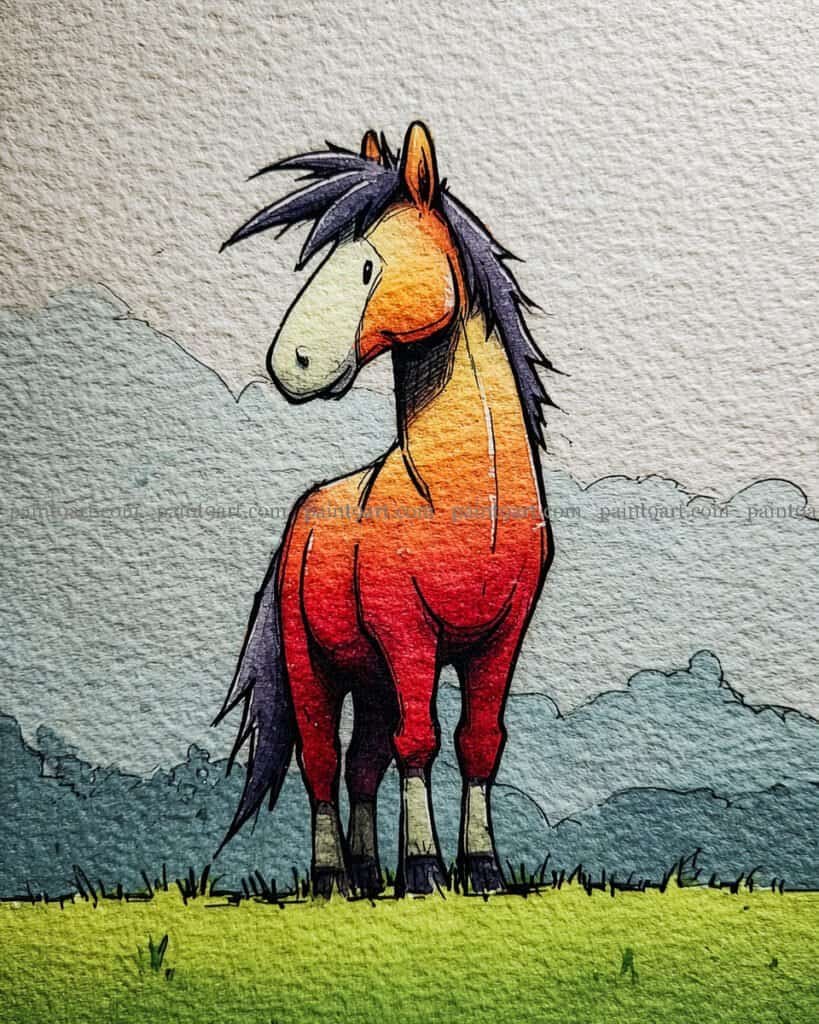
To paint this vibrant horse, start with a light pencil sketch followed by a waterproof fine-liner to define the muscular anatomy and the thick, flowing texture of the dark mane.
Use a wet-on-wet technique for the background, softly blending pale grays and blues to create a misty mountain range that recedes into a hazy sky.
For the horse’s coat, apply a variegated wash that transitions from a sun-lit golden yellow at the head to a rich, saturated orange and deep red across the body.
Build the intense shadows along the belly and legs using a wet-on-dry application of deep purple and indigo, allowing the colors to bleed slightly into the warmer tones.
Finally, use a vibrant spring green for the grassy foreground and add sharp, vertical ink hatching to the mane and hooves to provide structural depth and a sense of movement.
Recommended Pigment Palette
| Element | Recommended Pigments |
| Vibrant Coat | New Gamboge, Cadmium Orange, and Pyrrol Scarlet for the warm, sun-drenched body tones. |
| Shadows & Mane | Dioxazine Purple mixed with Payne’s Gray and Indigo for the deep, cool-toned dark textures. |
| Mountain Range | Cerulean Blue and Neutral Tint (highly diluted) to create the soft, receding alpine peaks. |
| Grassy Foreground | Sap Green mixed with Azo Yellow for the bright, sun-lit meadow at the base. |
| Details & Outlines | Mars Black for the hooves and a waterproof Black fine-liner for all anatomical and fur textures. |
Happy Donkey Smile
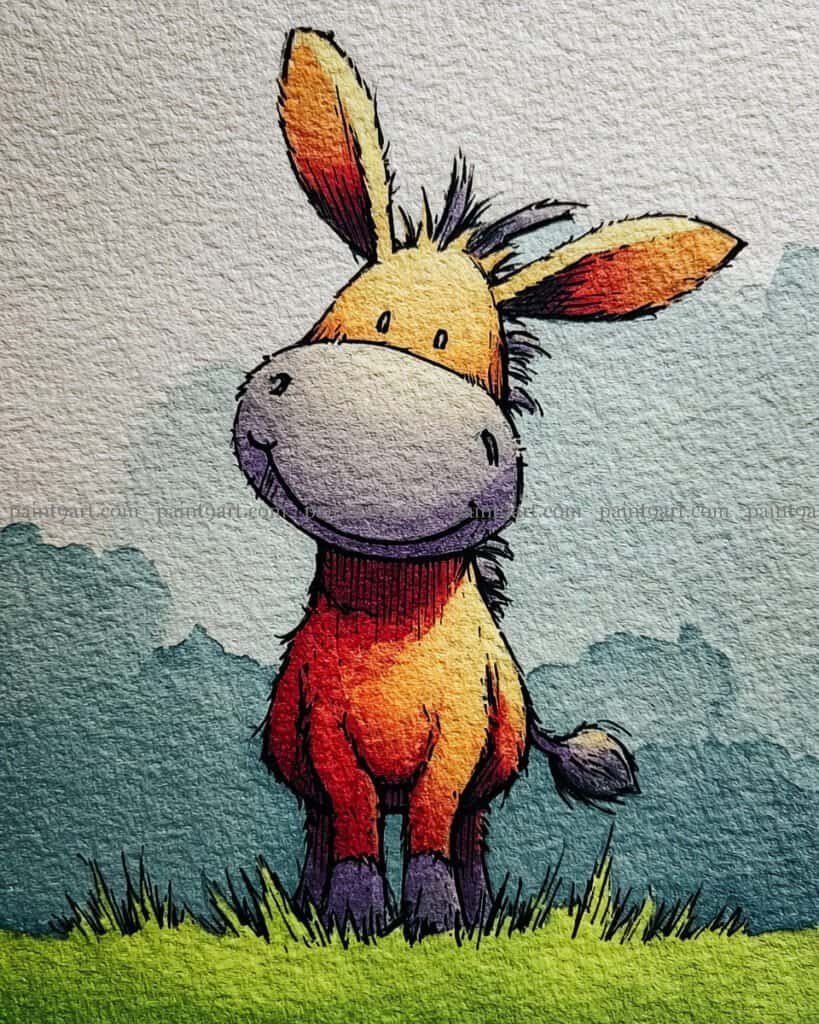
To paint this cheerful character, start with a confident line drawing using a waterproof fine-liner to capture the large, rounded muzzle and the whimsical, upright ears.
Use a wet-on-wet technique for the background sky and distant hills, blending soft teals and muted grays to create a dreamy, atmospheric setting that allows the subject to pop.
For the donkey’s body, apply a variegated wash that transitions from a sun-lit golden yellow at the head to a rich, saturated orange and deep red on the chest.
Build the cool, shadowed texture of the muzzle and hooves using a graduated wash of pale violet, adding fine cross-hatching with your pen to create volume and depth.
Finally, use a vibrant spring green for the grassy foreground and add a concentrated black for the tiny, joyful eyes to complete its friendly, lifelike expression.
Recommended Pigment Palette
| Element | Recommended Pigments |
| Vibrant Body | New Gamboge, Cadmium Orange, and Pyrrol Scarlet for the warm, fiery fur tones. |
| Muzzle & Hooves | Ultramarine Violet mixed with a touch of Neutral Tint (highly diluted) for the soft purple snout. |
| Sky & Hills | Cobalt Teal and Payne’s Gray to create the soft, receding mountain atmosphere. |
| Grassy Foreground | Sap Green mixed with Lemon Yellow for the bright, sun-drenched meadow at the base. |
| Ink Details | A waterproof Black fine-liner for all structural outlines, fur textures, and the smiling expression. |
Relax and unwind with Funny Farm Animals Printable Coloring Pages (PDF Download), perfect for peaceful, creative moments. Enjoy charming designs that bring joy and a touch of country fun to your day.
Shaggy Blue Ostrich

To paint this whimsical bird, start with a light pencil sketch followed by a waterproof fine-liner to define the round, fluffy body and the long, elegant neck.
Use a wet-on-wet technique for the background, blending soft teals and vibrant blues to create a hazy mountain silhouette that keeps the focus on the subject.
For the ostrich’s plumage, apply a variegated wash that transitions from a sun-lit cream at the top to a deep, saturated violet and indigo at the base, using short ink strokes to suggest soft, shaggy textures.
Build the intense color of the legs using a wet-on-dry application of saturated orange-red to create a bold focal point that anchors the bird in the bright green meadow.
Finally, use a concentrated black for the inquisitive eye and add delicate, wispy hairs around the head to capture its quirky and curious personality.
Recommended Pigment Palette
| Element | Recommended Pigments |
| Fluffy Body | Ultramarine Violet mixed with Indigo for the deep, shadowed plumage; leave the top area as a pale Yellow Ochre wash. |
| Vibrant Legs | Cadmium Orange and Pyrrol Scarlet to achieve the intense, sun-baked red-orange focal points. |
| Background Hills | Phthalo Blue and Cobalt Teal (highly diluted) to create the soft, receding mountain atmosphere. |
| Meadow Foreground | Sap Green mixed with Lemon Yellow for the bright, sun-drenched grass at the base. |
| Ink Details | A waterproof Black fine-liner for all structural outlines, feathery textures, and the glossy eye. |
Shaggy Shoebill Portrait

To paint this characterful bird, begin with a precise line drawing using a waterproof fine-liner to define the massive, hooked beak and the wispy, decorative feathers on the crown.
Use a wet-on-wet technique for the background, softly blending a muted olive green into a pale cream to create a simple, out-of-focus marshland atmosphere.
For the body and neck, apply a variegated wash of cool blue-gray and soft violet, using delicate vertical ink hatching to suggest the dense, slightly ruffled texture of the plumage.
Build the intense colors of the beak using a graduated wash of golden yellow that transitions into a saturated orange and deep red at the tip, adding fine stippling for a weathered effect.
Finally, use a highly concentrated orange for the iris and a deep black for the pupil to create a sharp, prehistoric gaze that anchors the entire composition.
Recommended Pigment Palette
| Element | Recommended Pigments |
| Vibrant Beak | New Gamboge, Cadmium Orange, and Pyrrol Scarlet for the intense, warm color gradient. |
| Plumage & Neck | Payne’s Gray and Ultramarine Violet (highly diluted) for the cool, textured feather shadows. |
| Eye & Crown | Azo Yellow for the piercing iris; Dioxazine Purple for the deep tones on the forehead. |
| Background | Sap Green mixed with Raw Umber (diluted) to create a soft, naturalistic wetland backdrop. |
| Ink Details | Mars Black for the pupil and a waterproof Black fine-liner for all feather and beak textures. |
Enjoy calming, creative time with Funny Farm Animals Printable Coloring Pages (PDF Download), designed for relaxing moments at home. These charming illustrations make coloring simple, joyful, and stress-free.
Serene Goose Pond
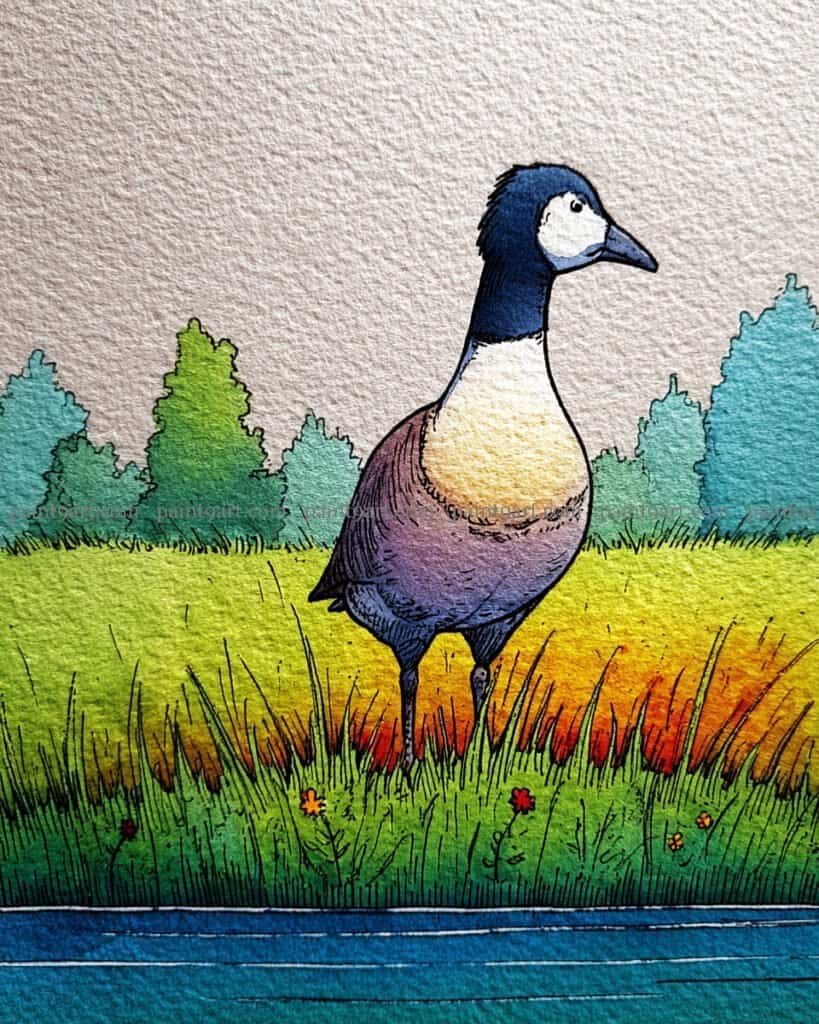
To paint this peaceful landscape, start by sketching the goose and the surrounding foliage using a waterproof fine-liner to create crisp, defined outlines.
Use a wet-on-wet technique for the expansive sky, applying a very light, neutral wash to maintain focus on the colorful meadow.
For the goose’s body, apply a variegated wash that transitions from a sun-lit golden cream on the chest to a deep violet-gray on the back, leaving the face a bright white.
Build the vibrant meadow using a graduated wash, blending bright lemon yellow into deep orange and red at the base to suggest sun-drenched, textured grasses.
Finally, use a saturated teal for the water in the foreground and add small dabs of red and orange for the wildflowers to create a lively, balanced composition.
Recommended Pigment Palette
| Element | Recommended Pigments |
| Goose Body & Chest | Yellow Ochre (highly diluted) for the chest and Payne’s Gray mixed with Dioxazine Purple for the back. |
| Vibrant Meadow | Lemon Yellow, Cadmium Orange, and Pyrrol Scarlet for the warm, fiery grass tones. |
| Water Foreground | Phthalo Blue or Cobalt Teal to achieve the intense, cool-toned water surface. |
| Foliage & Grass | Sap Green for the foreground grass and Hooker’s Green (diluted) for the distant, soft trees. |
| Details & Ink | A waterproof Black fine-liner for the goose’s structural outlines and the fine grass textures. |
Proud Farm Rooster
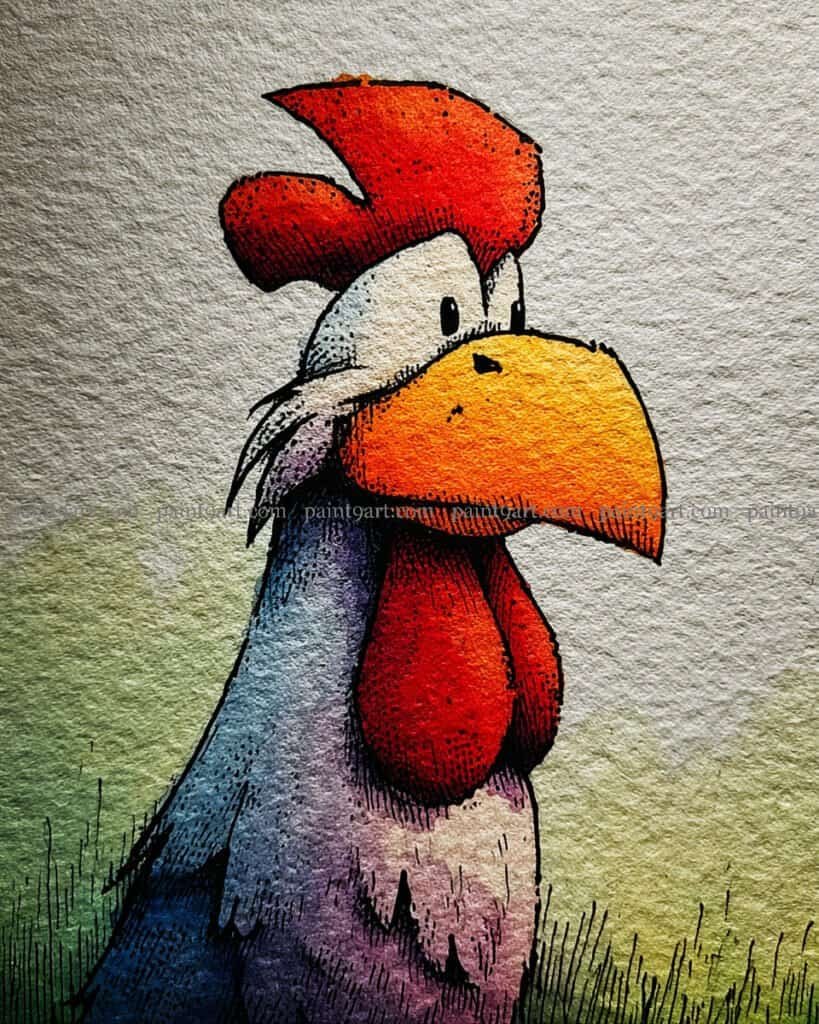
To paint this vibrant rooster, start with a light pencil sketch followed by a waterproof fine-liner to define the sharp, curved beak and the bulbous texture of the wattle and comb.
Apply a wet-on-wet wash for the background, softly blending a pale spring green into a neutral cream to create a simple, sun-drenched meadow atmosphere.
For the rooster’s body, use a variegated wash of cool violet and soft blue-gray, leaving the neck area lighter to suggest direct sunlight.
Build the intense colors of the comb and wattle using a graduated wash of saturated red, while using a bright golden-orange for the large beak to create a striking focal point.
Finally, use a dry brush technique to add fine, feathery textures to the neck and use a concentrated black ink for the small, observant eye to complete its bold character.
Recommended Pigment Palette
| Element | Recommended Pigments |
| Comb & Wattle | Cadmium Red or Pyrrol Scarlet to achieve the intense, fleshy red tones. |
| Beak & Highlights | Hansa Yellow and Cadmium Orange for the vibrant, sun-lit golden beak. |
| Body Plumage | Ultramarine Violet mixed with Payne’s Gray (highly diluted) for the cool, shadowed feathers. |
| Meadow Background | Sap Green mixed with a touch of Yellow Ochre for a soft, natural pastoral setting. |
| Details & Eyes | Mars Black for the eye and a waterproof Black fine-liner for the stippled and feathered textures. |
Add a little fun and relaxation to your day with Funny Farm Animals Printable Coloring Pages (PDF Download). Delight in easy, cheerful designs perfect for quiet, cozy coloring time.
Happy Rooster Meadow
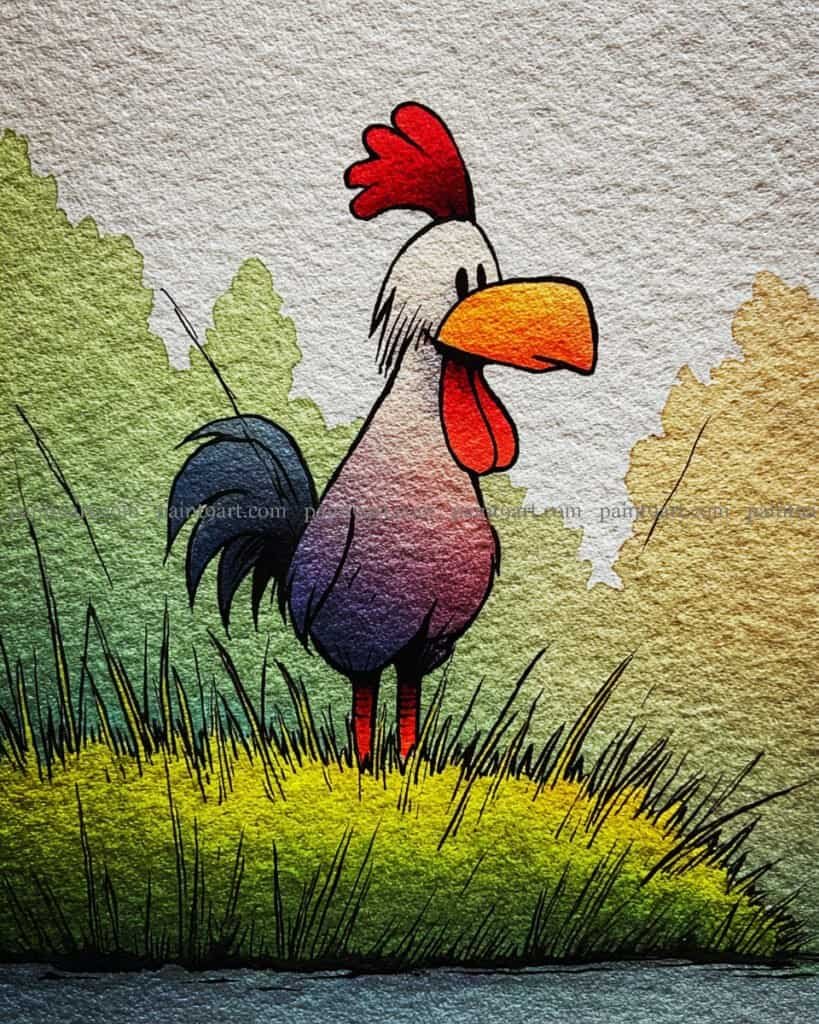
To paint this vibrant rooster, start with a light pencil sketch followed by a waterproof fine-liner to define the sharp beak, the curved tail feathers, and the textured grassy mound.
Use a wet-on-wet technique for the background, softly blending a pale cream into a hazy spring green to create a simple, sun-drenched pastoral atmosphere.
For the rooster’s body, apply a variegated wash that transitions from a sun-lit white at the head to a deep, shadowed violet on the lower belly.
Build the intense colors of the comb, wattle, and legs using a wet-on-dry application of saturated red, while using a bright golden-orange for the beak to create a striking focal point.
Finally, use a concentrated black ink for the tail feathers and the small, joyful eye, adding fine hatching lines to provide structural depth and a sense of movement.
Recommended Pigment Palette
| Element | Recommended Pigments |
| Comb, Wattle & Legs | Cadmium Red or Pyrrol Scarlet to achieve the intense, vibrant red focal points. |
| Beak & Highlights | Hansa Yellow and Cadmium Orange for the bright, sun-lit golden beak. |
| Body & Tail | Ultramarine Violet mixed with Indigo or Payne’s Gray for the deep, cool-toned plumage. |
| Grassy Foreground | Sap Green mixed with Lemon Yellow for the bright, textured meadow at the base. |
| Ink Details | A waterproof Black fine-liner for all structural outlines, feather textures, and the glossy eye. |
Happy Forest Fox
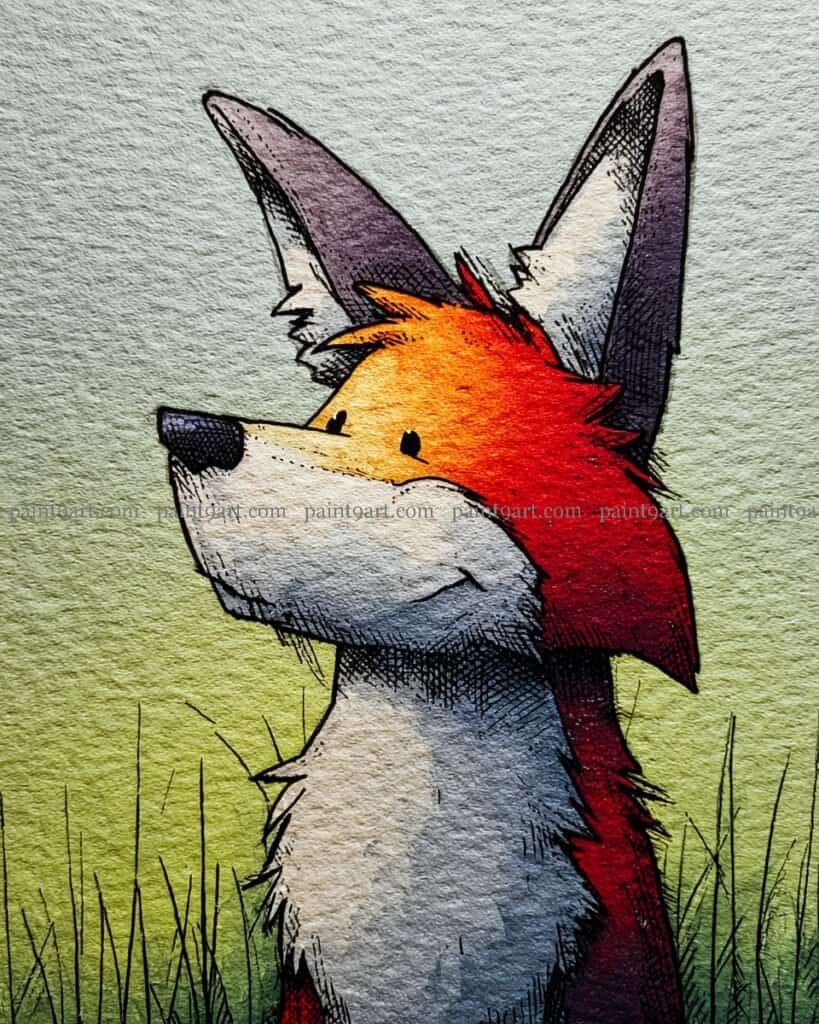
To paint this charming fox, start with a light pencil sketch followed by a waterproof fine-liner to define the sharp, perky ears and the soft, smiling curves of the muzzle.
Use a wet-on-wet technique for the background, softly blending a pale sage green to create a simple, out-of-focus meadow atmosphere that recedes behind the subject.
For the fox’s fur, apply a variegated wash that transitions from a sun-lit cream at the snout to a vibrant, saturated orange and deep red across the crown and back.
Build the cool shadows on the chest and inner ears using a graduated wash of pale violet-gray, adding fine ink hatching to suggest a thick, soft coat.
Finally, use a concentrated black for the nose and tiny, sparkling eyes, ensuring you leave a crisp white highlight in each to capture its joyful and curious personality.
Recommended Pigment Palette
| Element | Recommended Pigments |
| Vibrant Fur | New Gamboge, Cadmium Orange, and Pyrrol Scarlet for the intense, warm coat colors. |
| Shadowed Ears & Neck | Ultramarine Violet mixed with Payne’s Gray (highly diluted) for the cool, textured fur shadows. |
| Face & Chest Base | Yellow Ochre (highly diluted) or Naples Yellow for the warm, sunlit cream highlights. |
| Meadow Background | Sap Green and Lemon Yellow to create a soft, sun-drenched pastoral setting. |
| Details & Eyes | Mars Black for the nose/eyes and a waterproof Black fine-liner for the fur and facial textures. |
Relax and unwind with Funny Farm Animals Printable Coloring Pages (PDF Download), perfect for peaceful, creative moments. Enjoy charming designs that bring joy and a touch of country fun to your day.
Curious Pig Portrait
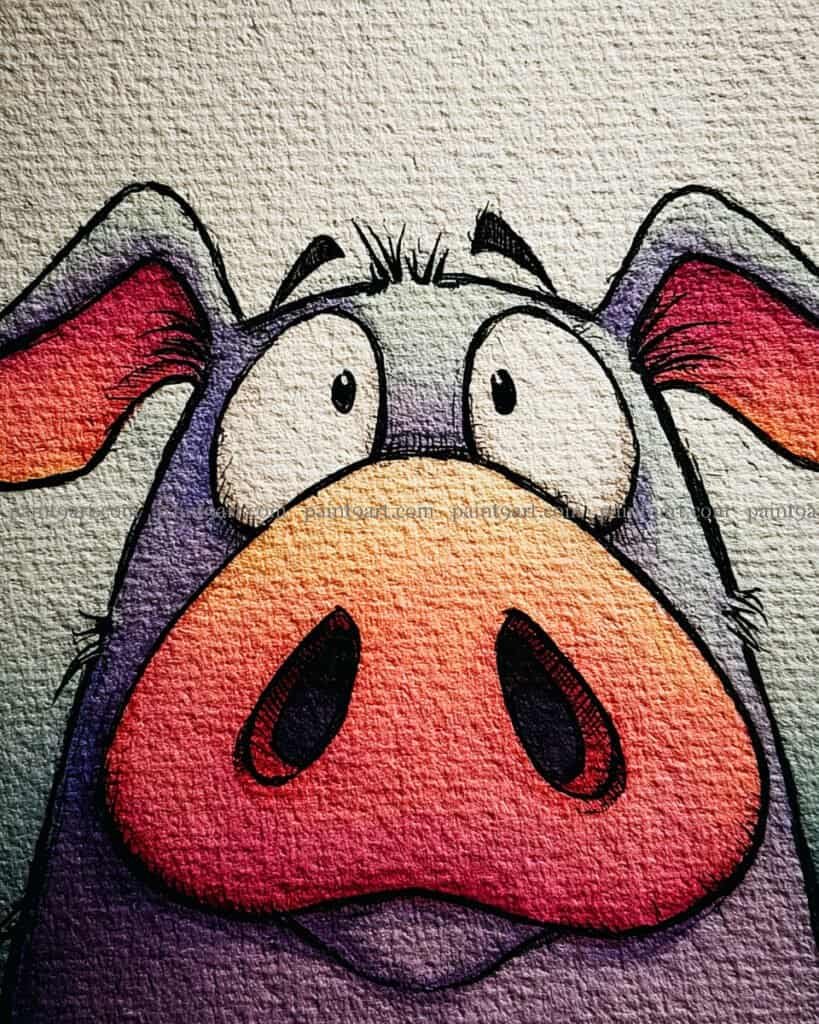
To recreate this whimsical portrait, start with a detailed ink drawing using a waterproof fine-liner to define the massive, textured snout and wide, startled eyes.
Use a wet-on-wet technique for the background and forehead, softly blending a cool lavender-gray to create a misty, out-of-focus atmosphere.
For the snout, apply a graduated wash of golden yellow that transitions into a saturated orange and finally a deep, vibrant red at the base.
Build the inner ears with a similar warm gradient to create high-contrast focal points against the cooler tones of the face.
Use fine cross-hatching and stippling with your pen over the dry watercolor to enhance the sense of volume on the snout and the leathery texture of the skin.
Finally, use a highly concentrated black for the large, expressive nostrils and the pupils, leaving crisp white highlights in the eyes to give the pig its curious and lifelike personality.
Recommended Pigment Palette
| Element | Recommended Pigments |
| Vibrant Snout & Ears | New Gamboge, Cadmium Orange, and Pyrrol Scarlet for the intense, warm color gradient. |
| Face & Shadowed Fur | Ultramarine Violet mixed with Payne’s Gray (highly diluted) for the cool, textured skin tones. |
| Background & Atmosphere | Neutral Tint and a touch of Indigo to create the soft, receding neutral backdrop. |
| Nostrils & Eyes | Mars Black for the deep, solid darks; leave the white of the paper for the eye highlights. |
| Ink Textures | A waterproof Black fine-liner for all structural outlines, stippling, and cross-hatching details. |
Smiling Pink Piglet

To paint this adorable portrait, start with a detailed ink drawing using a waterproof fine-liner to define the large, round snout and the cheerful, wide-set ears.
Use a wet-on-wet technique for the background, softly blending a pale sage green to create a simple, out-of-focus meadow atmosphere that recedes behind the subject.
For the pig’s face, apply a variegated wash that transitions from a sun-lit golden yellow at the crown to a cool violet-gray along the lower jaw, using fine cross-hatching to suggest volume.
Build the intense colors of the snout and inner ears using a graduated wash of saturated orange and deep red, creating vibrant focal points that contrast with the cooler facial tones.
Finally, use a highly concentrated black for the large nostrils and the sparkling eyes, leaving crisp white paper highlights in the pupils to give the piglet its joyful and lifelike personality.
Recommended Pigment Palette
| Element | Recommended Pigments |
| Vibrant Snout & Ears | Cadmium Orange and Pyrrol Scarlet for the intense, warm color gradients. |
| Face & Shadowed Fur | Ultramarine Violet mixed with Payne’s Gray (highly diluted) for the cool, textured skin tones. |
| Crown & Highlights | New Gamboge or Yellow Ochre (highly diluted) for the sun-drenched forehead area. |
| Meadow Background | Sap Green and Lemon Yellow to create a soft, receding pastoral backdrop. |
| Nostrils & Eyes | Mars Black for the deep, solid darks; leave the white of the paper for the eye highlights. |
Enjoy calming, creative time with Funny Farm Animals Printable Coloring Pages (PDF Download), designed for relaxing moments at home. These charming illustrations make coloring simple, joyful, and stress-free.
Startled Rainbow Calf
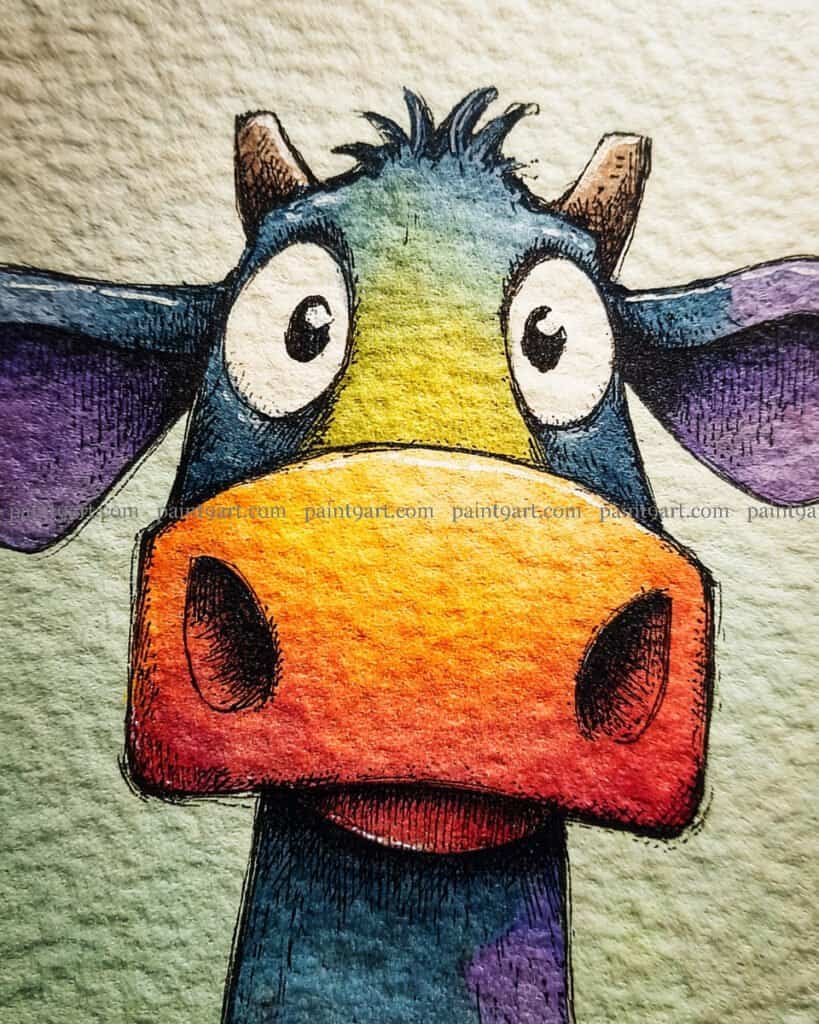
To recreate this whimsical cow, begin with a bold line drawing using a waterproof fine-liner to define the wide, blocky snout and the large, expressive eyes.
Use a wet-on-wet technique for the head, blending a bright lemon yellow into vibrant teals and deep purples to create a striking iridescent effect across the fur.
For the large snout, apply a graduated wash of golden orange that transitions into a saturated red at the base, adding fine cross-hatching with your pen over the dry paint to enhance the sense of volume.
Build the inner ears with a concentrated violet wash, ensuring the eyes remain a crisp white of the paper with small, glossy black pupils for a startled expression.
Finally, ground the portrait with a soft, pale green wash in the background, keeping the brushwork light to ensure the colorful calf remains the central focus.
Recommended Pigment Palette
| Element | Recommended Pigments |
| Colorful Head | Azo Yellow, Cobalt Teal, and Dioxazine Purple to achieve the vibrant, rainbow fur gradient. |
| Bold Snout | Cadmium Orange and Pyrrol Scarlet for the intense, warm focal point of the nose. |
| Ears & Shadows | Ultramarine Violet mixed with Payne’s Gray for the deep, textured shadows. |
| Background | Sap Green (highly diluted) to create a soft, sun-drenched pastoral atmosphere. |
| Ink Details | Mars Black for the pupils and a waterproof Black fine-liner for the structural outlines and stippling. |
Curious Meadow Cow
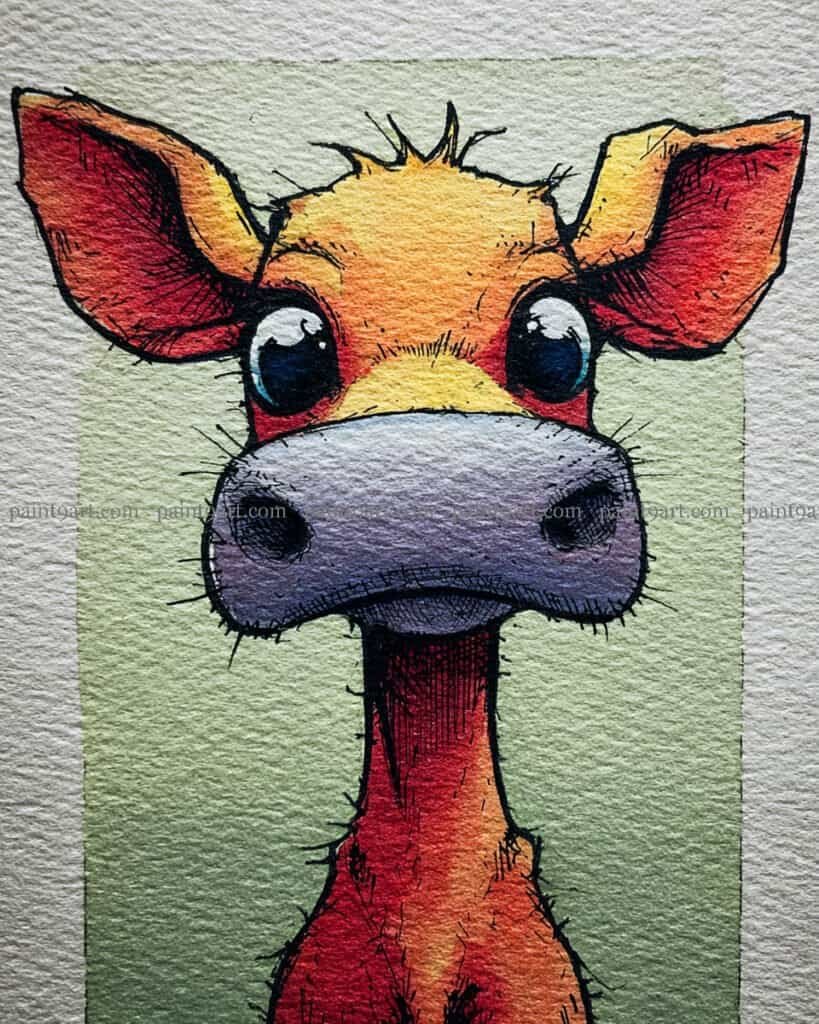
To paint this adorable calf, start with a precise ink drawing using a waterproof fine-liner to define the wide, blocky muzzle and those large, soulful eyes.
Use a wet-on-wet technique for the background, softly blending a pale sage green to create a simple, out-of-focus meadow that makes the subject pop.
For the cow’s face, apply a variegated wash that transitions from a sun-lit golden yellow at the crown to a vibrant orange and deep red down the neck.
Build the cool, textured shadows on the muzzle and inner ears using a graduated wash of lavender and soft gray, adding fine cross-hatching with your pen to emphasize volume.
Finally, use a highly concentrated black for the large, glossy pupils, ensuring you leave a crisp white highlight in each to give the calf its curious and lifelike expression.
Recommended Pigment Palette
| Element | Recommended Pigments |
| Vibrant Head & Neck | New Gamboge, Cadmium Orange, and Pyrrol Scarlet for the intense, warm color gradient. |
| Muzzle & Shadows | Ultramarine Violet mixed with Payne’s Gray (highly diluted) for the cool, soft snout tones. |
| Meadow Background | Sap Green and Lemon Yellow to create a soft, sun-drenched pastoral backdrop. |
| Eyes & Nose Details | Mars Black for the deep, solid pupils and a waterproof Black fine-liner for the fur and skin textures. |
| Highlights | Yellow Ochre (diluted) for the bridge of the nose and the white of the paper for the eye glints. |
Add a little fun and relaxation to your day with Funny Farm Animals Printable Coloring Pages (PDF Download). Delight in easy, cheerful designs perfect for quiet, cozy coloring time.
Proud Little Peacock
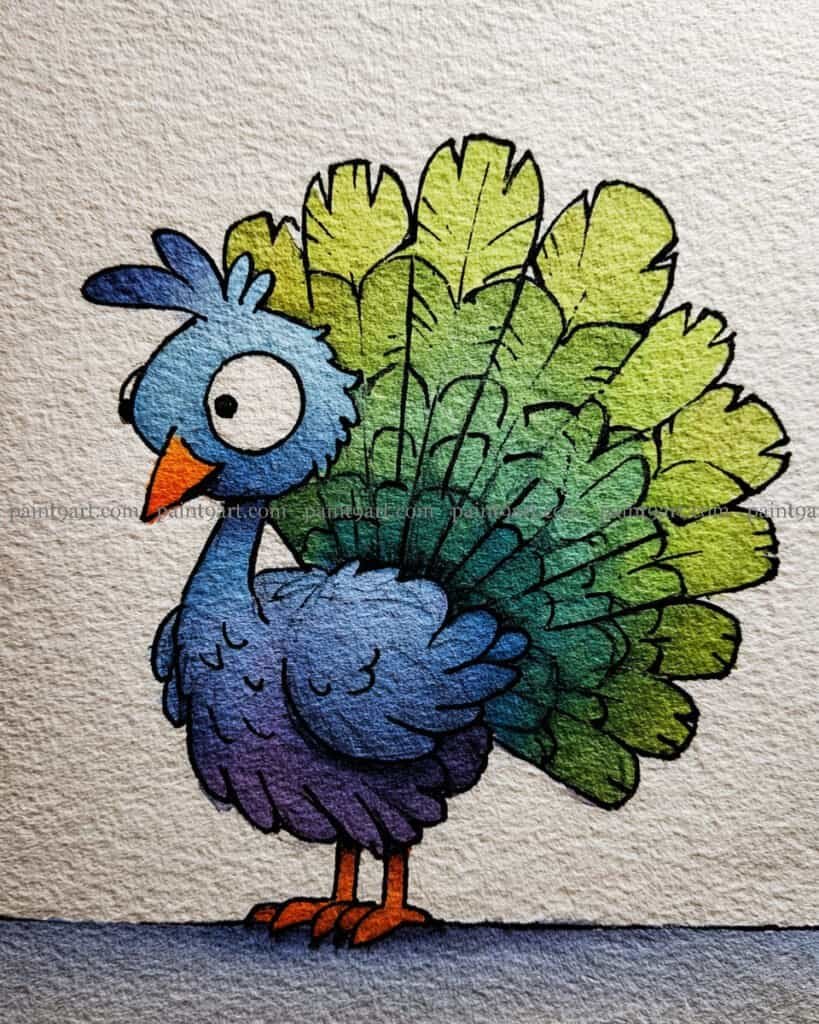
To paint this whimsical bird, begin with a light pencil sketch of its rounded body and large, fanned tail, using a waterproof fine-liner to define the scalloped edges of the feathers and the bird’s startled expression.
Use a wet-on-wet technique for the tail feathers, creating a vibrant gradient that transitions from a bright lime green at the tips to a deep forest green and finally a saturated teal at the base.
For the peacock’s body, apply a variegated wash of cobalt blue that blends into a deep violet at the underbelly, using small “u” shaped ink strokes to suggest soft, ruffled down.
Build the intense color of the beak and legs using a wet-on-dry application of bright orange to create a sharp focal point against the cooler plumage.
Finally, ground the bird with a soft, blue-gray wash at the base and use a concentrated black ink for the pupil, leaving a large white highlight to emphasize its wide-eyed, playful character.
Recommended Pigment Palette
| Element | Recommended Pigments |
| Fanned Tail | Lemon Yellow and Sap Green for the bright tips; Phthalo Green for the deep, vibrant base. |
| Bird’s Body | Cobalt Blue for the head and chest, blending into Dioxazine Purple for the lower shadows. |
| Beak & Legs | Cadmium Orange or New Gamboge to achieve that intense, warm focal point. |
| Shadows & Ground | Payne’s Gray (highly diluted) for the subtle grounding shadow and structural depth. |
| Ink Details | A waterproof Black fine-liner for the scalloped feather patterns, body texture, and the eye. |
Wise Grassy Goat
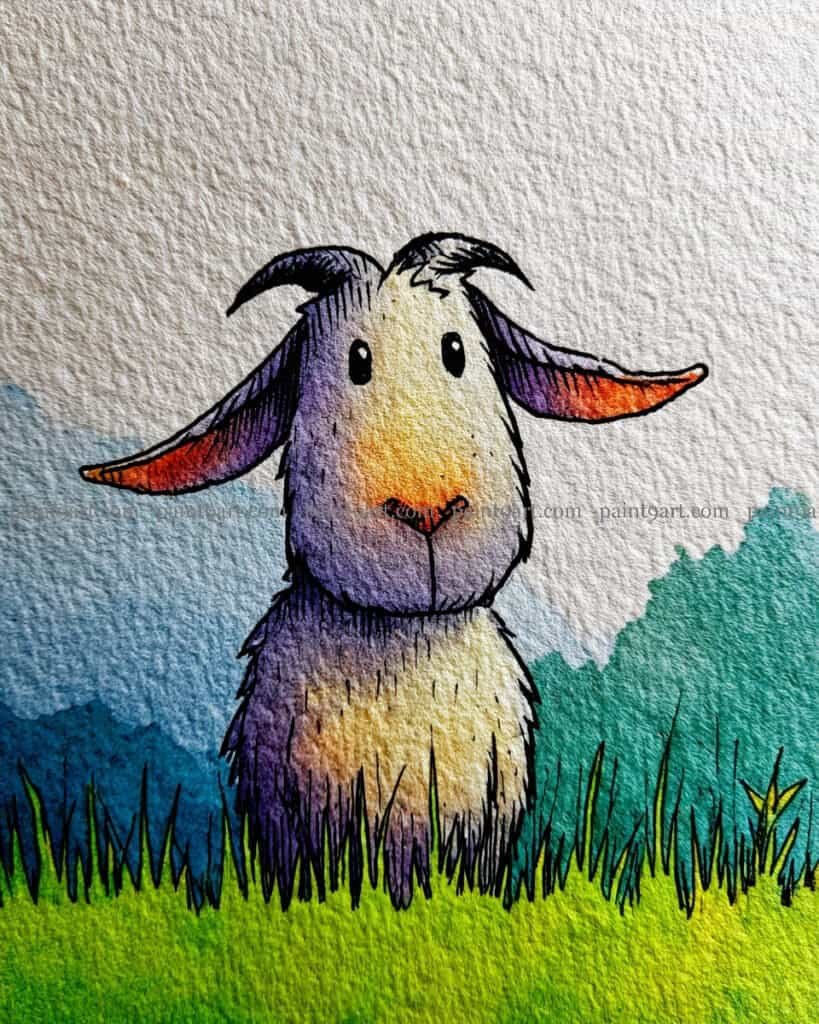
To recreate this whimsical portrait, start with a detailed ink drawing using a waterproof fine-liner to define the goat’s long, drooping ears and the sharp, curved horns.
Use a wet-on-wet technique for the background, softly blending a vibrant sky blue into a lush spring green to create a misty mountain meadow atmosphere.
For the goat’s face and body, apply a variegated wash that transitions from a sun-lit golden yellow at the center to a deep, shadowed violet at the edges, using fine ink hatching to suggest a soft, woolly texture.
Build the intense colors of the inner ears using a graduated wash of saturated orange and red, creating a striking focal point against the cooler facial tones.
Finally, add small dabs of concentrated black for the inquisitive eyes and use a dry brush technique to suggest the individual blades of grass in the foreground.
Recommended Pigment Palette
| Element | Recommended Pigments |
| Vibrant Ears | Cadmium Orange and Pyrrol Scarlet for the intense, warm focal points within the ears. |
| Face & Body Shadows | Dioxazine Purple mixed with Payne’s Gray (highly diluted) for the cool, textured shadows. |
| Golden Highlights | New Gamboge or Yellow Ochre for the warm, sun-drenched areas of the forehead and chest. |
| Meadow & Mountains | Sap Green and Lemon Yellow for the grass; Cobalt Blue for the misty background peaks. |
| Ink Details | A waterproof Black fine-liner for the structural outlines, fur hatching, and the glossy eyes. |
Relax and unwind with Funny Farm Animals Printable Coloring Pages (PDF Download), perfect for peaceful, creative moments. Enjoy charming designs that bring joy and a touch of country fun to your day.
Goofy Grizzly Bear
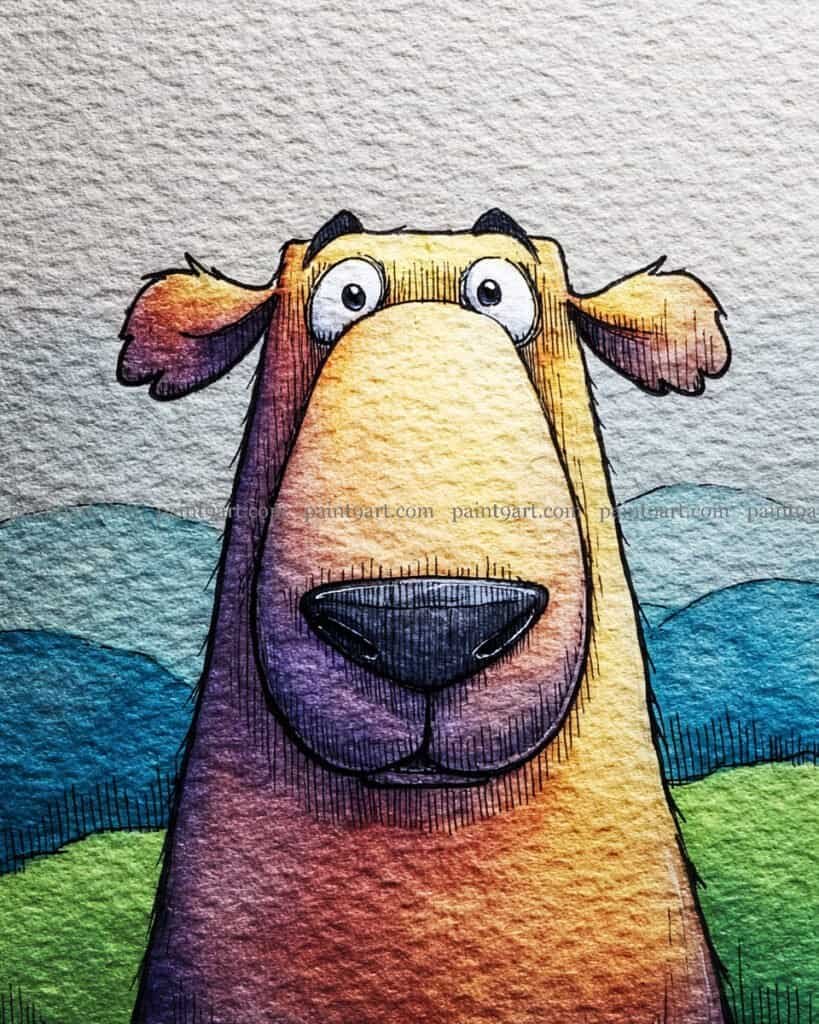
To paint this expressive bear, start with a detailed ink drawing using a waterproof fine-liner to define the massive, blocky snout and the large, startled eyes positioned high on the head.
Use a wet-on-wet technique for the body, blending a sun-lit golden yellow at the crown into a deep, variegated wash of violet and rich orange along the shoulders.
For the large muzzle, apply a graduated wash of pale purple that transitions into a saturated orange at the bridge, adding fine vertical hatching with your pen to create a fuzzy, dense fur texture.
Build the background by softly dabbing teals and muted blues to suggest rolling hills, keeping the edges blurry to ensure the bear remains the central focus.
Finally, use a highly concentrated black for the nostrils and pupils, leaving crisp white highlights in the eyes to capture its humorous and inquisitive expression.
Recommended Pigment Palette
| Element | Recommended Pigments |
| Body & Crown | New Gamboge, Cadmium Orange, and Pyrrol Scarlet for the warm, fiery fur tones. |
| Shadows & Muzzle | Dioxazine Purple mixed with Payne’s Gray (highly diluted) for the cool, soft snout textures. |
| Hilly Background | Cobalt Teal and Indigo to create the soft, receding mountain silhouettes. |
| Grassy Foreground | Sap Green mixed with Azo Yellow for the bright, textured meadow at the base. |
| Ink Details | A waterproof Black fine-liner for the structural outlines, fur hatching, and the glossy eyes. |
Majestic Ram Portrait
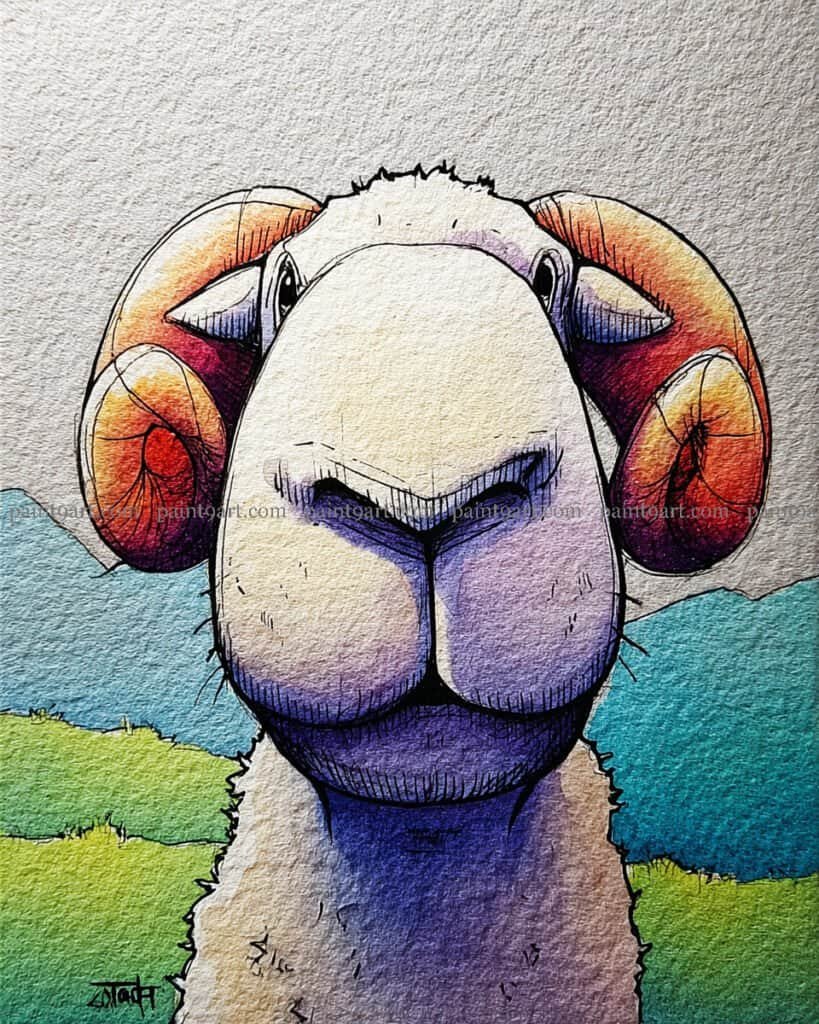
To recreate this striking portrait, begin with a detailed ink drawing using a waterproof fine-liner to define the massive, spiraled horns and the soft, blocky muzzle.
Use a wet-on-wet technique for the background and forehead, softly blending pale blues and violets to create a misty mountain atmosphere that recedes behind the subject.
For the curved horns, apply a variegated wash that transitions from a sun-lit golden yellow to a saturated orange and deep red in the deepest crevices.
Build the cool shadows on the snout and neck using a graduated wash of lavender-gray, adding fine stippling and hatching with your pen to suggest a dense, woolly texture.
Finally, use a concentrated black for the inquisitive eyes and ground the piece with a vibrant spring green wash for the rolling hills at the base.
Recommended Pigment Palette
| Element | Recommended Pigments |
| Spiraled Horns | New Gamboge, Cadmium Orange, and Pyrrol Scarlet for the intense, warm color gradients. |
| Snout & Shadows | Ultramarine Violet mixed with Payne’s Gray (highly diluted) for the cool, soft woolly textures. |
| Sky & Mountains | Cobalt Teal and Indigo to create the soft, atmospheric background peaks. |
| Grassy Foreground | Sap Green mixed with Azo Yellow for the bright, textured meadow at the bottom. |
| Ink Details | A waterproof Black fine-liner for all structural outlines, wool textures, and the pupils. |
Enjoy calming, creative time with Funny Farm Animals Printable Coloring Pages (PDF Download), designed for relaxing moments at home. These charming illustrations make coloring simple, joyful, and stress-free.
Curious Yak Portrait
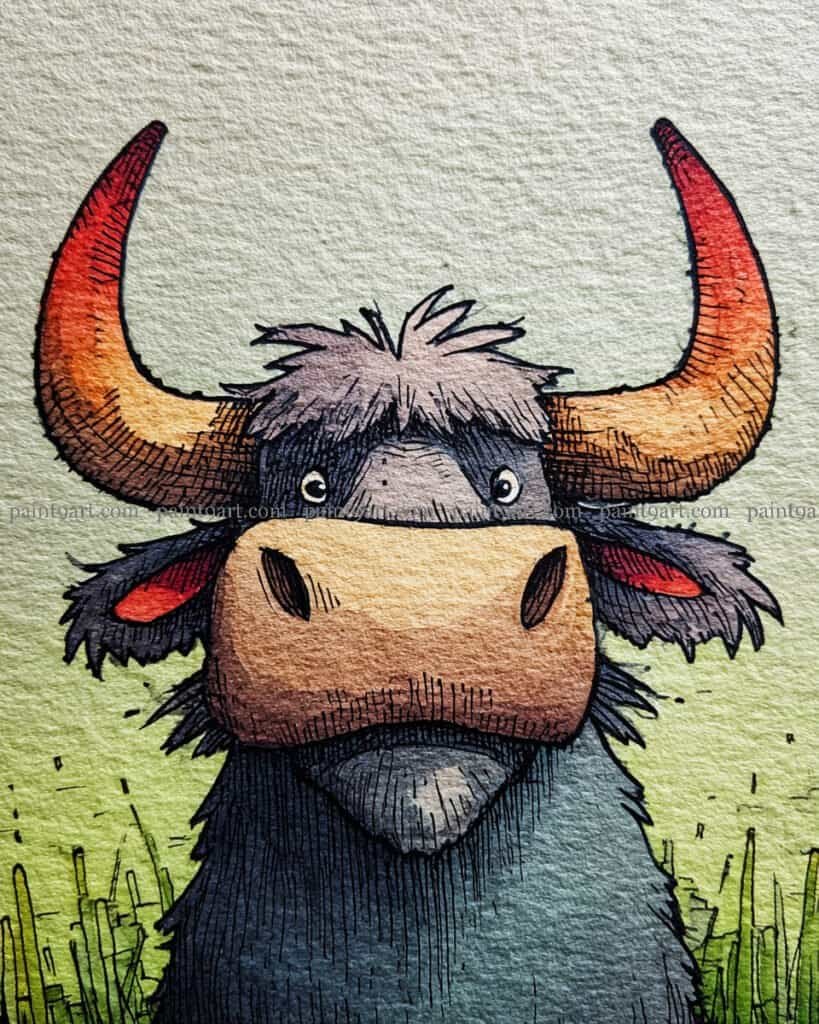
To recreate this bold character, start with a detailed ink drawing using a waterproof fine-liner to define the wide, blocky muzzle and the magnificent upward-curving horns.
Use a wet-on-wet technique for the background, softly dabbing a pale sage green to create a simple, out-of-focus meadow atmosphere.
For the yak’s shaggy coat, apply a variegated wash of deep indigo and violet, leaving the top of the head a lighter gray to suggest volume and texture.
Build the intense colors of the horns and inner ears using a graduated wash that transitions from a sun-lit golden yellow at the base to a saturated orange and a deep, vibrant red at the tips.
Finally, use a highly concentrated black for the inquisitive eyes and nostrils, adding fine vertical hatching with your pen over the dry paint to emphasize the coarse, thick nature of the fur.
Recommended Pigment Palette
| Element | Recommended Pigments |
| Vibrant Horns | New Gamboge, Cadmium Orange, and Pyrrol Scarlet for the intense, warm color gradient. |
| Shaggy Fur | Indigo mixed with Dioxazine Purple for the deep, shadowed body; Payne’s Gray for lighter tufts. |
| Muzzle & Skin | Yellow Ochre (highly diluted) for the snout base, layered with Raw Umber for soft shadows. |
| Meadow Background | Sap Green and a touch of Lemon Yellow to create a soft, receding pastoral backdrop. |
| Ink Details | A waterproof Black fine-liner for all structural outlines, heavy fur hatching, and the pupils. |
Add a little fun and relaxation to your day with Funny Farm Animals Printable Coloring Pages (PDF Download). Delight in easy, cheerful designs perfect for quiet, cozy coloring time.
Cheerful Golden Otter
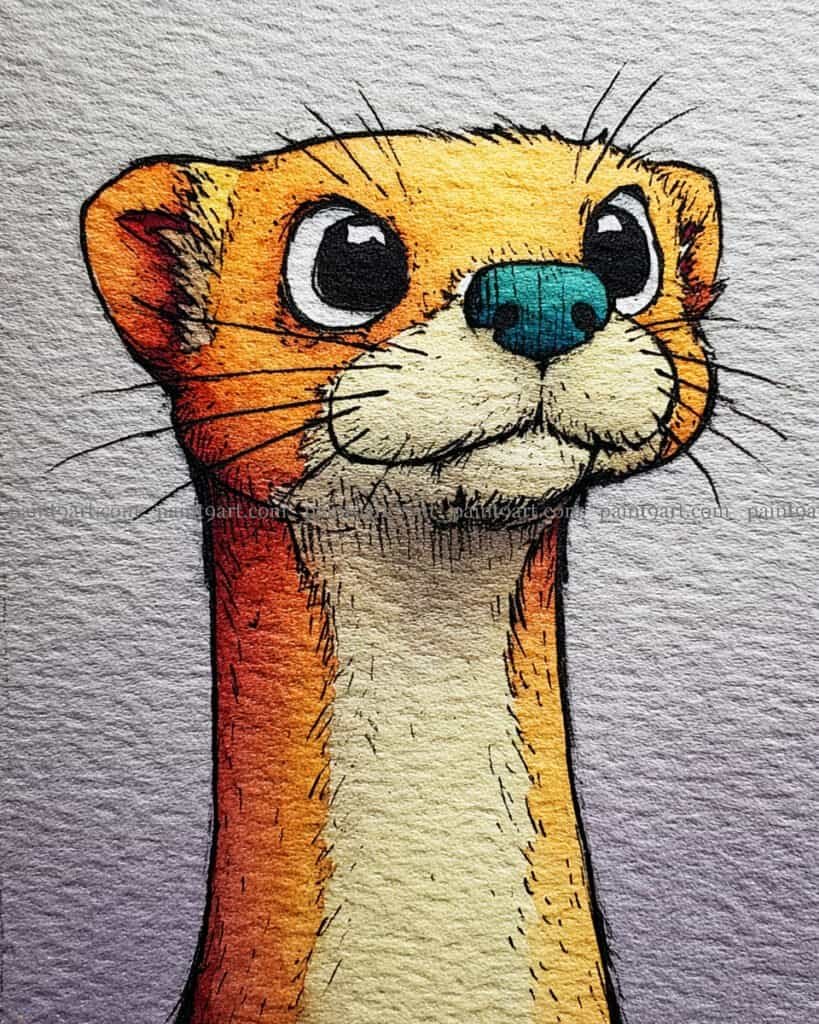
To capture this lively portrait, start with a detailed ink drawing using a waterproof fine-liner, focusing on the otter’s broad, rounded snout and its small, inquisitive eyes placed high on the head.
Use a wet-on-wet technique for the lower neck and background, blending a soft, atmospheric lavender-gray to create a sense of depth and focus on the face.
For the fur, apply a variegated wash that transitions from a pale, sun-lit cream on the chin to a rich golden yellow and a highly saturated orange-red along the ears and the back of the neck.
Build the vibrant focal point of the nose using a wet-on-dry application of intense teal, adding fine horizontal hatching with your pen to suggest a leathery texture.
Finally, use concentrated black for the pupils and apply short, vertical ink strokes around the muzzle and crown to emphasize the dense, sleek quality of the otter’s coat.
Recommended Pigment Palette
| Element | Recommended Pigments |
| Vibrant Fur | New Gamboge, Cadmium Orange, and Pyrrol Scarlet for the intense, warm color gradients. |
| Teal Nose | Cobalt Teal or Phthalo Turquoise to create a striking, high-contrast focal point against the warm fur. |
| Chin & Highlights | Yellow Ochre (highly diluted) or Naples Yellow for the soft, sun-drenched cream tones. |
| Atmospheric Base | Ultramarine Violet mixed with Payne’s Gray (highly diluted) for the soft, receding background. |
| Ink Details | Mars Black for the pupils and a waterproof Black fine-liner for the fur textures and long whiskers. |
Surprised Dairy Cow
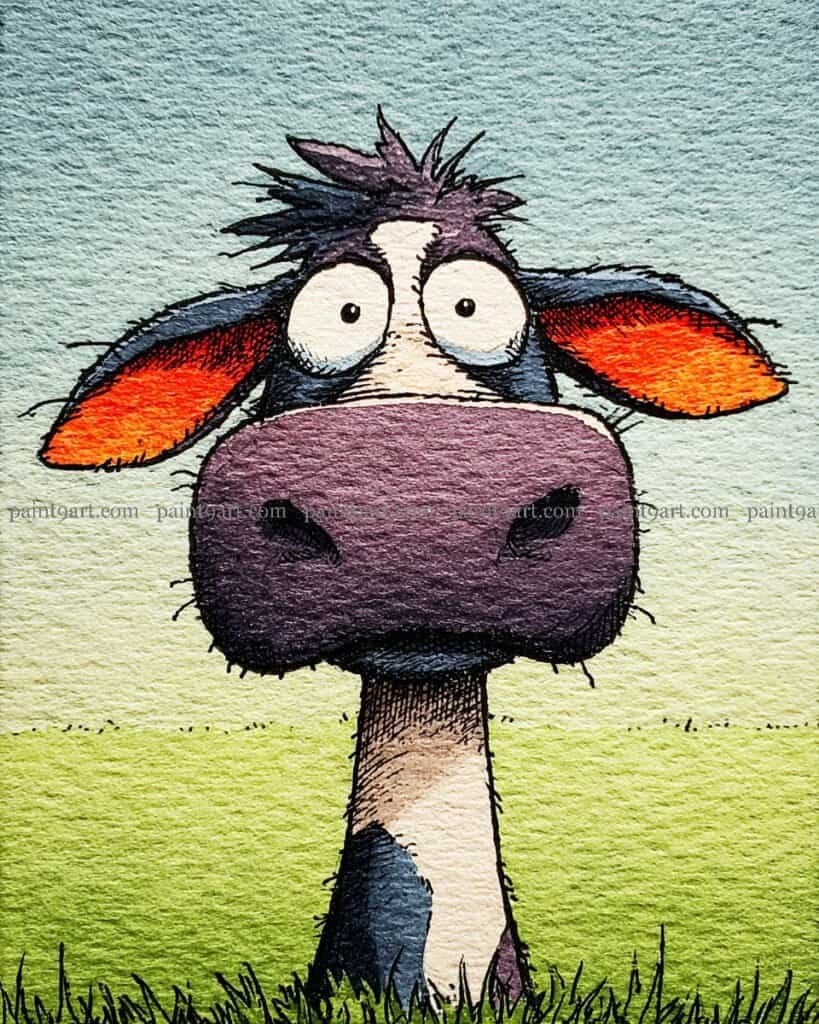
To paint this humorous portrait, begin with a bold ink outline using a waterproof fine-liner to emphasize the wide, flat muzzle and the disproportionately large, white-rimmed eyes.
Use a wet-on-wet technique for the background, applying a soft, desaturated sage green that transitions into a pale blue sky to keep the focus entirely on the subject.
For the cow’s face, apply a variegated wash that transitions from a clean white at the forehead to deep, cool Dioxazine Purple and Indigo patches around the eyes and neck.
Build the intense focal point of the inner ears by layering a graduated wash of saturated orange and red, ensuring the colors remain vibrant against the cooler tones of the fur.
Finally, use a concentrated black for the pupils and apply fine, vertical ink hatching along the muzzle to suggest the soft, velvety texture of a dairy cow’s skin.
Recommended Pigment Palette
| Element | Recommended Pigments |
| Inner Ears | Cadmium Orange and Pyrrol Scarlet for the high-contrast, warm focal points. |
| Dark Patches | Indigo mixed with Payne’s Gray to create the deep, shadowed areas of the head and neck. |
| Muzzle & Shadows | Ultramarine Violet (highly diluted) for the soft, subtle shadows on the white fur and snout. |
| Meadow & Sky | Sap Green for the grass and Cerulean Blue for the light, airy background atmosphere. |
| Eyes & Outlines | Mars Black for the pupils and a waterproof Black fine-liner for the structural details. |
Relax and unwind with Funny Farm Animals Printable Coloring Pages (PDF Download), perfect for peaceful, creative moments. Enjoy charming designs that bring joy and a touch of country fun to your day.
Happy Elephant Sunset
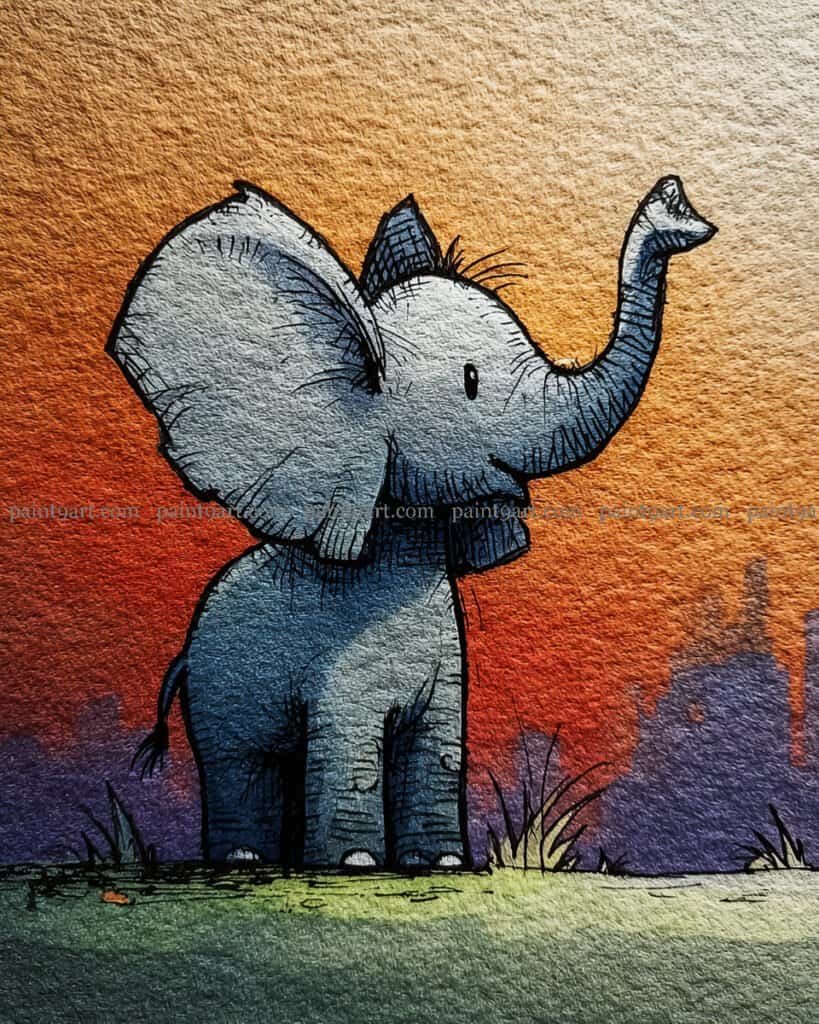
To paint this endearing scene, begin with a light pencil sketch followed by a waterproof fine-liner to define the elephant’s rounded body, large ears, and its playful, raised trunk.
Use a wet-on-wet technique for the expansive background, blending a warm golden yellow at the top into a deep, saturated orange and a moody violet at the base to create a dramatic sunset.
For the elephant, apply a variegated wash of cool blue and soft gray, using fine vertical ink hatching over the dry paint to suggest the wrinkled, leathery texture of its skin.
Build the grassy foreground with a simple wash of muted green and add a few sharp, vertical ink strokes for blades of grass to anchor the subject.
Finally, use a concentrated black for the small, joyful eye, leaving a tiny white highlight to bring the young elephant’s personality to life.
Recommended Pigment Palette
| Element | Recommended Pigments |
| Sunset Sky | New Gamboge, Cadmium Orange, and Dioxazine Purple for the vibrant, warm-to-cool sky gradient. |
| Elephant’s Body | Cerulean Blue mixed with Payne’s Gray for the cool, textured skin tones and shadows. |
| Foreground Grass | Sap Green mixed with a touch of Raw Umber for a natural, desaturated meadow base. |
| Distant Silhouettes | Ultramarine Violet (highly diluted) to create the soft, receding urban or mountain shapes in the background. |
| Ink Details | A waterproof Black fine-liner for all structural outlines, skin wrinkles, and the eye. |
Conclusion
Watercolor doesn’t always have to be serious or serene; sometimes, the best way to improve is by painting something that makes you laugh. We hope these funny farm animal ideas inspire you to pick up your brushes and embrace the “imperfect” side of art. Remember, the more personality you give your animals, the more memorable your paintings will be.