Have you ever wanted to create layered, delicate watercolor flowers but struggled with achieving real depth?
According to Love Letters to Milo, negative painting is the secret technique you’ve been missing. Instead of painting the flowers directly, you paint around them—allowing the shapes to emerge softly and naturally.
This method might look intimidating at first, but Love Letters to Milo will guide you through it with simple, beginner-friendly steps.
Grab your brushes, relax, and let’s begin creating a beautiful, layered floral watercolor piece together!
Essential Watercolor Supplies for Negative Painting
Before exploring the technique, it’s essential to have the right materials. Good supplies make a significant difference in how well layers blend and how vibrant the final painting becomes.
Best Watercolor Paper for Negative Painting
For negative painting, the artist uses Arches watercolor paper. It absorbs water evenly and prevents unwanted warping.
Cold-pressed paper works best because it offers just the right amount of texture to hold the paint while allowing smooth blending.
Lower-quality paper may cause washes to blend poorly or tear after multiple layers.
Using high-quality paper makes the entire process much easier.

Best Watercolor Paints and Brushes for Layering
For paints, the artist uses Winsor & Newton watercolors because they offer rich pigments and smooth blending.
Any professional-grade watercolor will work, but student-grade paints tend to be chalky and dull, so they are best avoided.
Brushes matter just as much. A fine-point brush is essential for painting around floral shapes. The artist uses:
- A number 9 brush for larger washes
- A number 4 brush for small details
A brush with a sharp tip makes it easier to control edges and define shapes in negative painting.

How to Prepare the Artist’s Workspace for Watercolor Painting
A clean and organized workspace makes the painting process smoother. Before starting, the artist:
- Fills two jars with clean water (one for rinsing, one for clean washes)
- Cuts Arches watercolor paper into a smaller, manageable size
- Keeps a kneaded eraser nearby to lighten sketch lines
- Arranges brushes and paints for easy access
With everything ready, it’s time to begin painting.

Step 1: Create the First Wash for a Smooth Watercolor Background
The first wash acts as the base of the painting. It should be soft, even, and light enough for subsequent layers to stand out.
How to Properly Wet the Artist’s Paper Before Painting
The artist wets the entire paper with a clean brush and clear water. This helps the paint spread smoothly and prevents harsh edges.
The paper should not be oversaturated—too much water can cause uneven drying.

Best Color Combinations for a Warm Watercolor Base Layer
For this floral piece, the artist uses a soft peachy-orange wash created by mixing a small amount of orange and pink.
The layer is applied lightly to keep it delicate for future layers.
Once dry, it’s time to sketch the first layer of flowers.

Step 2: Sketch the First Layer of Flowers for Negative Painting
These first flowers will remain the lightest shapes in the entire painting.
How to Draw Simple Five-Petal Flowers for Layering
Using a mechanical pencil, the artist sketches simple five-petal flowers, varying sizes and positions for a natural look.
These shapes will stay unpainted, so they must be clearly defined.

Why the Artist Should Lighten Pencil Marks Before Painting
A kneaded eraser is gently used to soften dark lines, preventing them from showing through the final painting.
This helps the flowers blend seamlessly with the layers.
Use a kneaded eraser to lift dark lines

Step 3: Negative Painting the Second Layer of Flowers
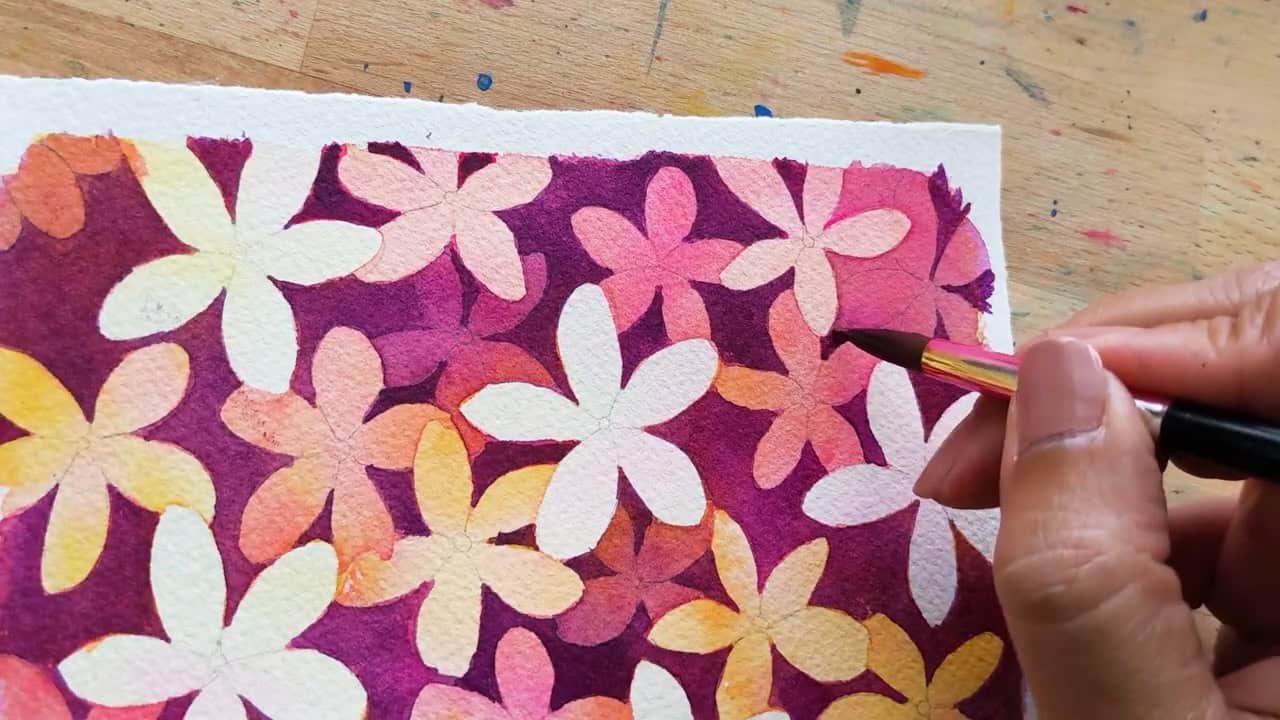
Negative painting involves painting around the flowers rather than inside them, helping the shapes stand out.
How to Paint Around the First Layer of Flowers
For this step, the artist mixes Cadmium yellow and pink, painting carefully around the first layer of flowers.
This contrast helps the shapes pop against the background.

Paint around the first layer of flowers
How to Add Tonal Variations Without Making Muddy Colors
The second layer is kept slightly darker but still soft. The artist allows colors to blend naturally without overworking them.
Small touches of extra yellow and pink create an organic look.
After this layer dries, it’s time to build more depth.

Step 4: Add a Third Layer for More Depth in Watercolor Flowers
This step introduces additional flowers and deeper shadows.
How to Sketch Over the Second Layer for a 3D Effect
The artist lightly sketches new five-petal flowers, placing some underneath the first ones to create layered depth.
The goal is to fill empty spaces while keeping the composition balanced.
 Sketch the second layer
The Best Way to Introduce Darker Shades for More Contrast
Pink and purple are mixed to deepen the wash. Painting around the new flowers enhances contrast, making earlier layers appear brighter.
Careful attention ensures each shape remains well-defined.

Step 5: Refine Details with the Final Layer of Negative Painting
This final stage adds fine details and strong contrast, completing the floral design.
How to Paint the Smallest and Deepest Negative Spaces
The artist switches to a number 4 brush to paint the tiniest gaps between petals. This produces crisp edges and refined shapes.

Final Touches: How to Fix Mistakes and Enhance Petal Edges
Any rough edges or uneven shapes are corrected with a slightly darker shade.
This brings the whole piece together and creates a polished finish.

In A Nutshell
Negative painting is a beautiful way to create depth in watercolor art. By layering washes and painting around the subject rather than inside it, artists can achieve striking floral results.
This guide aims to help beginners and experienced painters feel more confident with the technique.
Have others tried negative painting before? They are welcome to share their experience in the comments.
If they enjoyed this tutorial, sharing it with fellow artists is always appreciated.