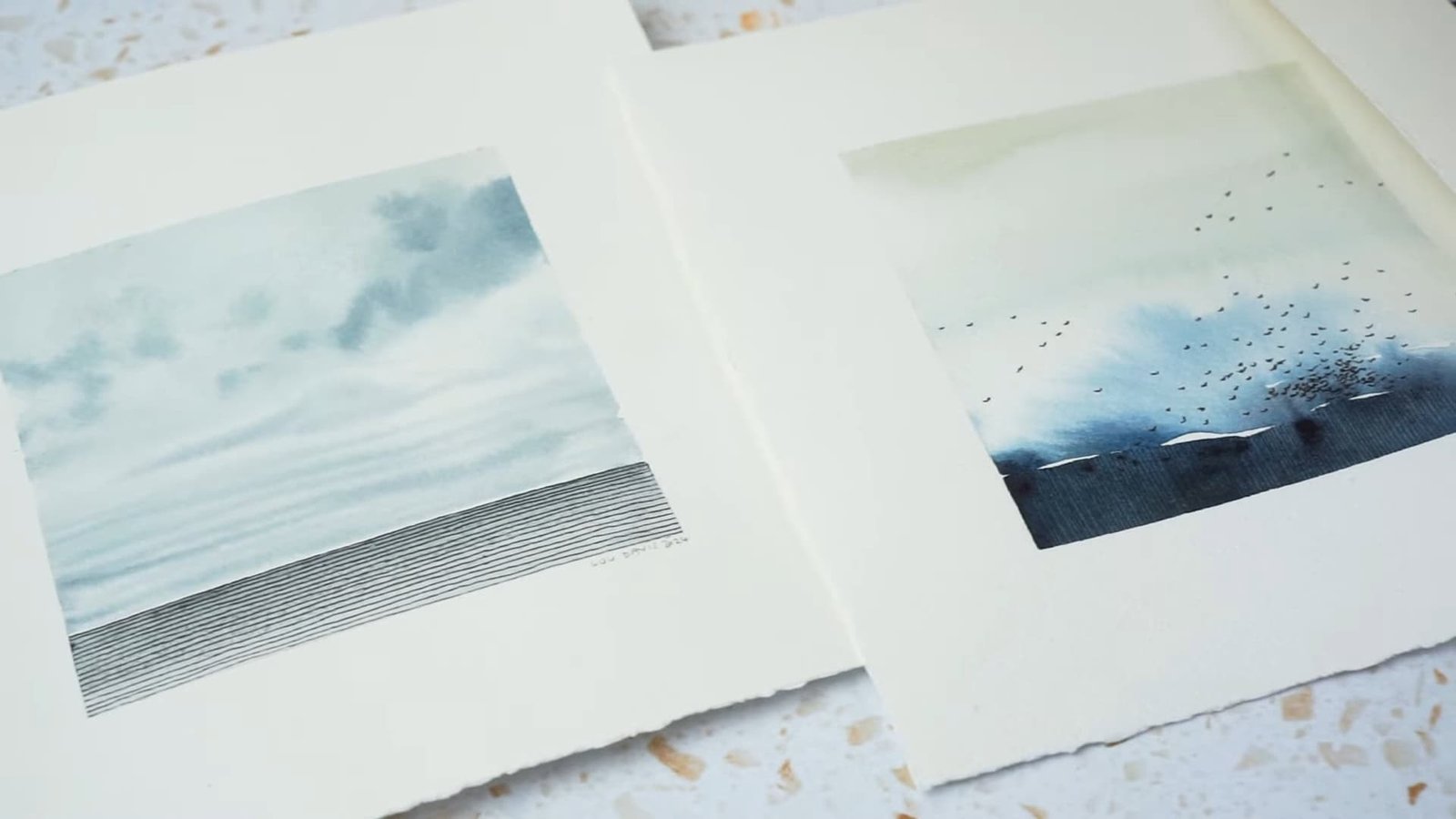
Looking for a peaceful painting session? Lou Davis loves creating three calming landscapes using watercolor and pen. These pieces are simple, relaxing, and filled with soft, gentle details.
The artist uses just a few colors and tools, guiding readers step by step so they can easily follow along. It’s an invitation to slow down and enjoy a quiet, creative moment.
Contents
Landscape 1: Deep Indigo Sea with Gannet Colony
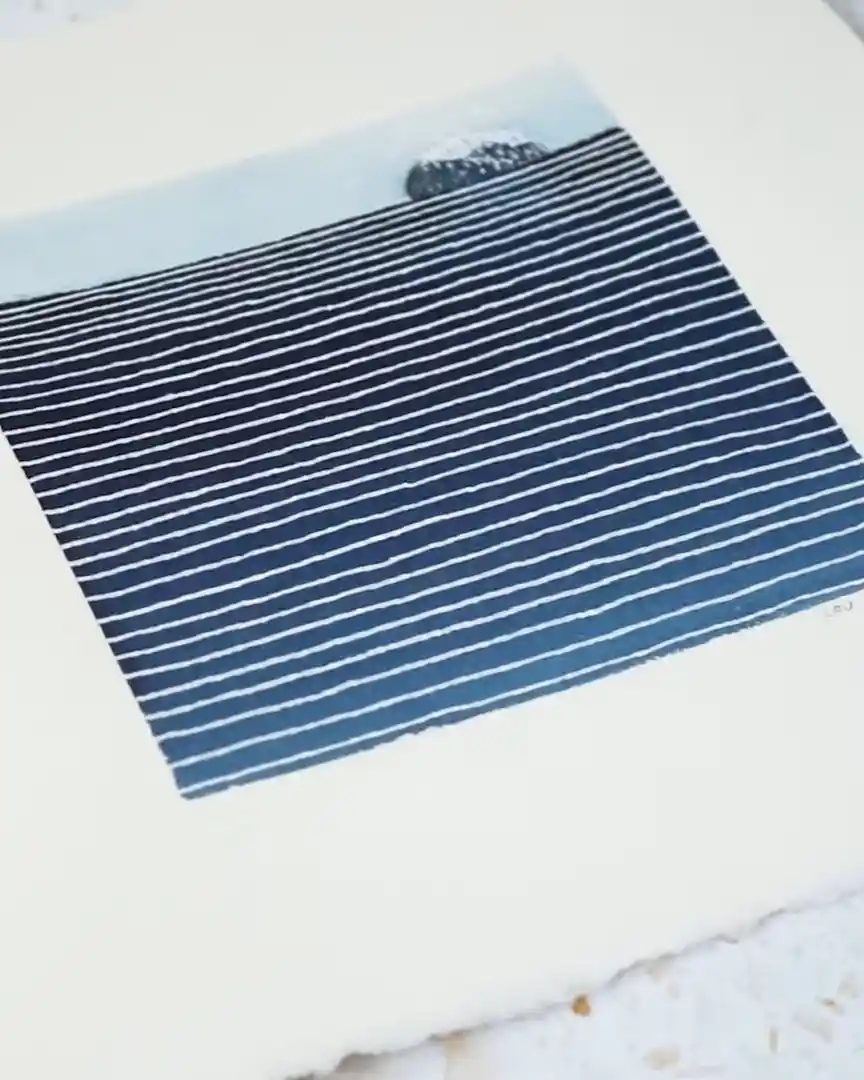
This first painting is all about the sea. The artist uses a rich indigo color and lets it build in layers. The artist enjoys how the water flows and creates soft effects. The best part: a surprising shape turns into a little gannet colony.
Painting the Ocean with Indigo
The artist starts by taping off the area on cotton watercolor paper. The cotton paper provides more working time with water. It holds the paint better, especially when water is added.
For this painting, the artist loads the brush with Indigo—quite a bit—and mixes it with water. Painting begins at the top, right on the horizon. The brush moves back and forth across the page.
The motion is repeated. The artist paints from the horizon and pulls the color down toward the bottom.
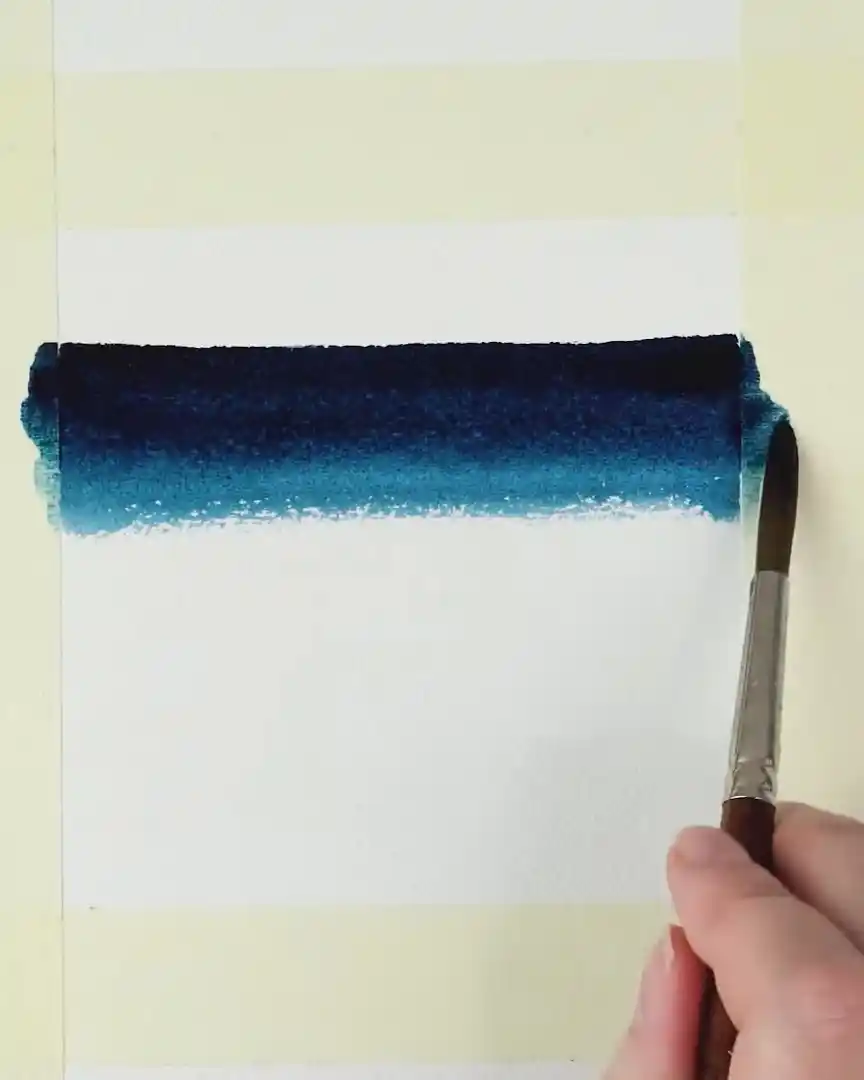
As the work continues, the brush begins to move like ocean waves—soft, repetitive strokes. The top of the page becomes rich and deep in color. While still wet, the pigment settles in.
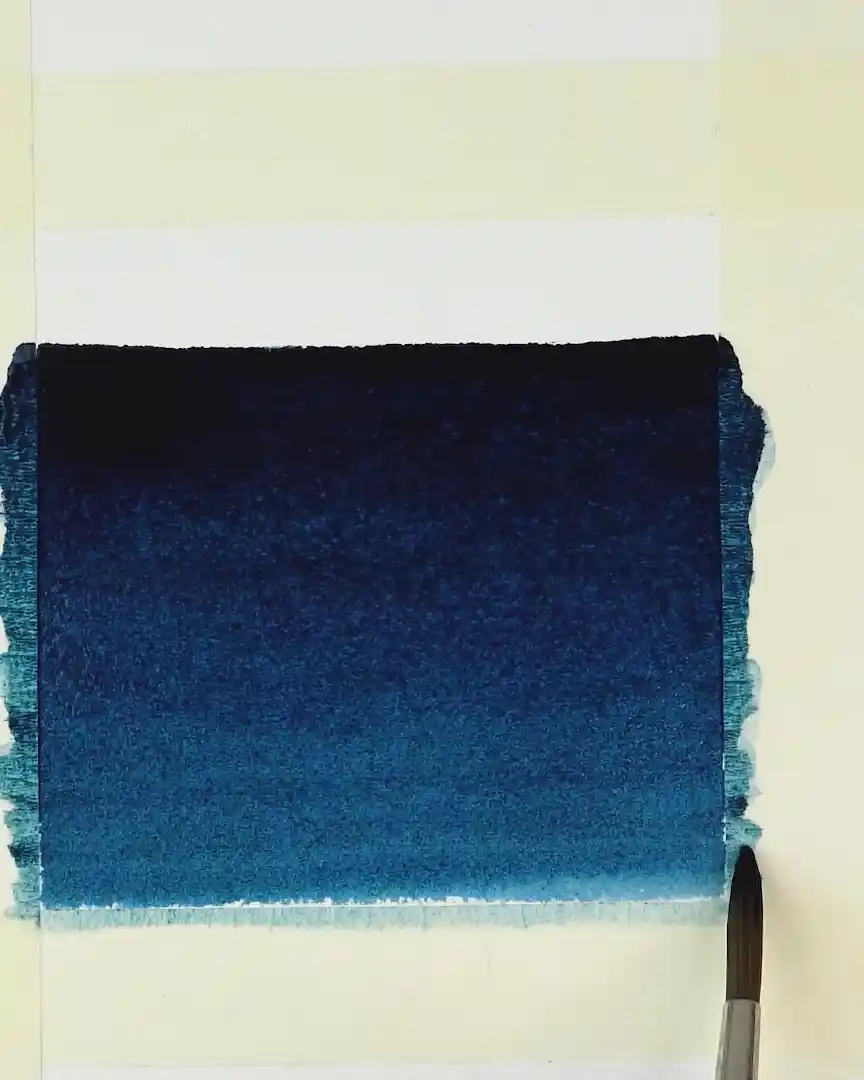
As the brush moves downward, the color fades. The artist could leave that dry-brush effect at the bottom—it looks like light hitting the waves. But the goal is full color from top to bottom.
So, the artist makes a few more passes with the brush and blends the color all the way down.
Adding Sky and an Unexpected Rock
Now, without fully cleaning the brush, the artist dips it into water. There is still a bit of Indigo on the bristles. The artist swipes it across the top to form the sky, bringing it close to the sea and allowing the two to touch in a few places.
This part is unpredictable. Sometimes, the sea flows into the sky; other times, the sky flows into the sea. The artist leaves it as is and lets it dry.
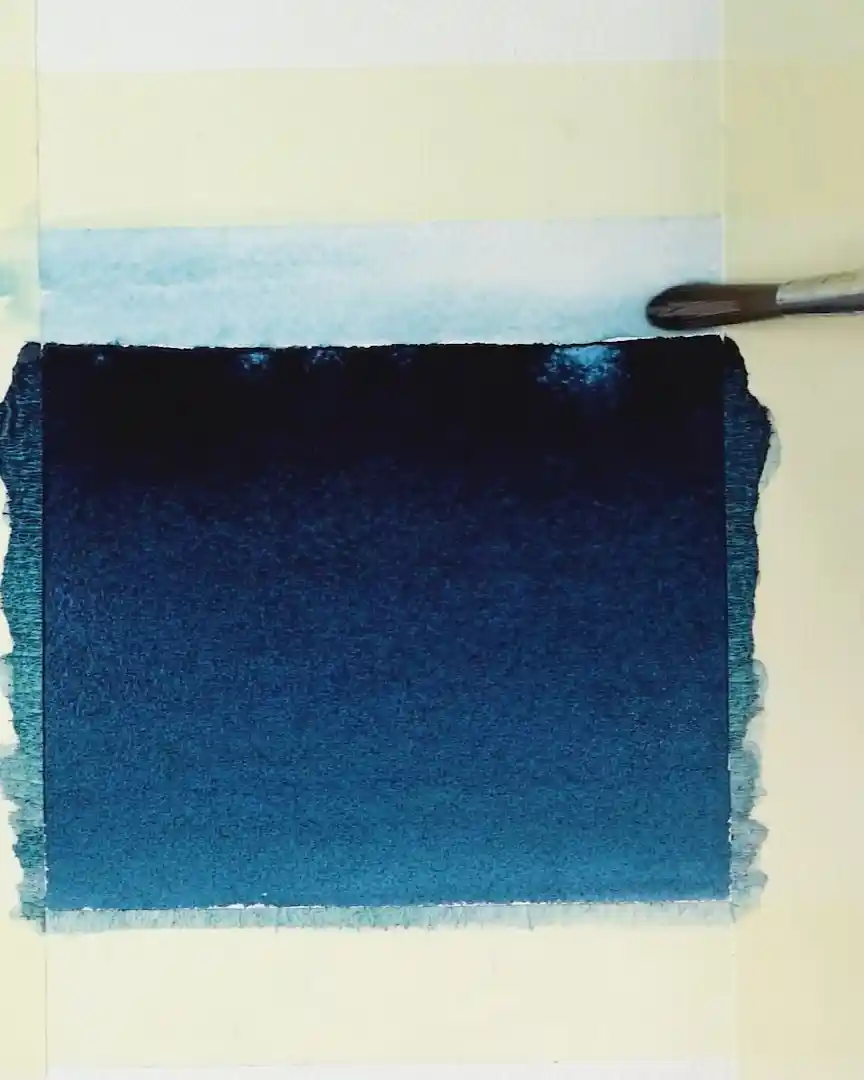
Once dry, a pleasant surprise appears: a bleed where the sea and sky meet forms a shape resembling Bass Rock—a real rock formation off the coast of Edinburgh, famous for its gannet colony.
The artist uses a white Posca marker to draw on top of the shape, making the top of the rock white, just like how gannets cover it in real life.

A black pen is used to darken the sides, giving the rock more shape, similar to the cliffs seen on Bass Rock.
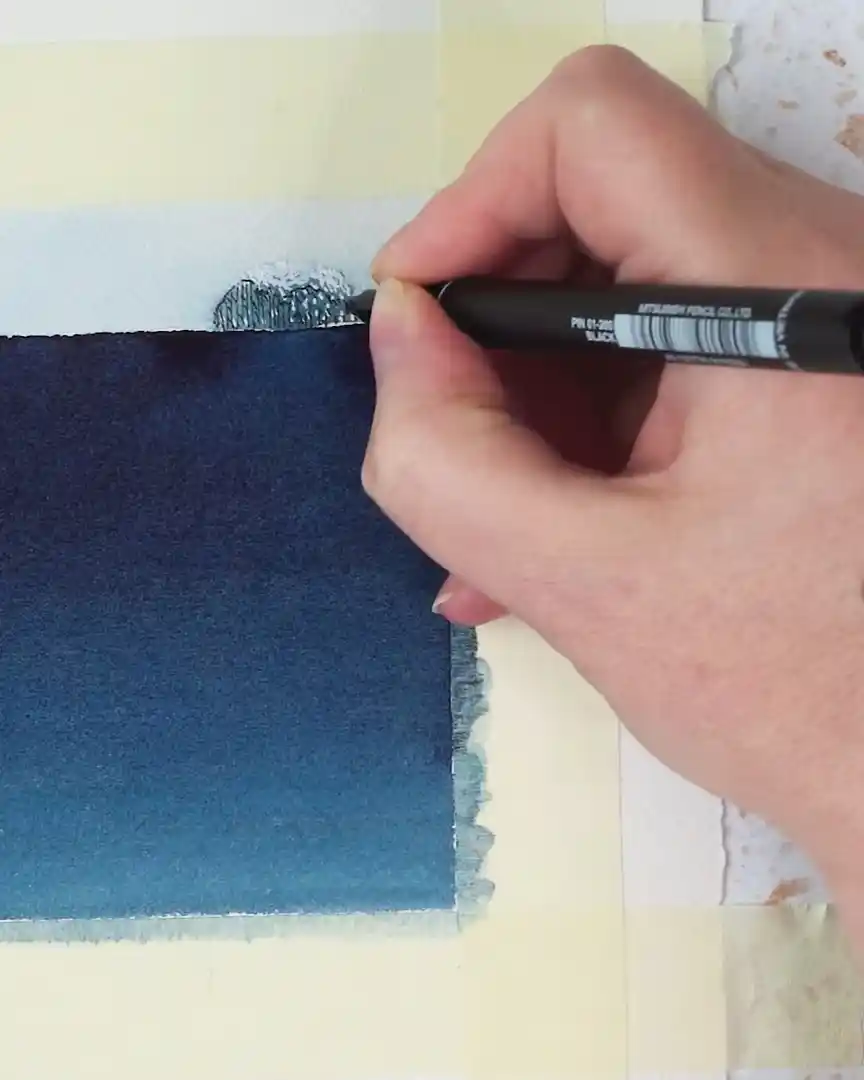
Drawing Lines and Finishing with Flying Birds
Next, the artist begins adding lines to the sea. A straight line is drawn across the horizon. A ruler is used at first, but then the artist goes back over the line by hand to avoid a perfectly mechanical look.
More white lines are added under the horizon, one at a time. Small gaps are left between them, and the spacing slowly increases down the page. It becomes a slow and steady process.
These lines aren’t perfect—some wiggle, some are closer than others. But that’s acceptable. The sea was painted dark so the white lines would pop. The contrast works well.
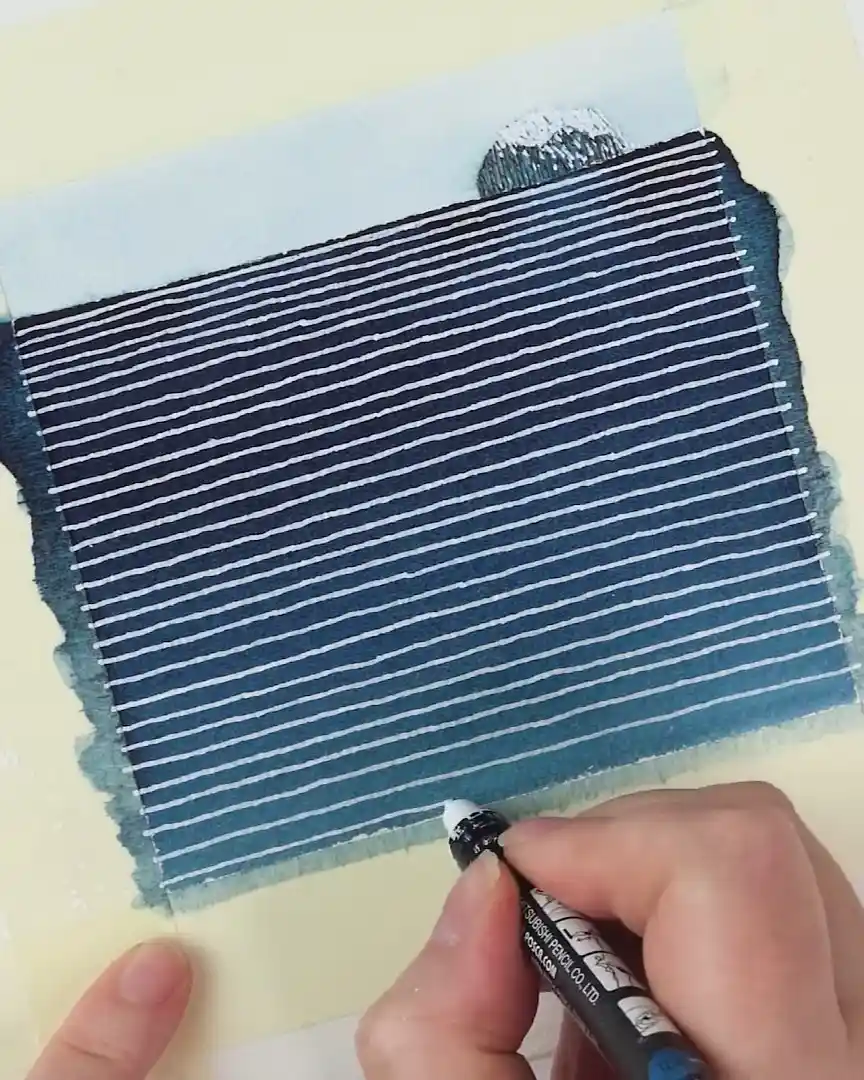 Draw lines on the sea
To finish, the artist draws a few tiny white “V” shapes in the sky. These little birds represent gannets in flight. They add movement to the scene and visually echo the colony on the rock.
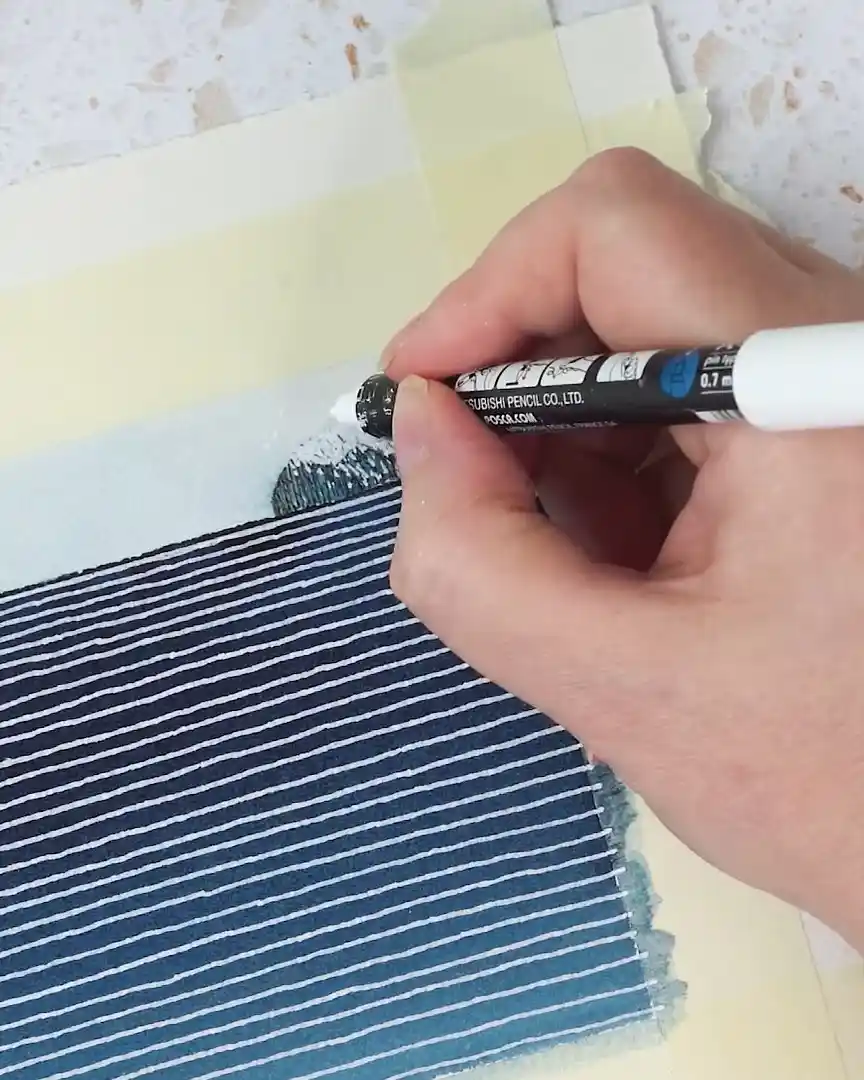
The artist appreciates how the shapes and lines came together—some planned, some unexpected.
Landscape 2: Gathering Geese over Hills
This second painting focuses on the sky. The artist wants to capture the feeling of wide open space and the moment when geese gathered overhead during a walk.
Starting with Sky and Land
The artist begins by painting a small patch of land at the bottom of the paper. Most of the piece will be the sky. A greenish-grey color is used and painted into the land.
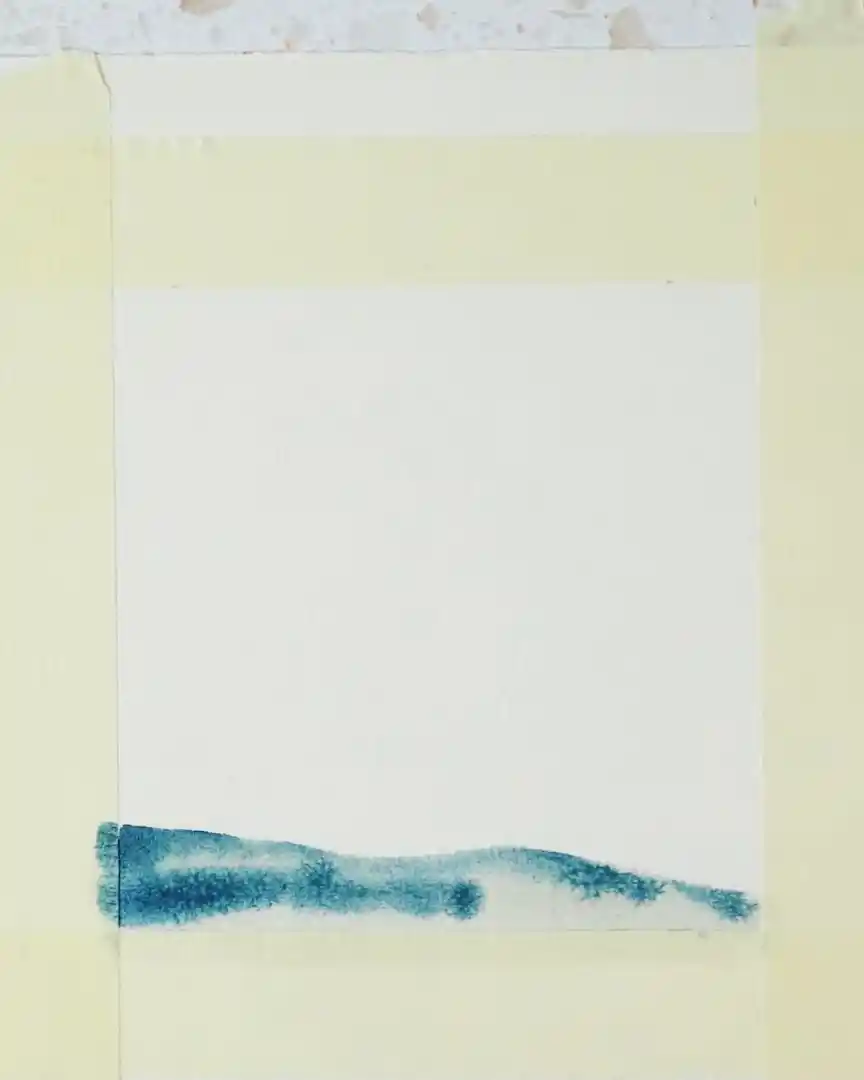
While still wet, some Indigo is added to deepen a few areas.
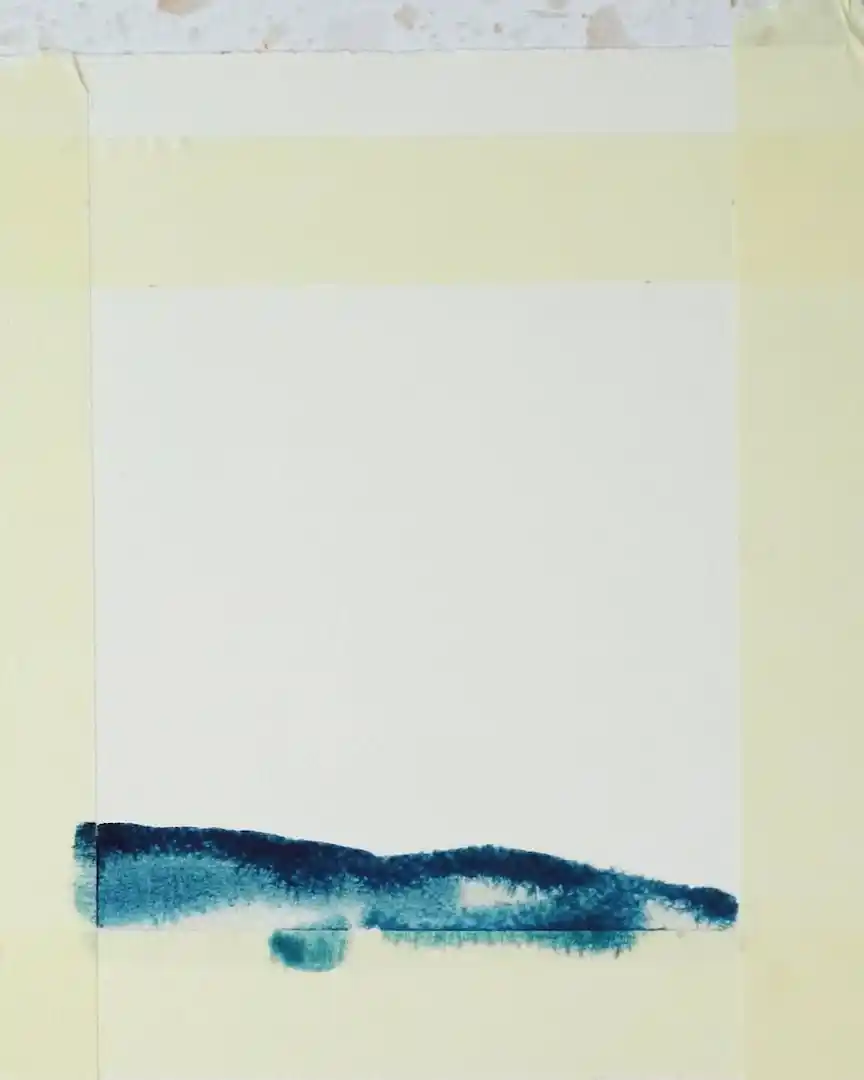
Then, the greenish-grey color is pulled upward into the sky. The artist washes it across the top of the paper and adds streaks of color. The brush moves back and forth between paint and water, letting the sky wash down toward the land.
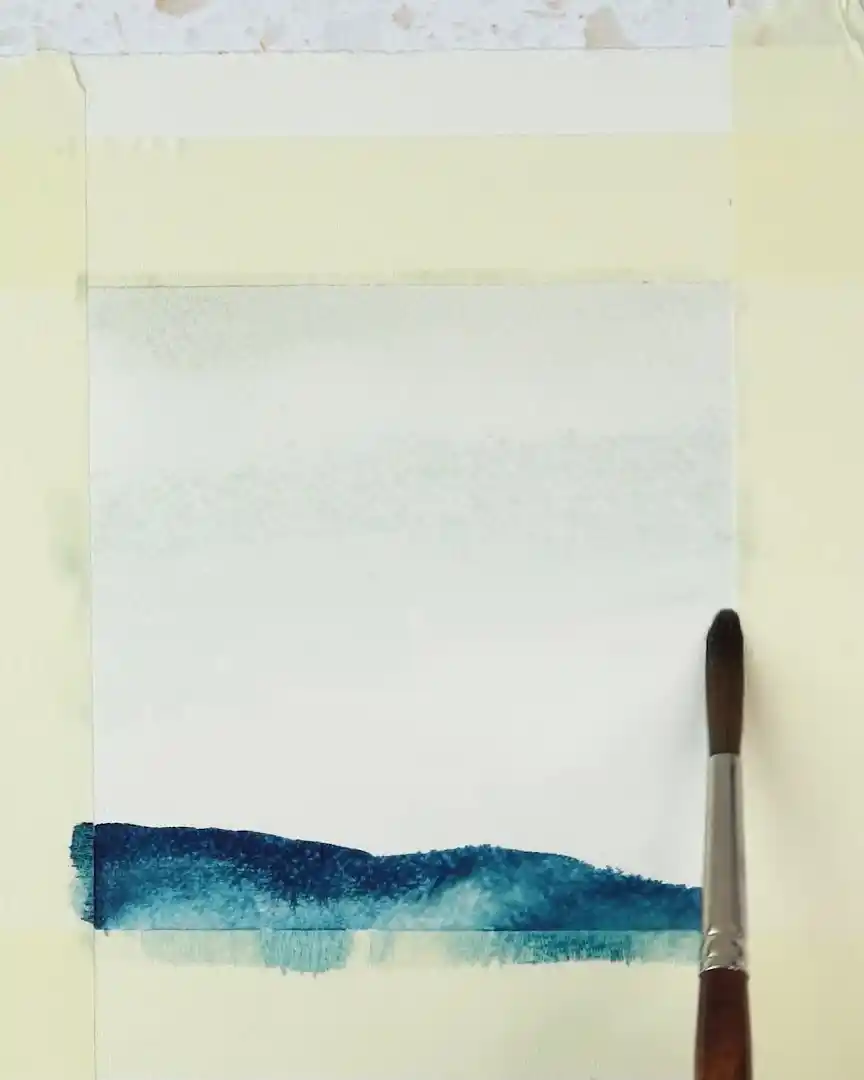
The artist ensures the sky and land touch in a few places so the wet paint flows together and creates soft edges. Small white gaps are intentionally left as well.
This helps define the top of the hill and keeps a clear line between land and sky.
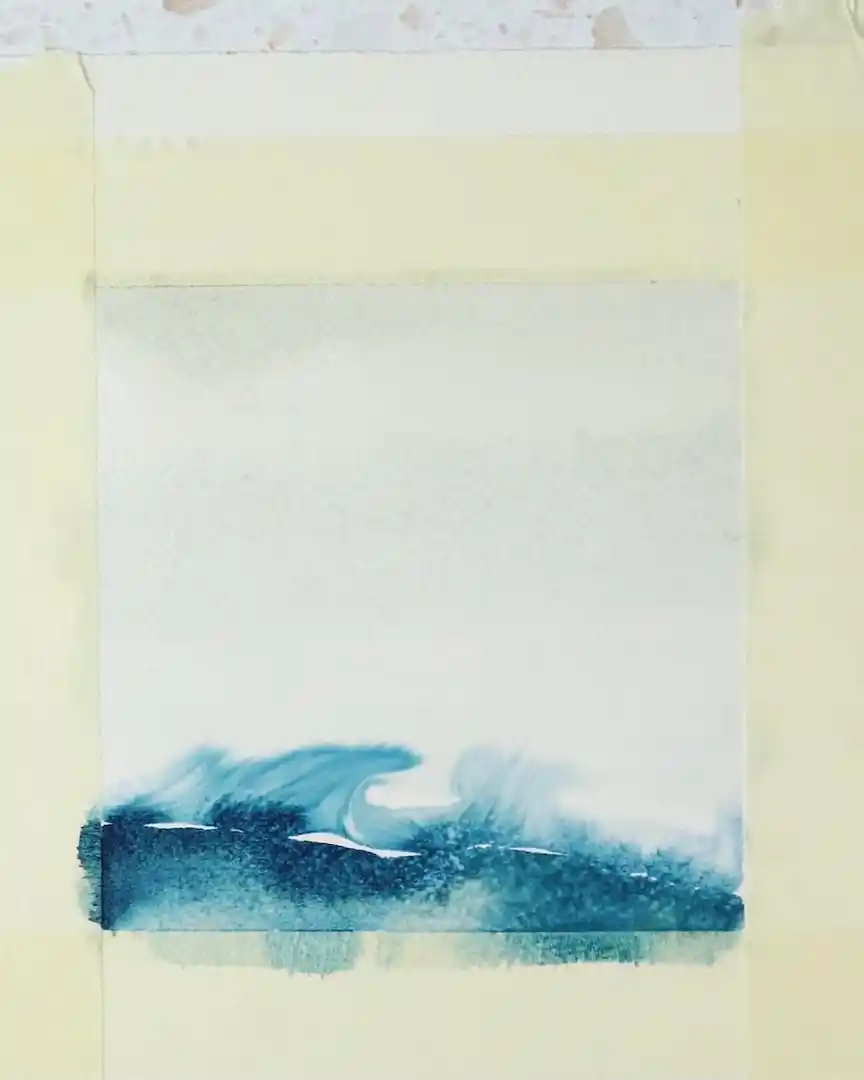
Adding Depth and Drawing Details
To darken the land, a little Payne’s Grey is dropped in while the paint is still wet. The goal is for the land to be deeper in tone than the sky.
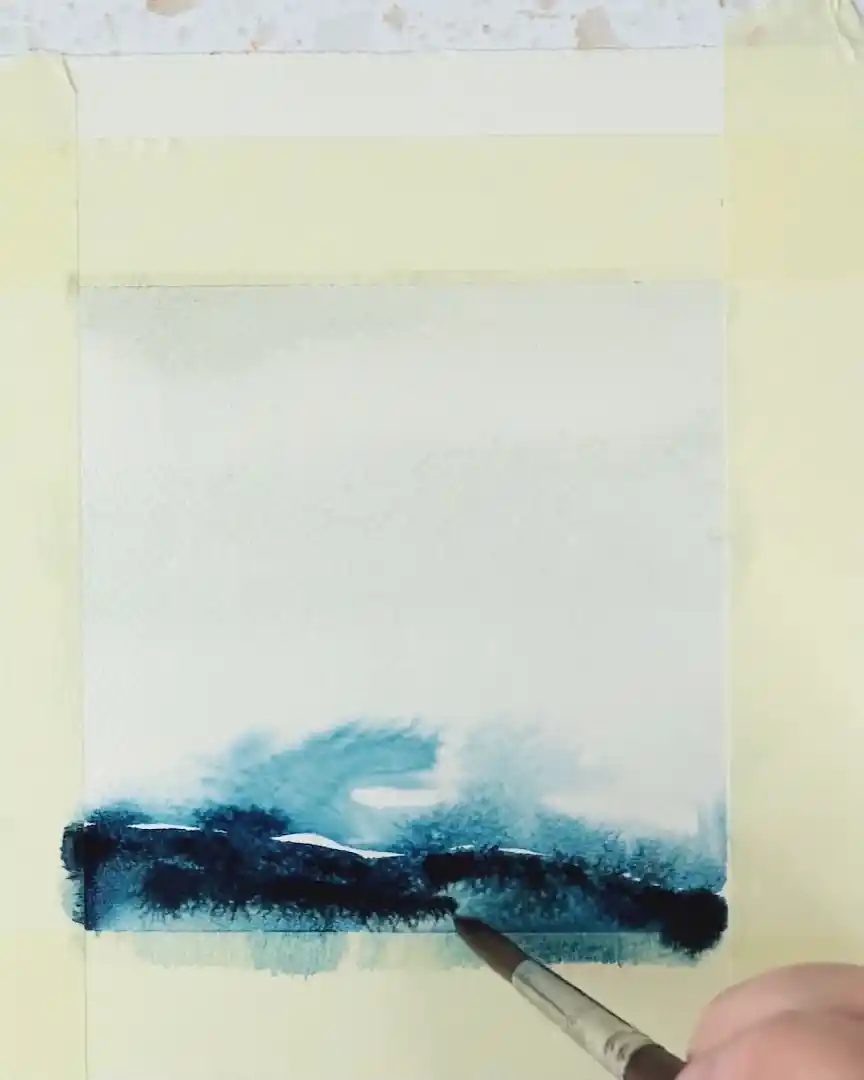
The artist also touches more water into the sky in places to help the paint move.
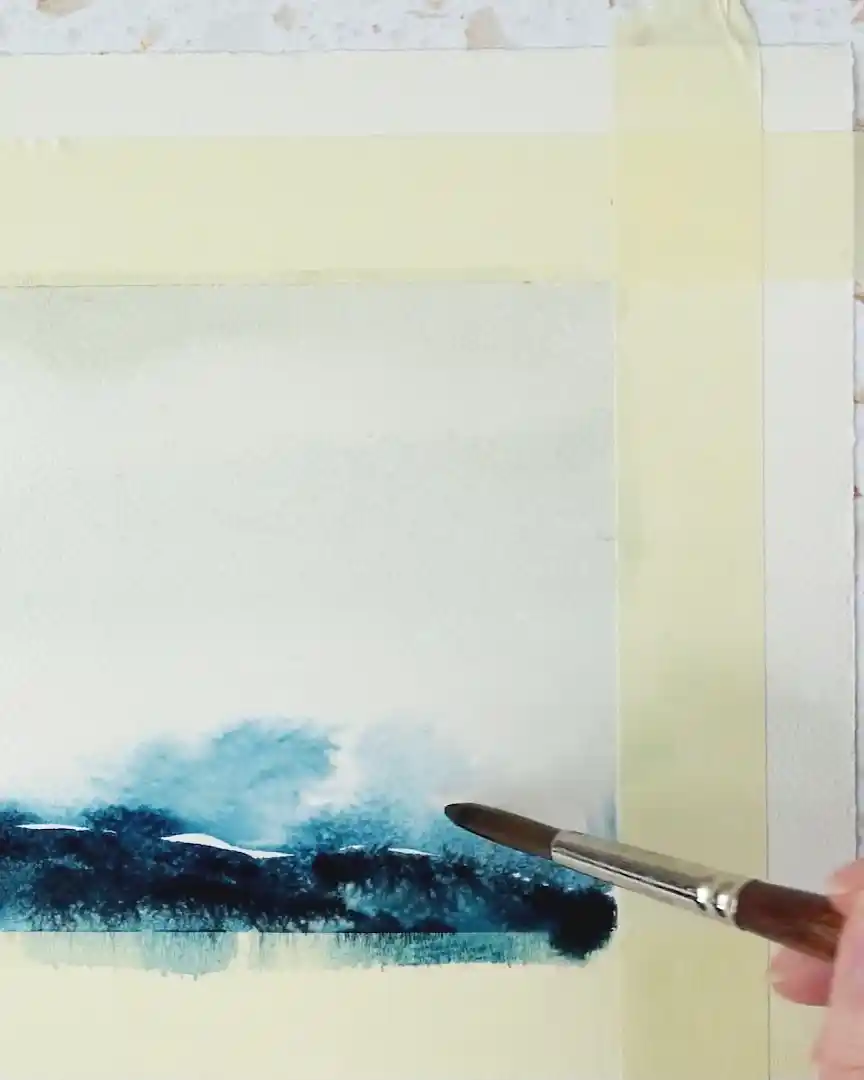
It takes some time to dry. Once it’s dry, the artist goes in with a fine-liner pen. Simple vertical stripes are drawn from the top of the land to the bottom.
The artist does it quickly, so the lines are uneven—some close together, others farther apart. The artist likes that. The hand-drawn lines give the painting a natural feel.
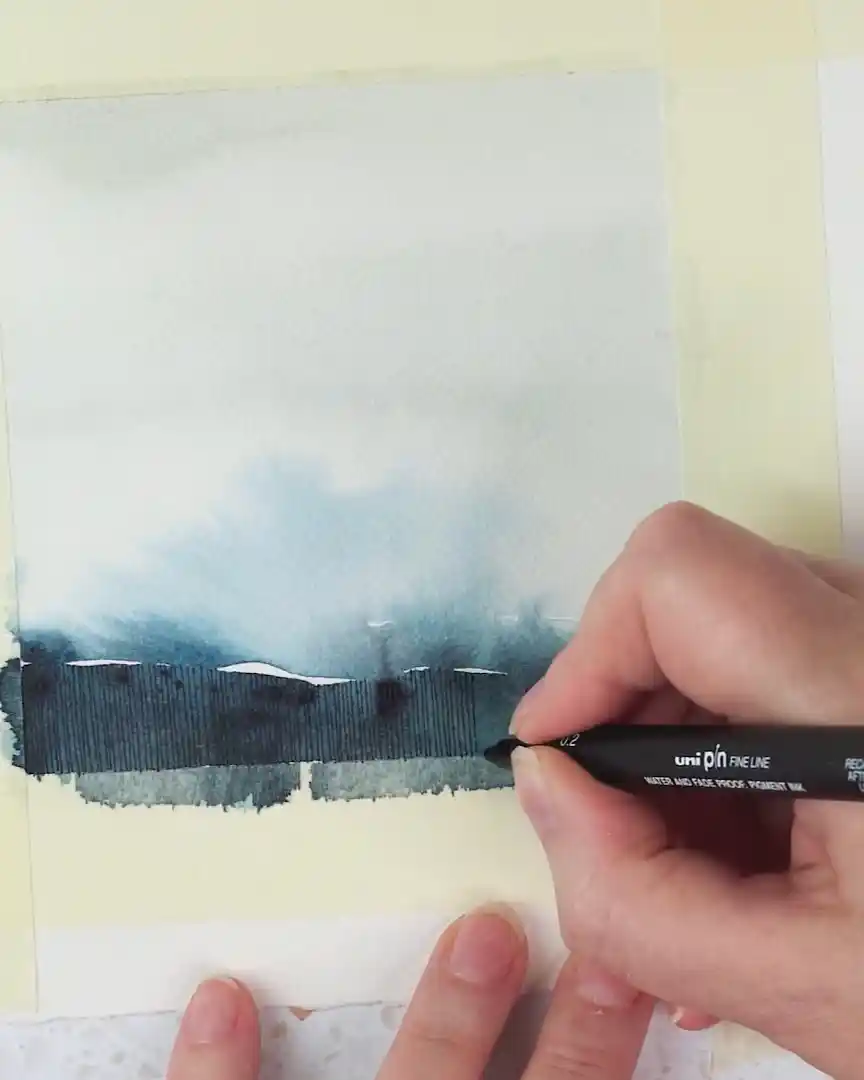
Drawing the Geese in the Sky
This painting is inspired by a real moment. The artist remembers driving to Linlithgow one day and seeing flocks of geese flying in V shapes through the sky. The artist thought they might be heading south, but they were going north.
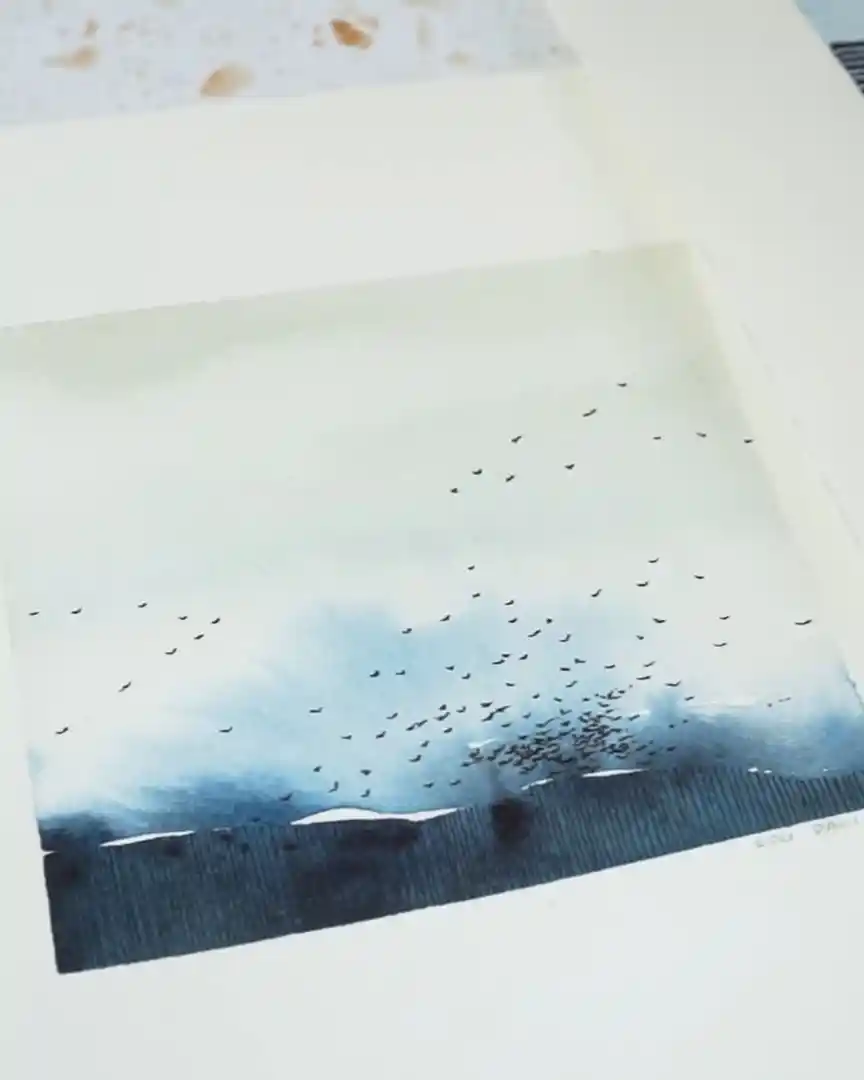
Later that day, hundreds of geese gathered at the loch—grey-legged geese, most likely. They circled above the hills. It was an amazing sight.
To capture that feeling, the artist draws tiny marks in the sky. One V of birds is added, then another, then another. The artist keeps adding them, just like on that day.
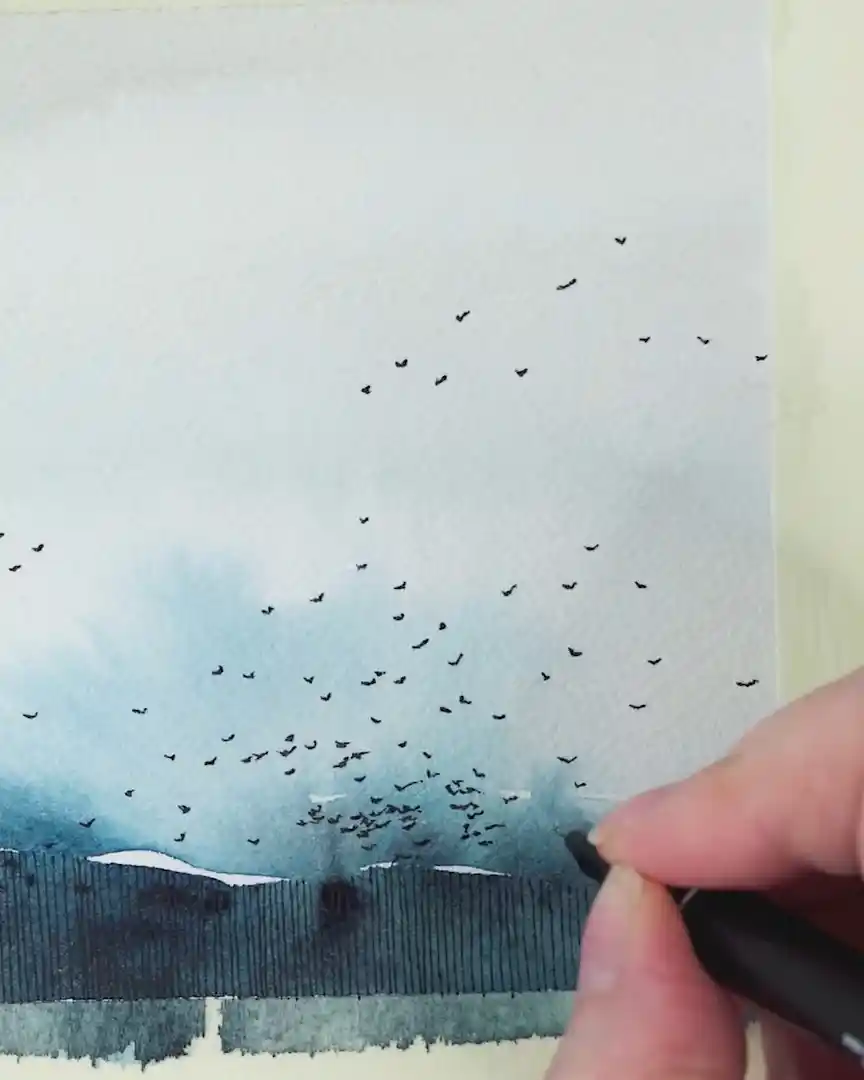
It takes a while, but the artist wants to recreate the sight of them all arriving together—this great gathering of geese in the sky.
Landscape 3: Minimalist Sea and Sky
For this last painting, the artist returns to the calm beauty of the sea and sky. This time, everything is kept very simple and quiet.
Soft Sea with a Gentle Grey Wash
The artist begins with a pencil line for the horizon, using a ruler to keep it straight. This painting uses just a very light wash of grey across the sea.
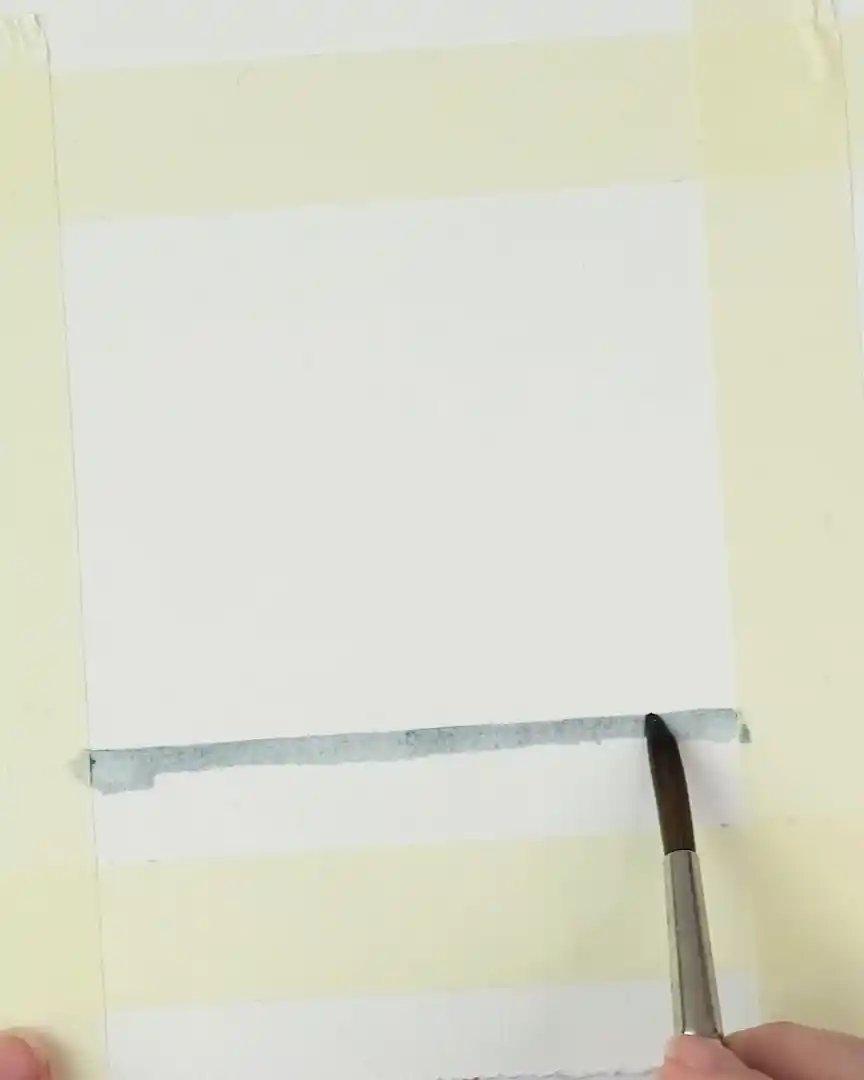
The paint is a mix of leftover colors from the palette—mainly greens and greys. A touch of Hematite Genuine, a gritty black, is added.
It gives the wash a soft texture—just enough interest without losing the minimal feel.
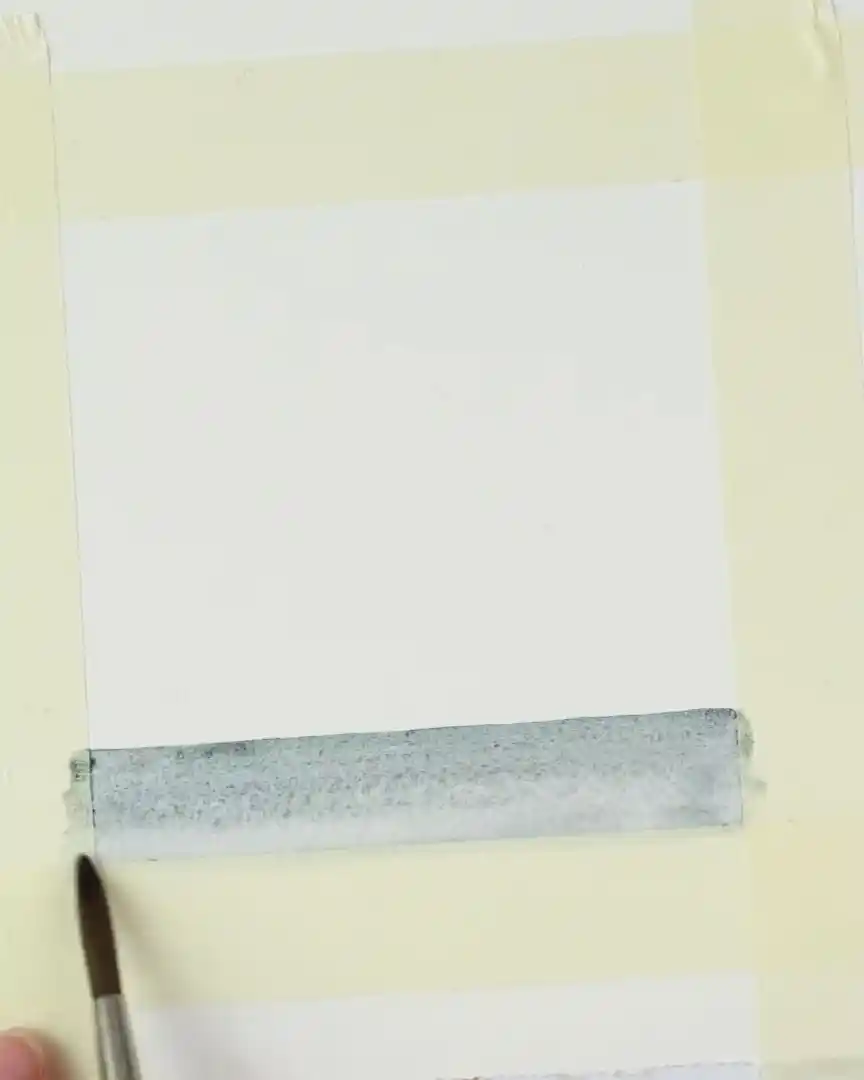 Add a touch of Hematite Genuine
Creating Subtle Clouds in the Sky
The sky is where the artist brings in a bit more movement. Work begins with a pale greeny-blue wash—again, leftover paint with plenty of water.
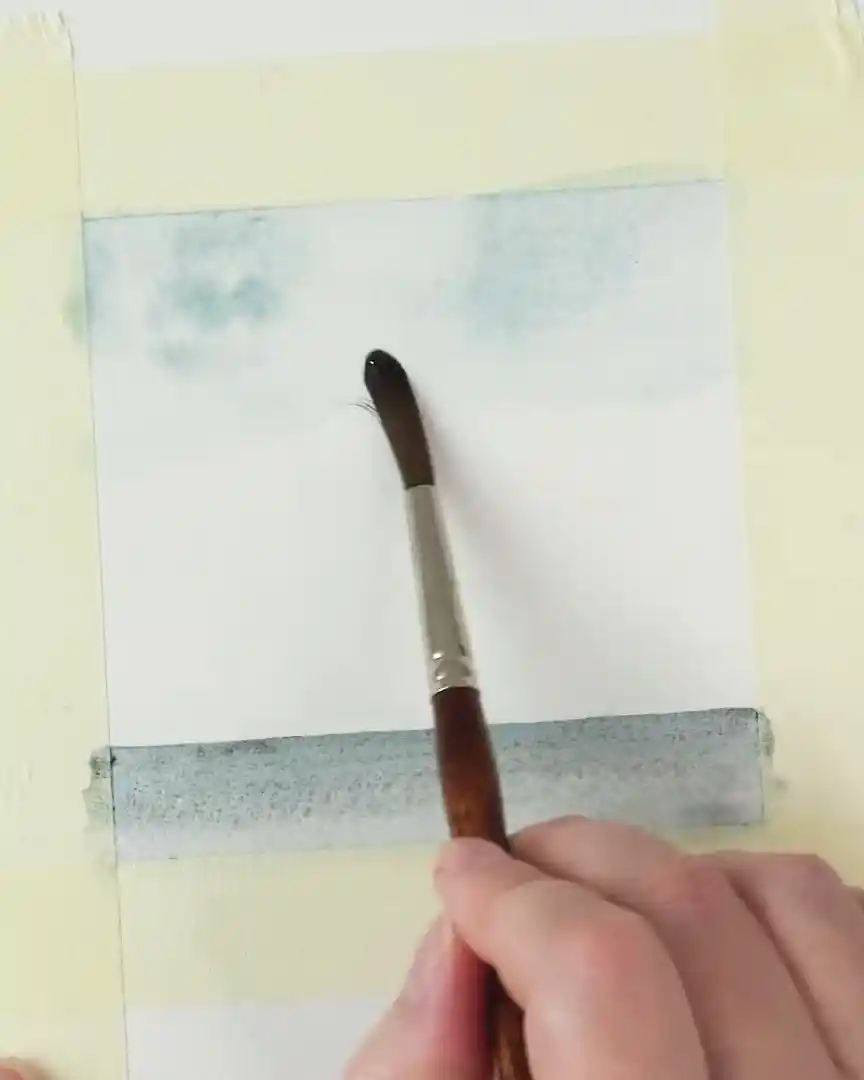
Then darker tones are added using Payne’s Grey.
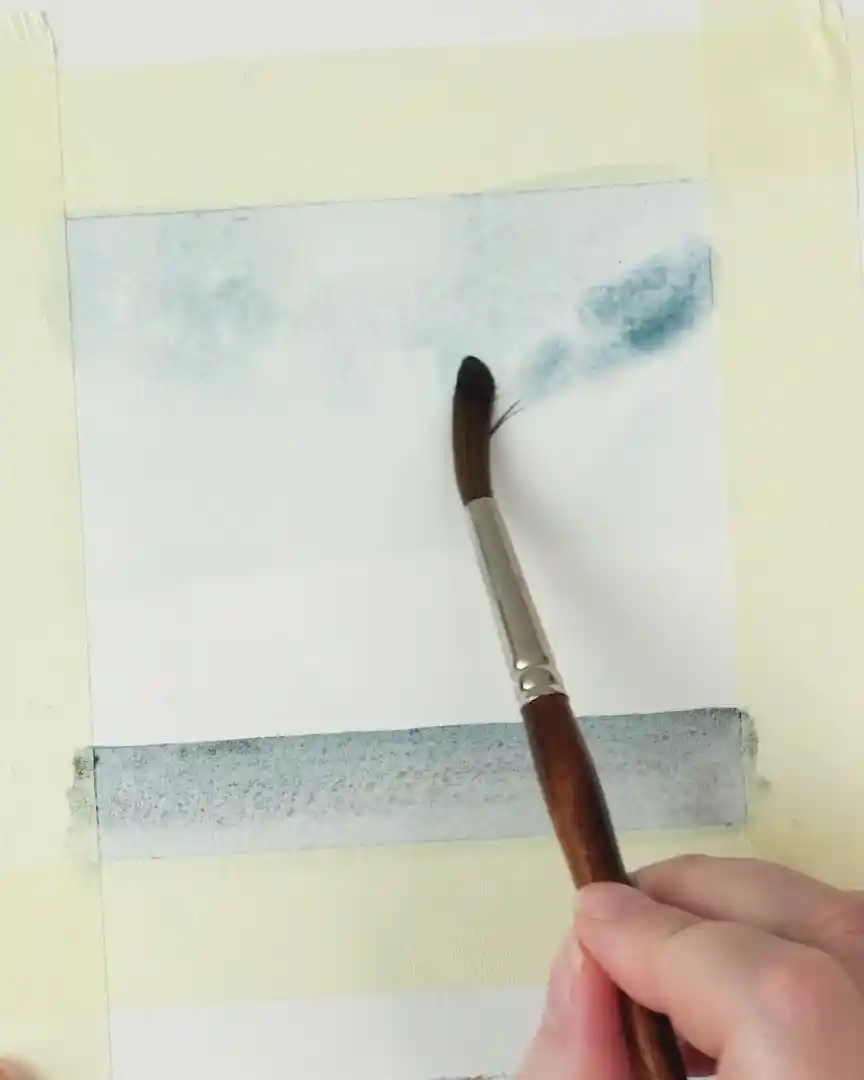
In the top half of the sky, the brush is wiggled to create soft, fluffy shapes—clouds that feel close overhead.
In the lower sky, long thin streaks are painted to suggest distance and mimic far-off clouds stretched along the horizon.
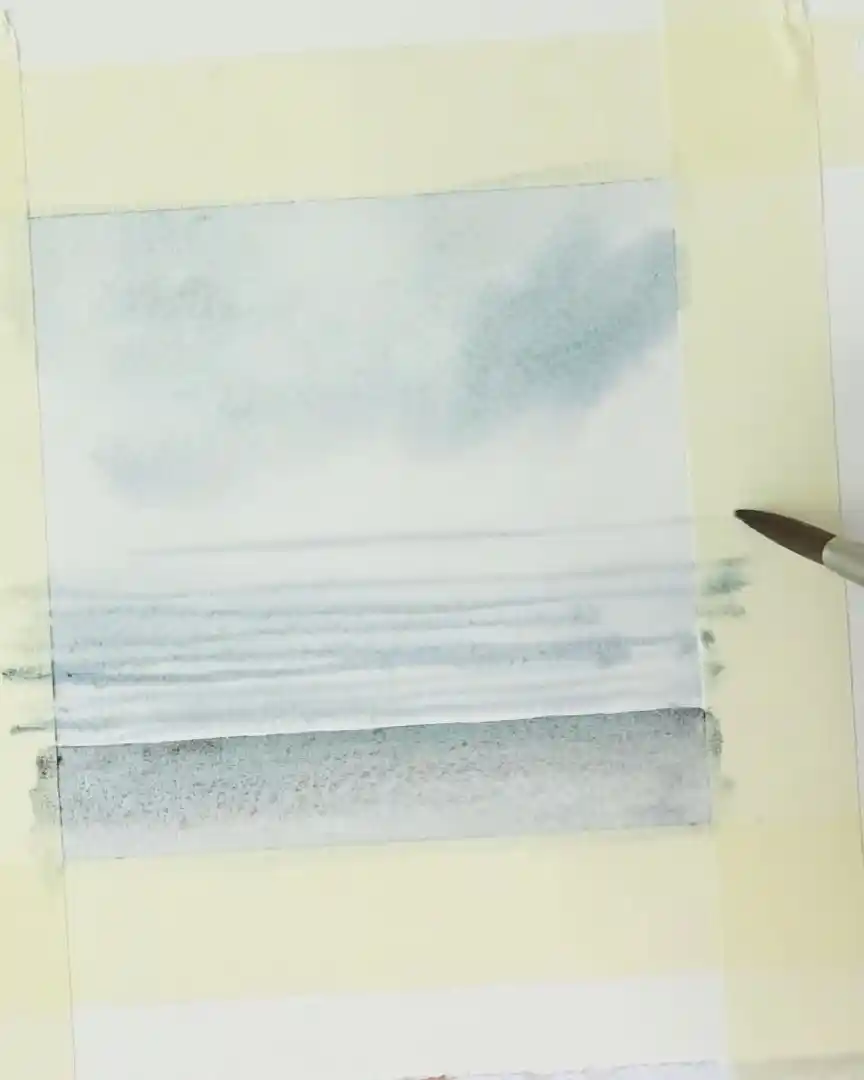
The artist keeps layering while the sky is still wet. As the brush moves upward, more wiggles and dark patches create a slightly stormy feel in the upper clouds.
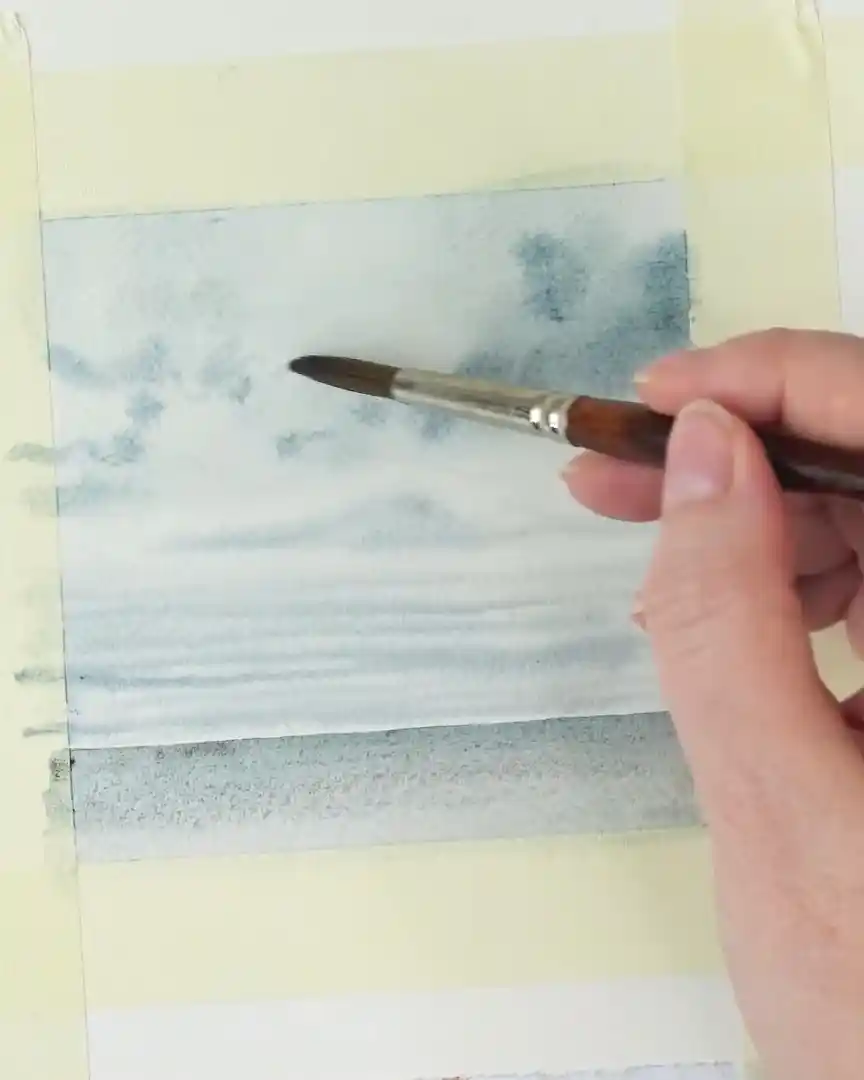
Simple Pen Lines for a Clean Finish
To finish, the artist uses a fine-liner pen to draw simple lines across the sea.
- A straight line is drawn across the horizon.
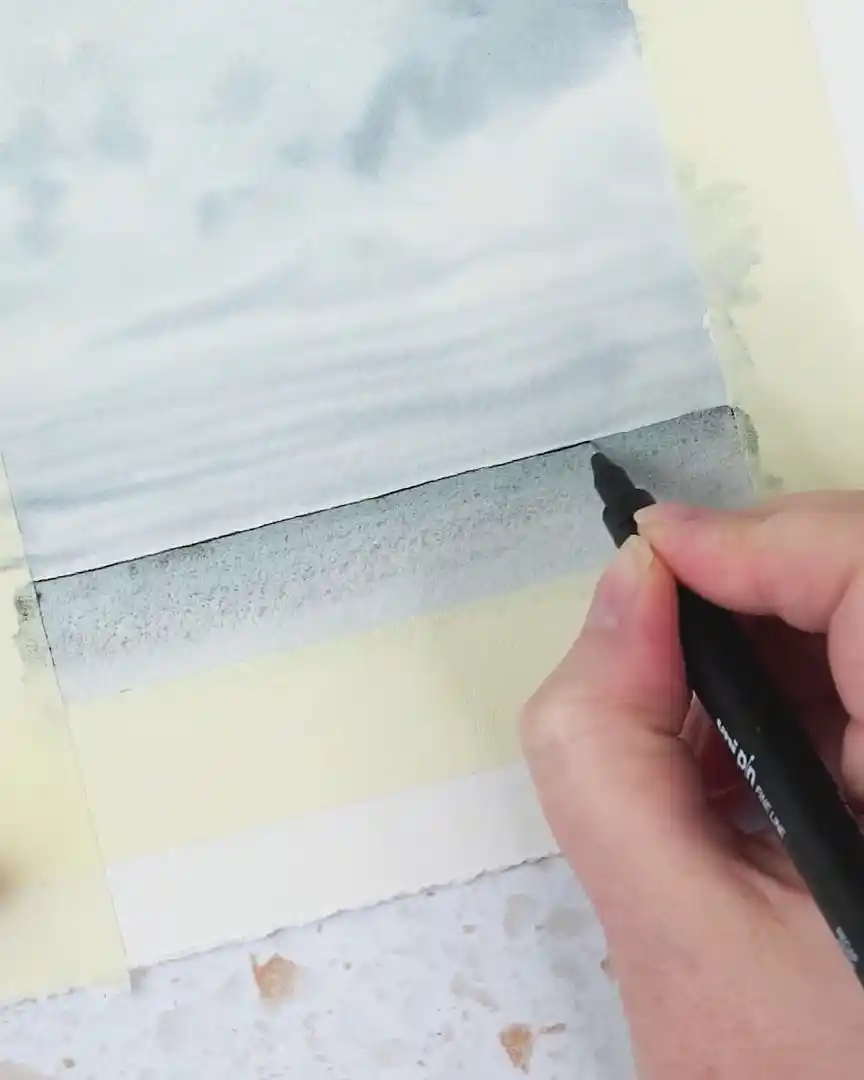
- Then several more lines are added below it, all hand-drawn and slightly wobbly.
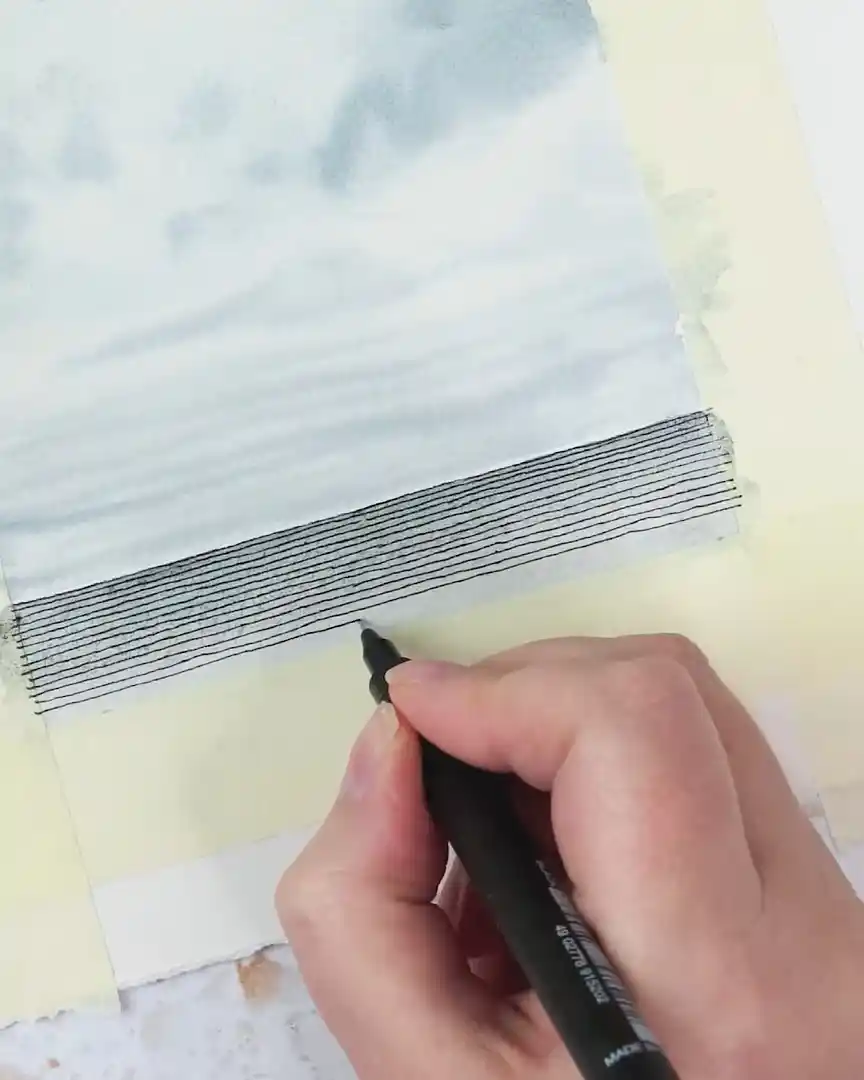
- Gaps in the lines are perfectly fine—they add to the handmade feel.
The artist thinks about adding birds, like in earlier paintings, but decides not to. Stillness and space feel right here.
The clean white borders help emphasize the calm mood. The tape has done its job well, leaving neat edges. The artist carefully peels it back to avoid tearing the paper. And that’s it—a quiet, minimalist sea and sky.
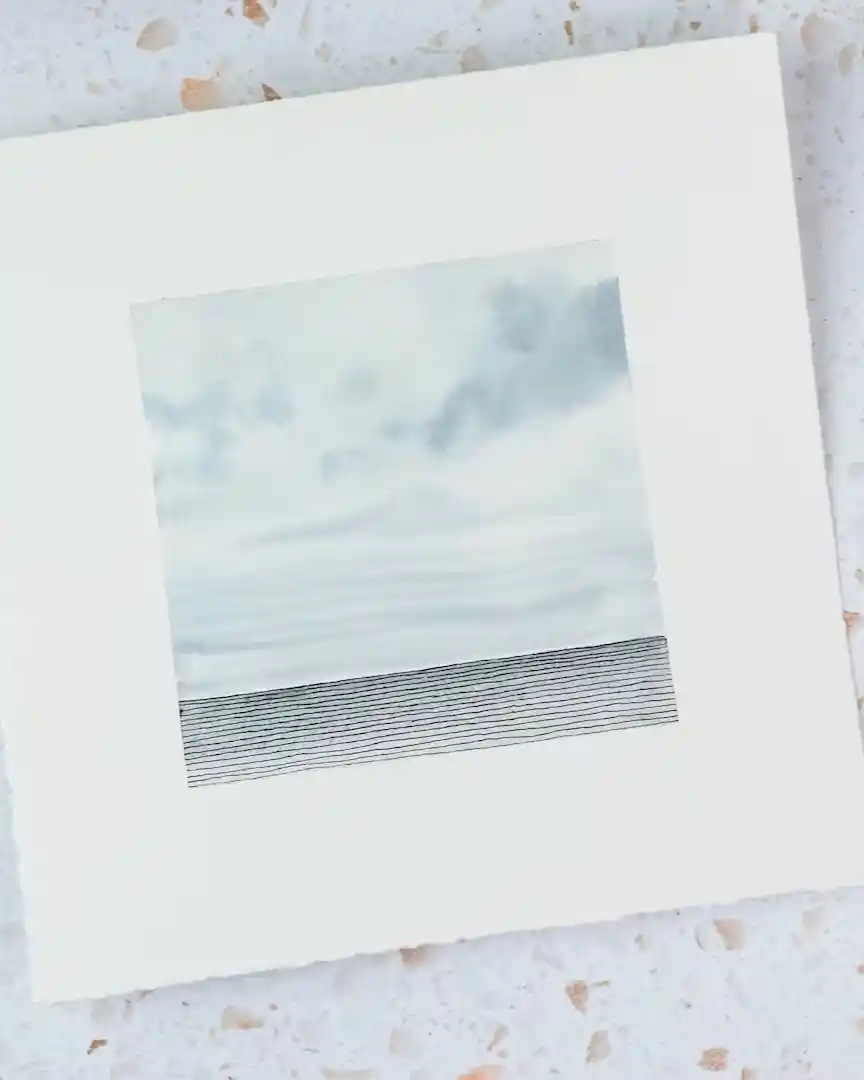 Minimalist sea and sky landscape
Wrapping Up
These three little landscapes make the artist happy. Each one expresses a different mood using watercolor and simple pen marks. Perfection is not the goal—the artist enjoys the process.
Let the paint flow, draw freely, and let imagination turn simple shapes into something special.