
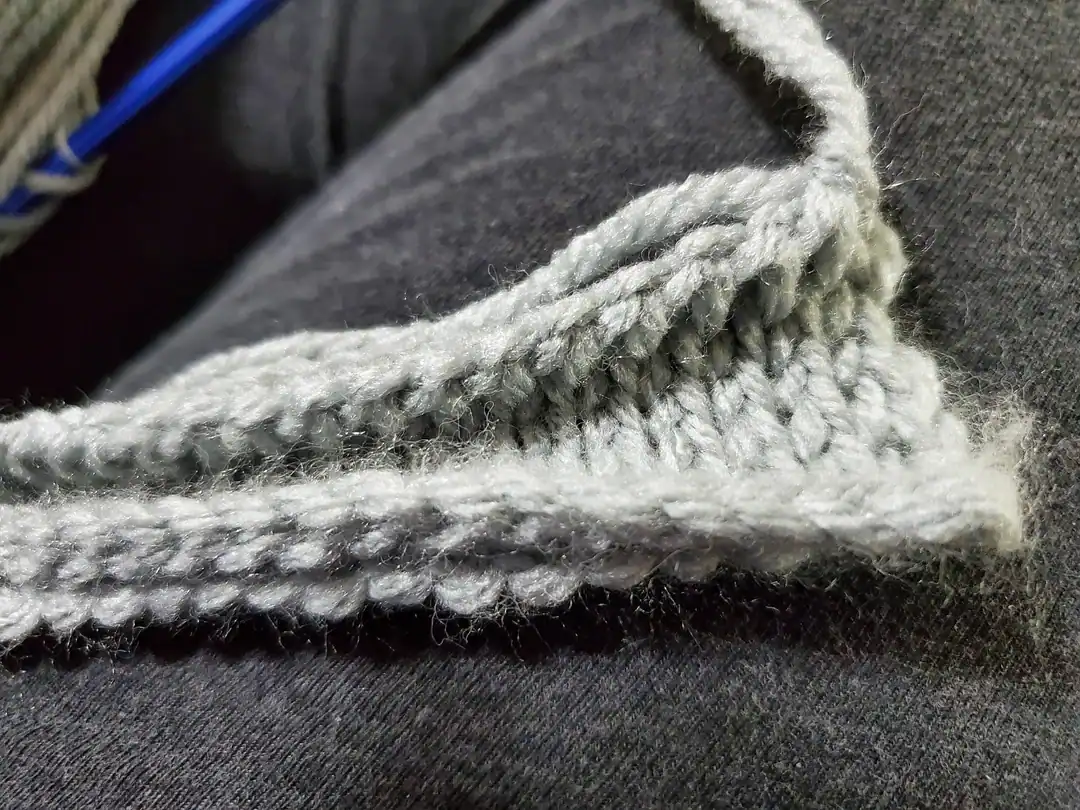
If you have ever picked up a Tunisian crochet hook, worked a few rows of the beautiful simple stitch, and looked down only to find your project rolling up like a snack wrap, you are not alone. That notorious curl is the number one struggle for beginners, and honestly, it can really kill the vibe when you are trying to create a masterpiece. But before you throw your hook across the room, Toni from TL Yarn Craft is here to remind you that curling is completely normal.
It happens because we are always working on the right side of the fabric, pulling loops toward us and creating vertical tension. Plus, all those stitches on the back are fighting for space and pushing the fabric forward. So, how do we get that flat, flowy drape we see in the magazines? We put five common “cures” to the test to see what actually works.
1. The “Size Matters” Approach: Going Up a Hook Size
The most common advice for Tunisian crochet is to use a hook one or two millimeters larger than what the yarn label suggests. But if your work is still acting like a cinnamon roll, why not go even bigger?
- The Experiment: Testing 5mm, 6mm, 8mm, and 9mm hooks with the same yarn.
- The Result: The 5mm and 6mm hooks produced a tight, curly “taquito.” The 8mm started to relax, and the 9mm was flat but very airy.
- The Verdict: Going up a size works—to a point. If you go too large, you lose the integrity of the fabric and it becomes a bit too “holey.” It is all about finding your personal “Goldilocks” zone.
2. The “Flick of the Wrist”: Lifting Your Loops
Some makers swear by pulling their loops a little higher during the forward pass to counteract tension.
- The Technique: As you pull up a loop, give your hook a little “flick” upward to add extra height.
- The Result: While the fabric looks flatter while you are working it, one little flick of the finger and it rolls right back up.
- The Verdict: I’m just the messenger, but this isn’t a permanent cure. It helps a little, but the tension is still hiding in there.
3. The Power of the Border
Sometimes, your crochet just needs a little structural support. Adding a traditional crochet border can help redistribute the tension.
- The Experiment: Adding two rounds of single crochet to a curly swatch.
- The Result: It worked wonders! The weight of the border pulls the edges down and adds a professional, polished finish.
- The Verdict: This is a fantastic solution for blankets or scarves where a border fits the aesthetic.
4. Choosing the “Non-Curly” Stitches
Did you know there are over 400 Tunisian stitches? Some of them are naturally born to lay flat. Don’t ask me why, it’s just the magic of physics!
- Honeycomb Stitch: By alternating simple and purl stitches, the tension cancels itself out. This is a total winner for beginners.
- Basketweave: Alternating knit and reverse stitches creates a fabric that pulls in opposite directions, staying mostly flat.
- Mesh and Lace: Using yarn overs and negative space gives the tension “room to breathe,” resulting in beautiful drape with zero roll.
5. The Ultimate Cure: Steam Blocking
If all else fails, all roads lead to blocking. This is the process of using moisture and heat to “set” your stitches into their final, flat shape.
- Pin it down: Use T-pins or knit blockers to secure your work (face down is a pro secret!) to a blocking board.
- Steam it: Use a garment steamer to thoroughly dampen the fibers.
- Let it dry: Do not—I repeat, do not—unpin it until it is bone dry.
The Verdict: This is the gold standard. Blocking turns stiff, curly acrylic into soft, draped fabric that behaves perfectly. It is how we honor the hard work we put into the process!
Ready to Start Your Next Project?
Now that you are armed with the secrets to beating the curl, there is no reason to be afraid of Tunisian crochet. Whether you choose a non-curling stitch or reach for your steamer, you can create gorgeous, flat garments that you’ll be proud to wear.