
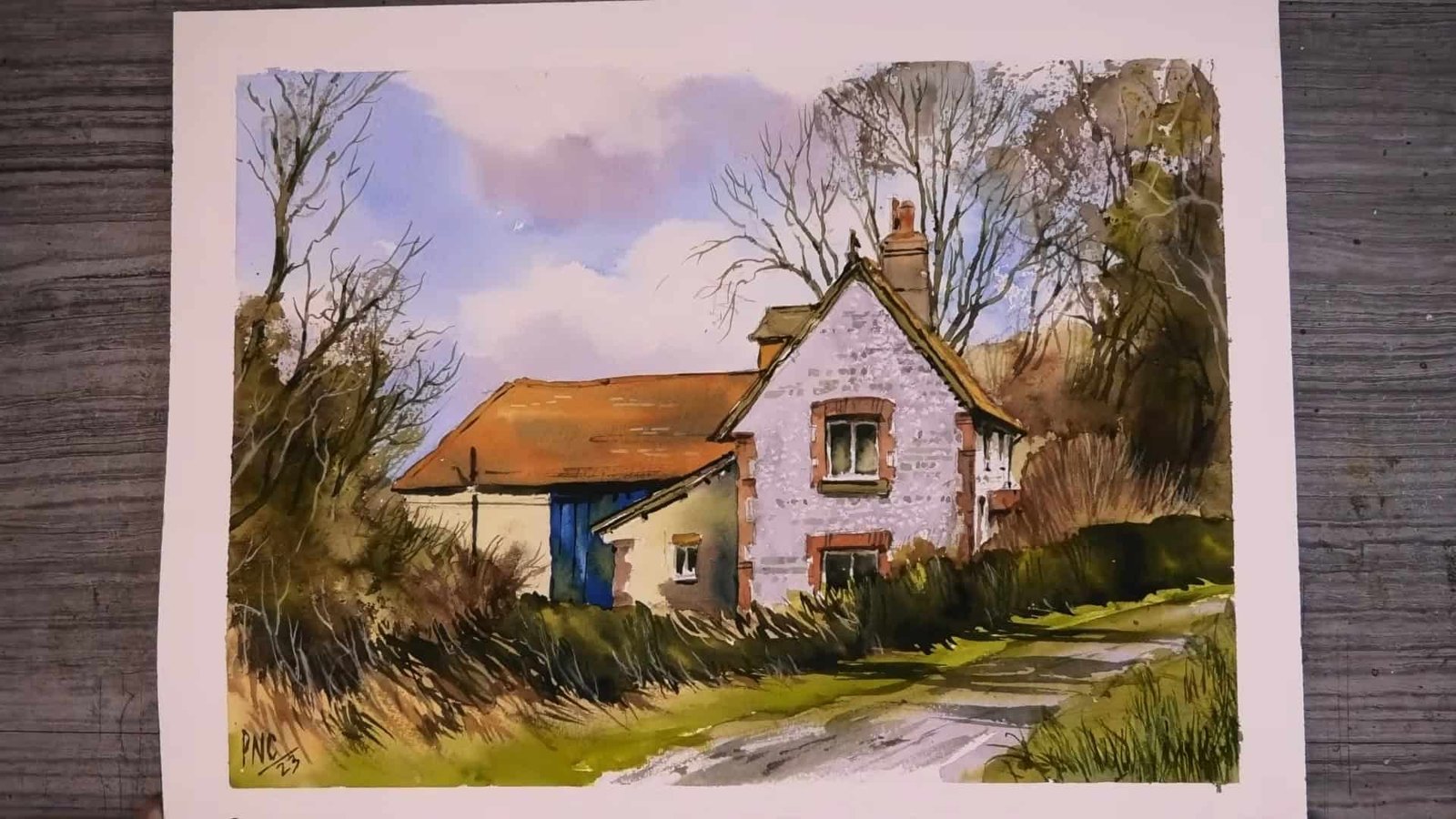
Autumn brings warm colors and timeless countryside charm. In his channel Art by Paul Clark, Paul Clark shares a step-by-step watercolor lesson on painting a Sussex farmhouse using only three colors.
He shares practical advice on paper, brushes, color mixing, and painting techniques. Dive into the guide and give his farmhouse painting approach a try today!
Best Watercolor Materials for a Farmhouse Painting
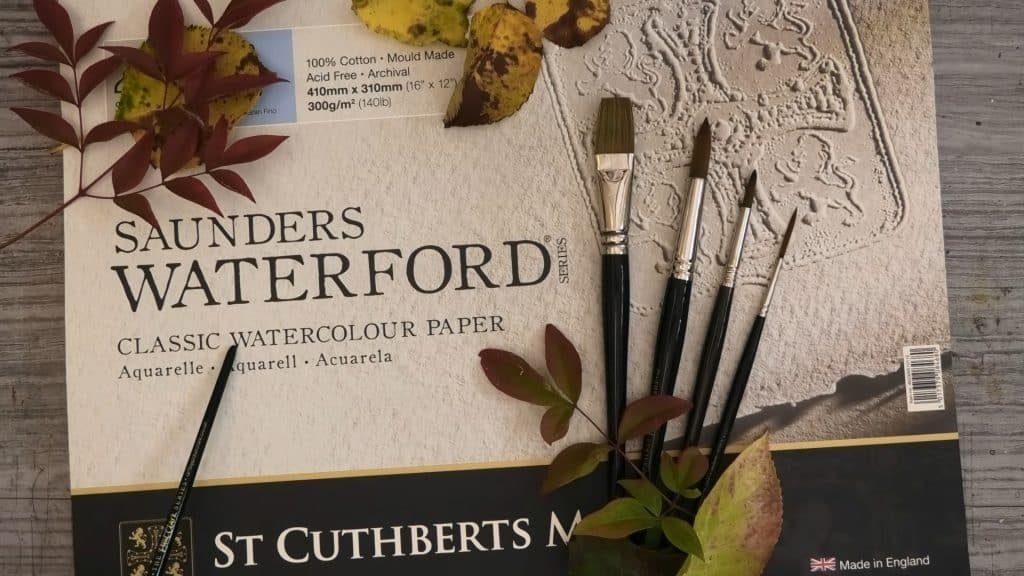
Before starting, Paul Clark highlights the importance of using quality materials. He believes the right paper and brushes set the foundation for a good painting.
Choosing the Right Watercolor Paper
Paul Clark recommends Saunders Waterford, 100% cotton, 140 lb, in block form. This paper does not need stretching and handles multiple washes well.
He suggests that any high-quality watercolor paper works, but cotton paper gives the best results for blending.
This choice ensures smoother washes and prevents buckling. According to Paul Clark, beginners may use other brands, but investing in proper paper helps achieve better textures.
Essential Watercolor Brushes for Farmhouse Scenes
He uses four brushes from his own range:
- ¾ inch flat brush
- Number 12 round brush
- Number 6 round brush
- Number 3 rigger
Paul Clark explains that the flat brush is perfect for large washes and skies, while the rigger adds thin, fluid lines for branches and details. The different brush sizes help him move between broad strokes and fine lines smoothly.
Watercolor Paints
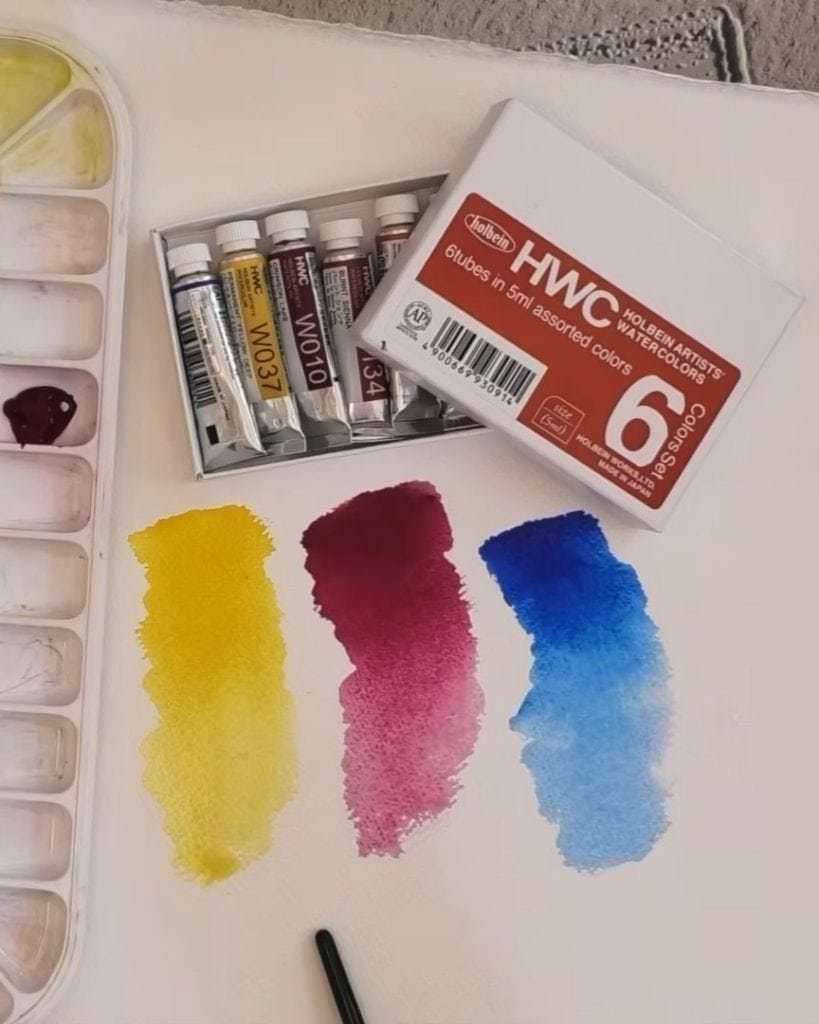
For this tutorial, Paul Clark tries Holbein paints, a Japanese brand. The six-tube set includes Permanent Yellow Deep, Cobalt Blue Hue, Crimson Lake, Burnt Sienna, Vermilion Hue, and Viridian Hue. He limits himself to only three: yellow, blue, and red.
He feels this discipline brings harmony to the whole painting. With fewer choices, every color connects. The three primaries form the base of all the tones in the artwork.
How to Mix Colors with Three Primaries
Paul Clark limits his palette to just three Holbein primaries: Permanent Yellow Deep, Cobalt Blue Hue, and Crimson Lake. He mentions that using three colors gives harmony and balance.
Mixing Secondary Colors
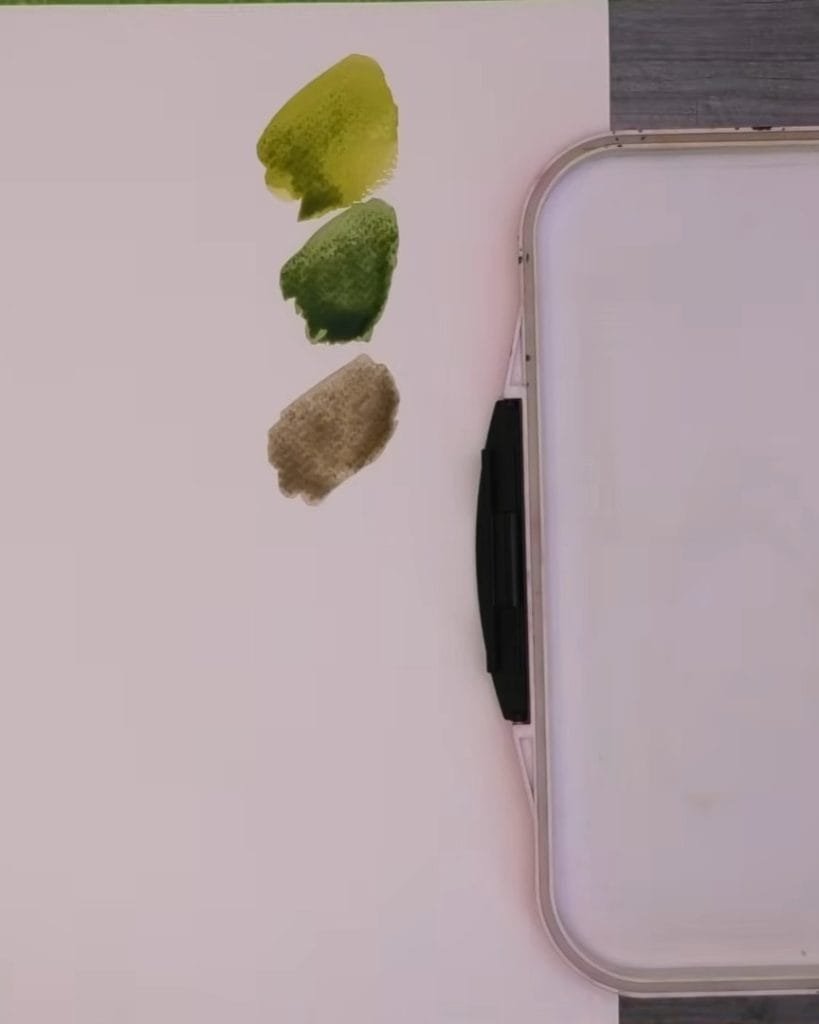
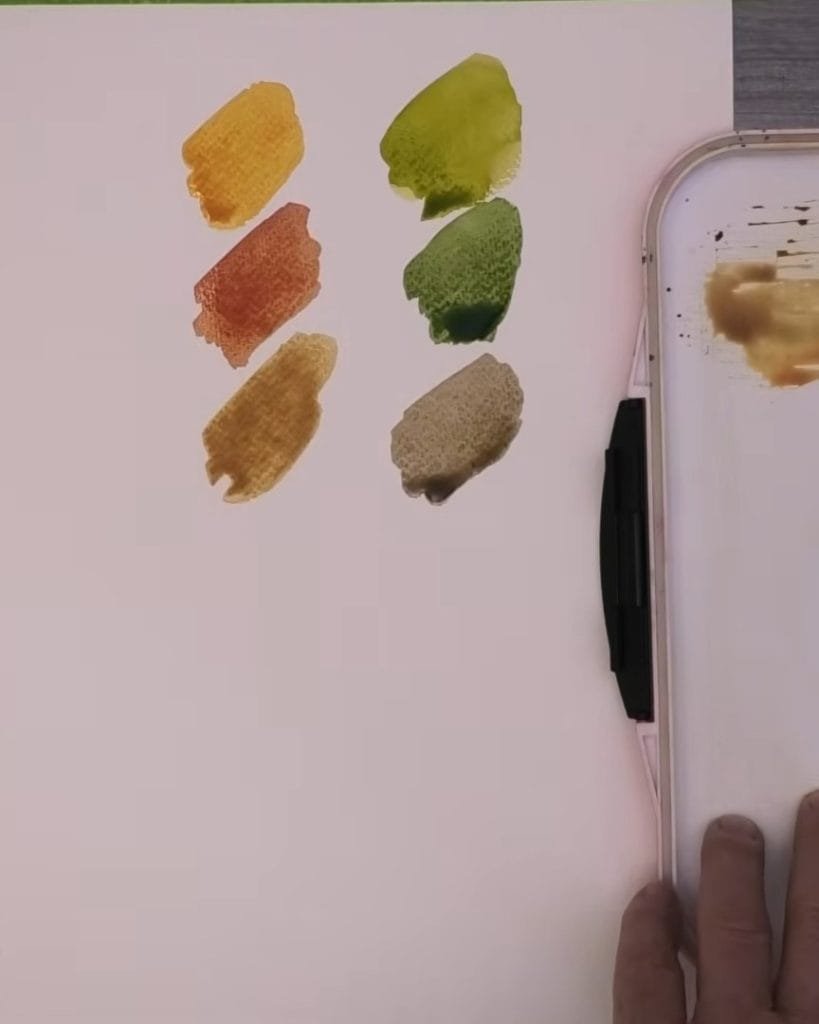
He begins with yellow and adds a touch of blue to create a yellow-green. Adding more blue turns it into a deeper green.
He shows that adding the third primary, red, neutralizes the mix, creating browns and greys. Many artists, he notes, mix browns from green and red.
Mixing Warm Autumn Colors
For golden tones, Paul Clark mixes yellow with a little red. Adding more red creates a burnt orange.
To deepen the mix, he includes blue, which shifts the shade into earthy browns. These blends capture the autumn feeling of the Sussex scene.
Mixing Purples, Neutrals, and Near Blacks
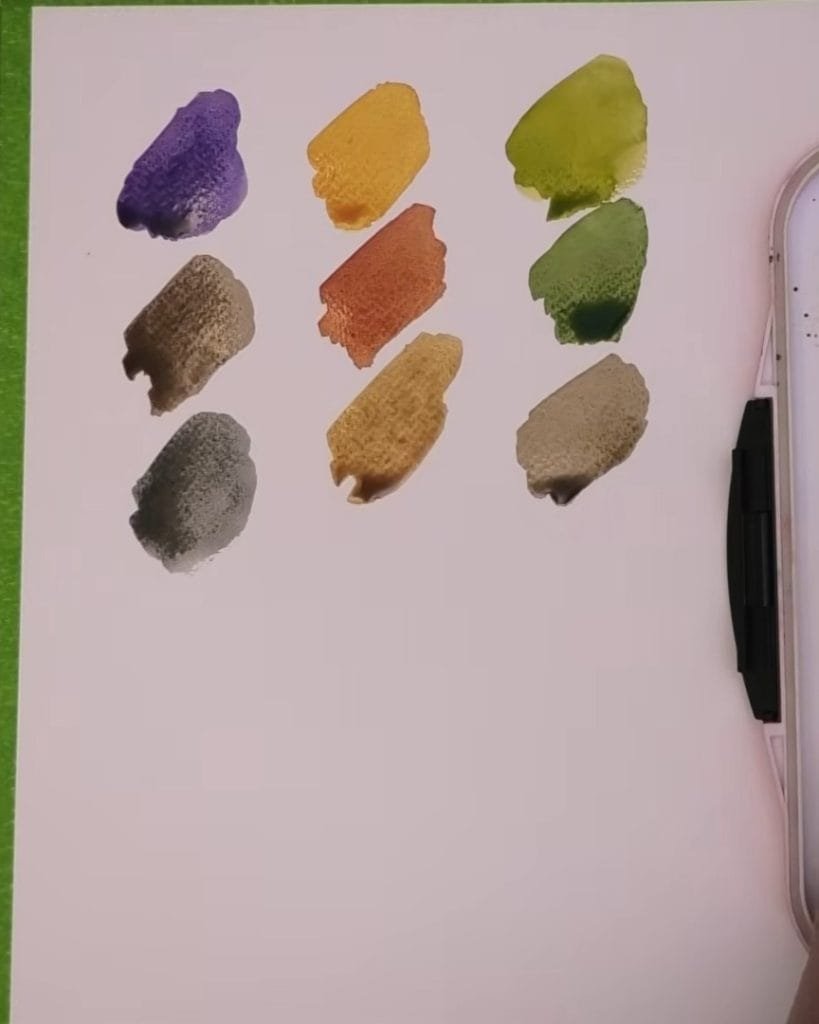
Next, he mixes blue and red to make purple. Because Crimson Lake is a cool red, the purple looks strong and fresh. By adding yellow, the purple turns into a deep brown.
Adding even more blue leads to a perfect neutral grey. He points out that with stronger pigments, even near black is possible using just the three primaries.
Step 1: Drawing the Sussex Farmhouse Sketch
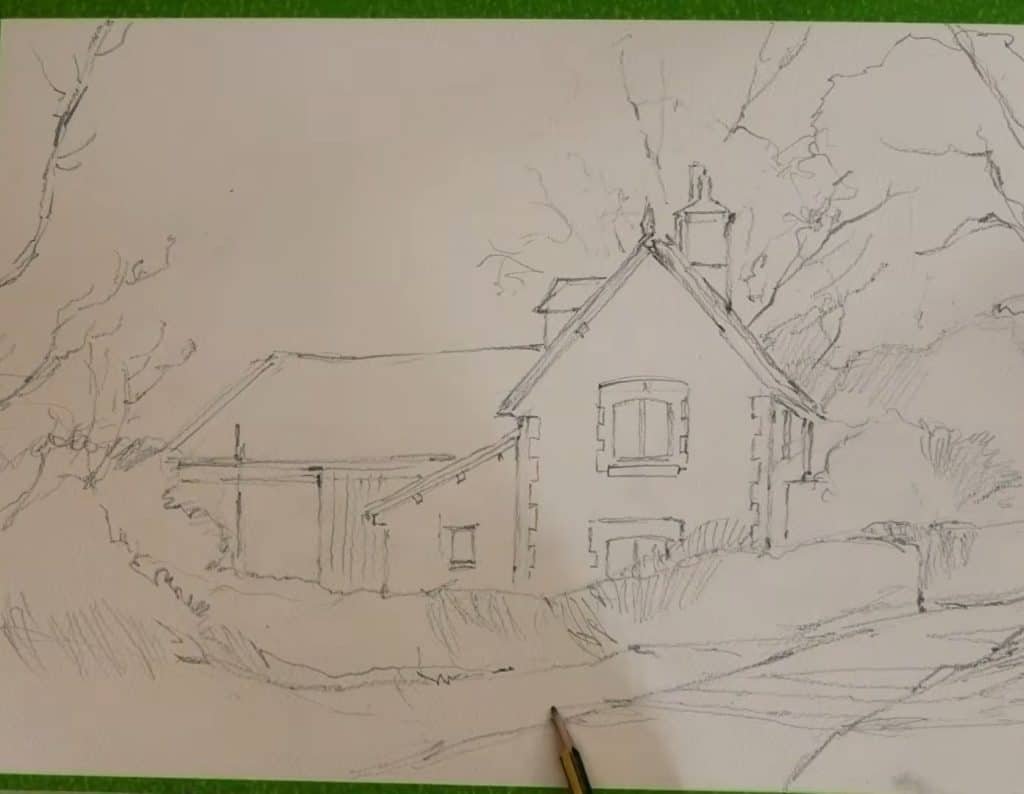
Paul Clark bases his composition on photos and sketches. He prepares a pencil outline of the farmhouse.
This drawing is also available as a free download on his website. He suggests keeping the sketch light and simple, leaving space for trees, sky, and road.
Step 2: How to Paint a Watercolor Sky with Clouds
The sky sets the mood for the farmhouse scene. Paul Clark starts with a wet wash.
He wets the entire sky area with clean water. This keeps the paint soft and prevents harsh edges. A flat brush works best for painting around the roofline.
He applies Cobalt Blue in a light mix. The Holbein paint is strong, so only a small amount is needed. Paul Clark leaves white gaps to form cloud shapes.
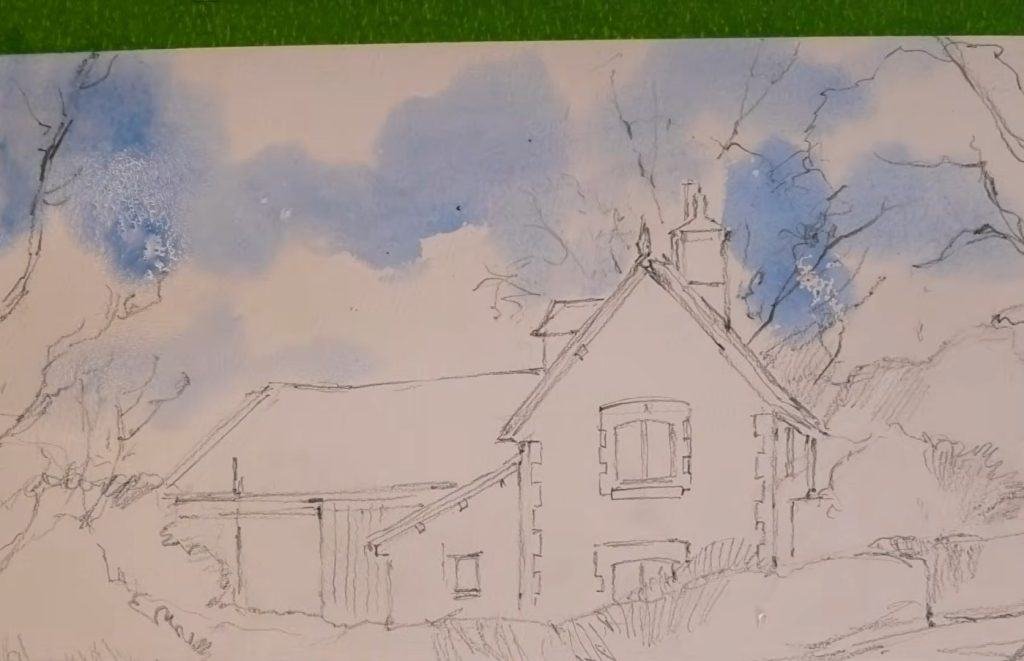
For shadows, he mixes all three primaries. Payne’s Grey could also be used, but he prefers sticking to the limited palette. He ensures the wash stays wet so the shadows blend softly.
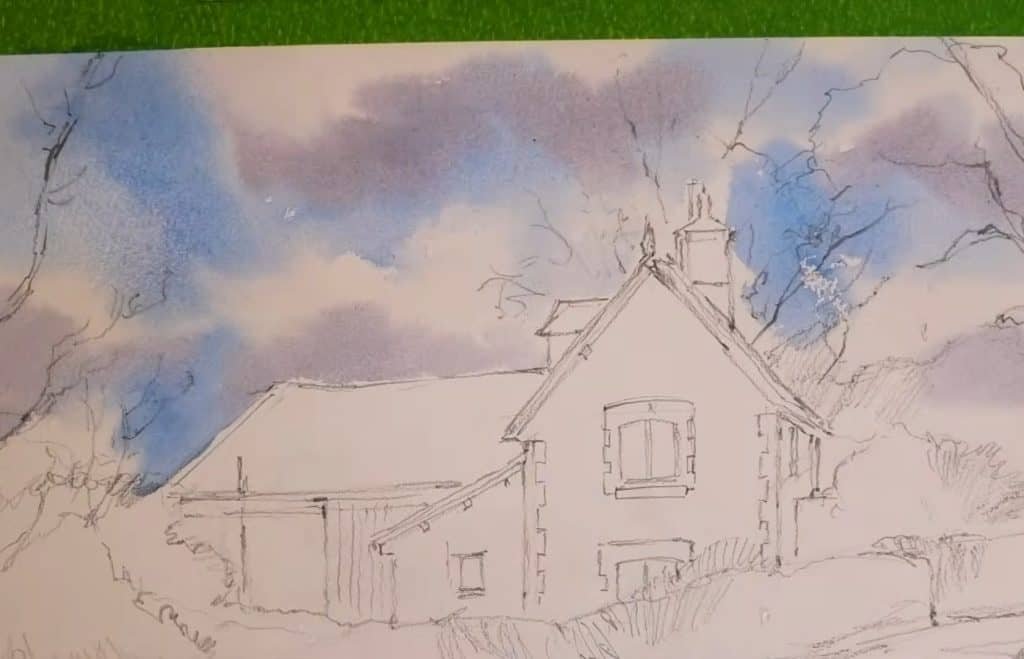
While still damp, he sprinkles salt lightly. This adds texture, mimicking the flintstone walls found on Sussex houses.
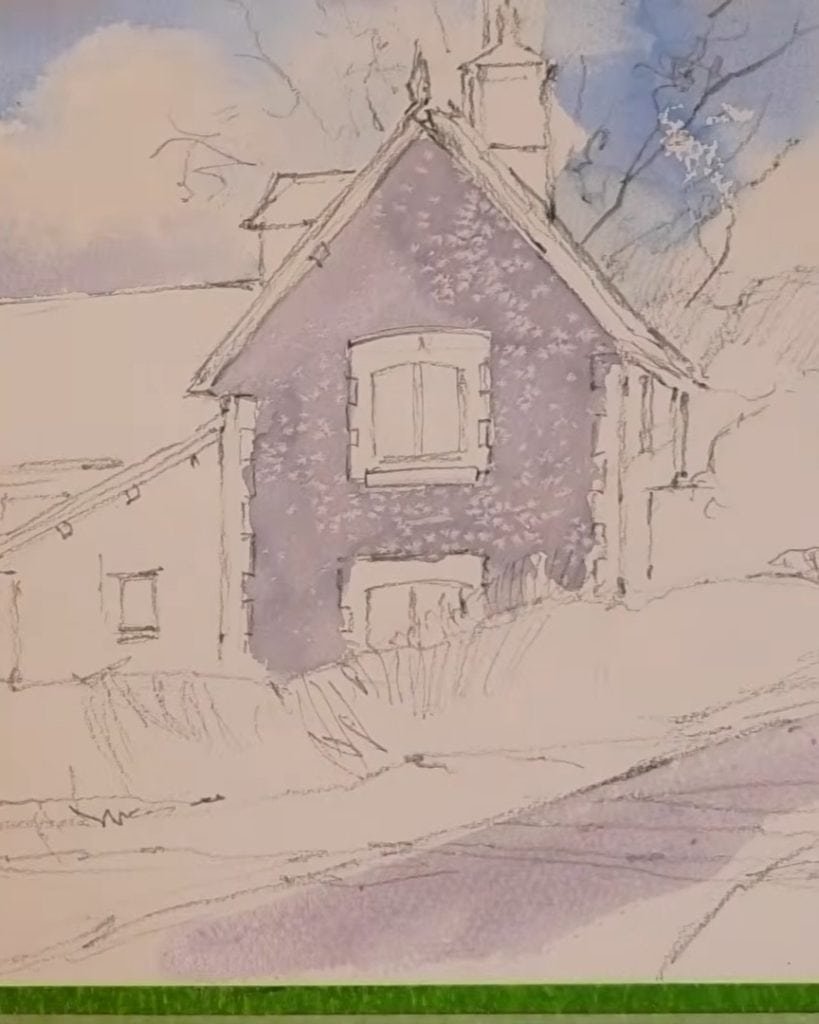
Step 3: Painting the Foreground and Lane
The foreground connects the farmhouse to the land. Paul Clark encourages loose, bold strokes.
He mixes browns and greens directly from the primaries. Ratios vary, but all come from the same three colors.
Holding the brush at the end, Paul Clark moves quickly to create expressive, broken textures. This helps suggest grass, earth, and trees without tight control.
He drops clean water on wet paint to make blooms. He scratches the paper with the brush handle for grass texture. A little splatter adds randomness.
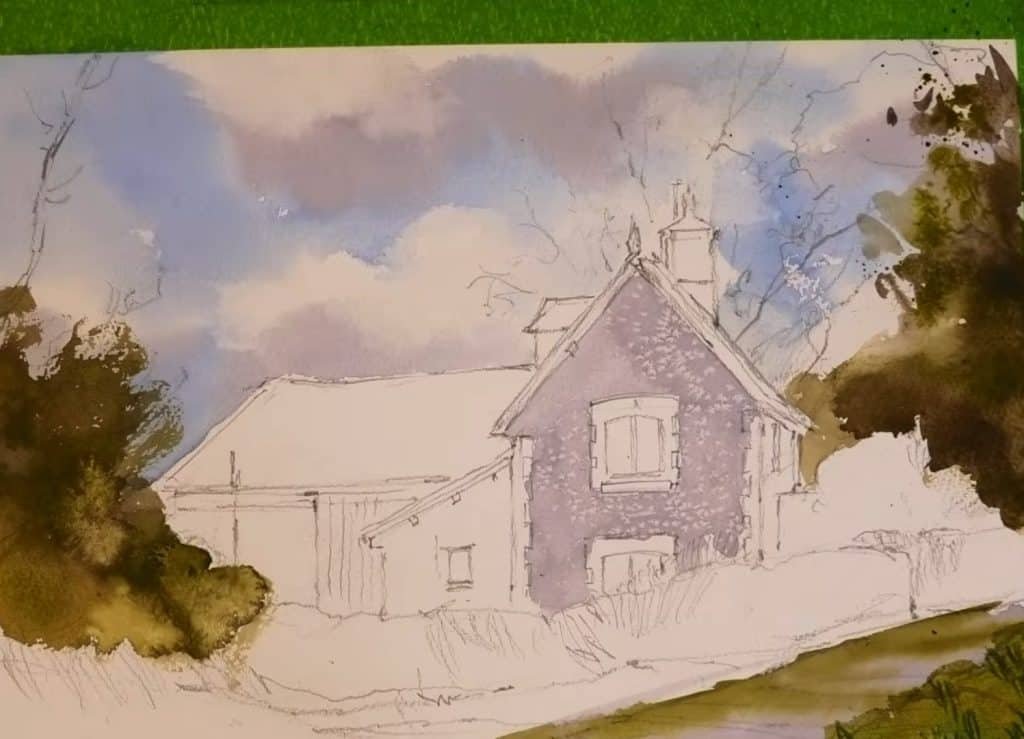
Step 4: Applying Drying Techniques
Drying matters in watercolor. Paul Clark lets the paper rest until paint stops moving. Then he uses a hairdryer to finish. He warns that rushing too soon can ruin soft washes.
Step 5: Painting Distant Trees
Background trees add depth. Paul Clark uses a dry brush for them.
He drags a semi-dry brush across the textured paper. The broken marks look like leaves and branches.
He drops clean water in some areas. This mix of edges creates a natural tree look, not stiff or artificial.
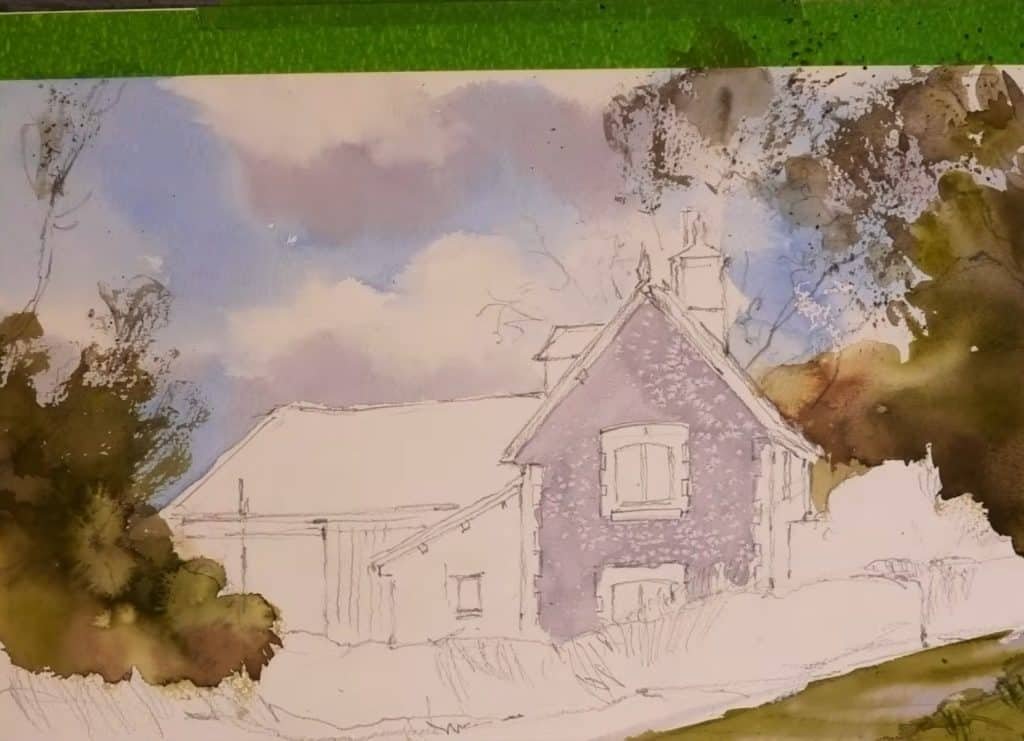
Step 6: Painting a Farmhouse Roof and Chimney
The roof and chimney give the farmhouse its identity. Paul Clark uses warm mixes here.
He blends red and yellow for the roof. He works wet-in-wet to let colors mix directly on paper.
He paints the chimney in a similar brown. At the top, he adds orange for the pot. This small touch brings out the Sussex character with red brick details.
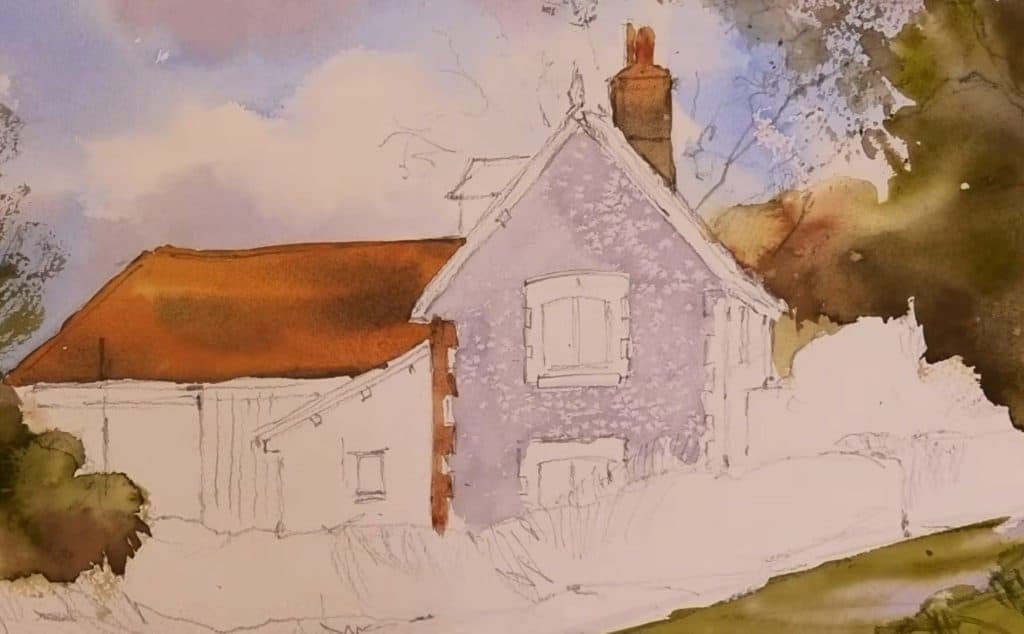
Step 7: Adding Wall Colors and Window Shadows
The farmhouse walls and windows bring texture and warmth. The earlier salt now reveals flint-like effects. Paul Clark points out that it looks natural without much extra effort.
He mixes yellow and red to form a golden tone. On the paper, the colors blend and shift, making the walls glow.
Using his No. 6 brush, he paints shadows. The strokes are wobbly and loose, never stiff. Windows get only a few quick marks, enough for suggestion.
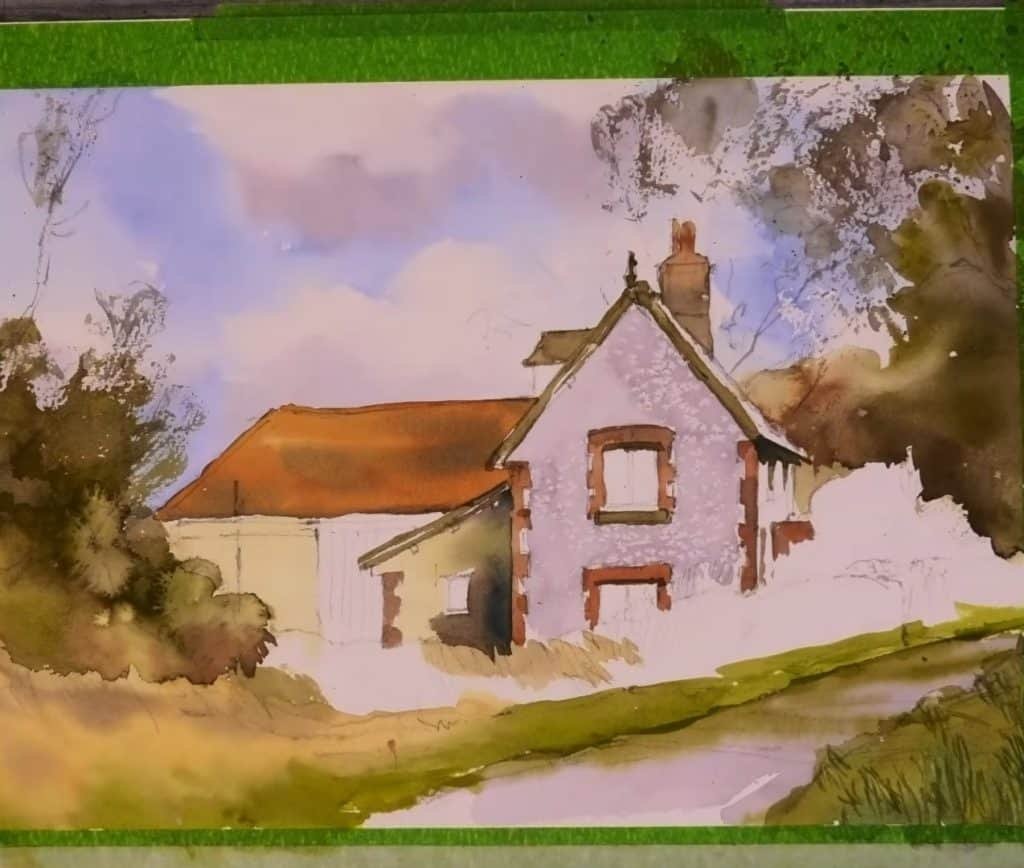
Step 8: Painting the Hedge and Road Shadows
The hedge and road frame the farmhouse. Paul Clark works boldly here.
He starts with a light yellow-green wash. Then he drops in a dark blue-green straight away. This contrast makes the hedge deep and natural. Then, he adds splatters.
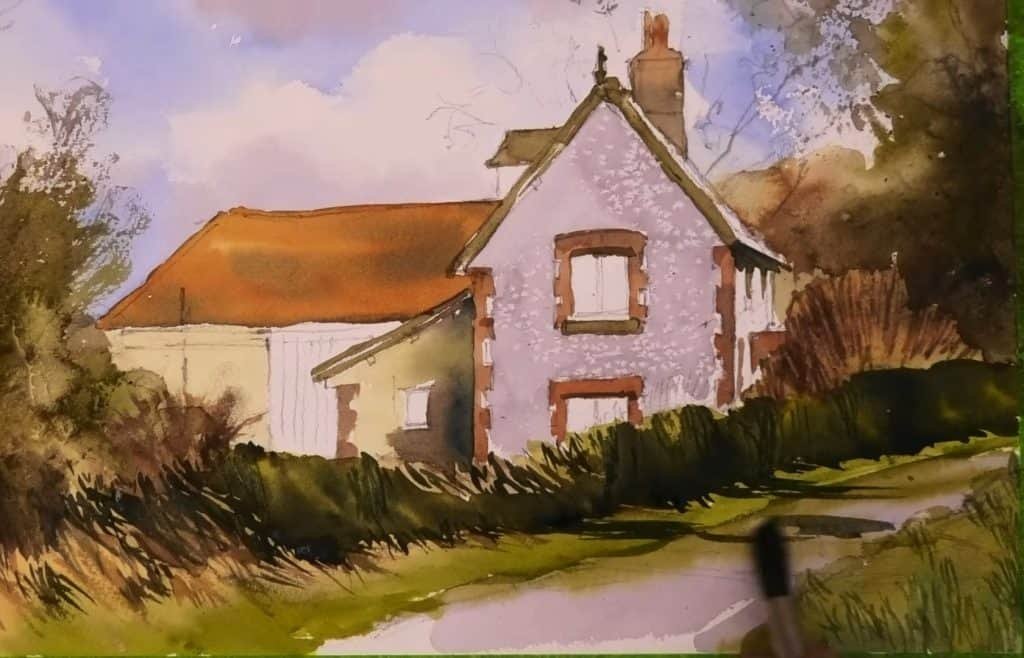
He paints grey shadows only where the road is grey. He then fills gaps with warm orange to keep harmony with autumn tones.
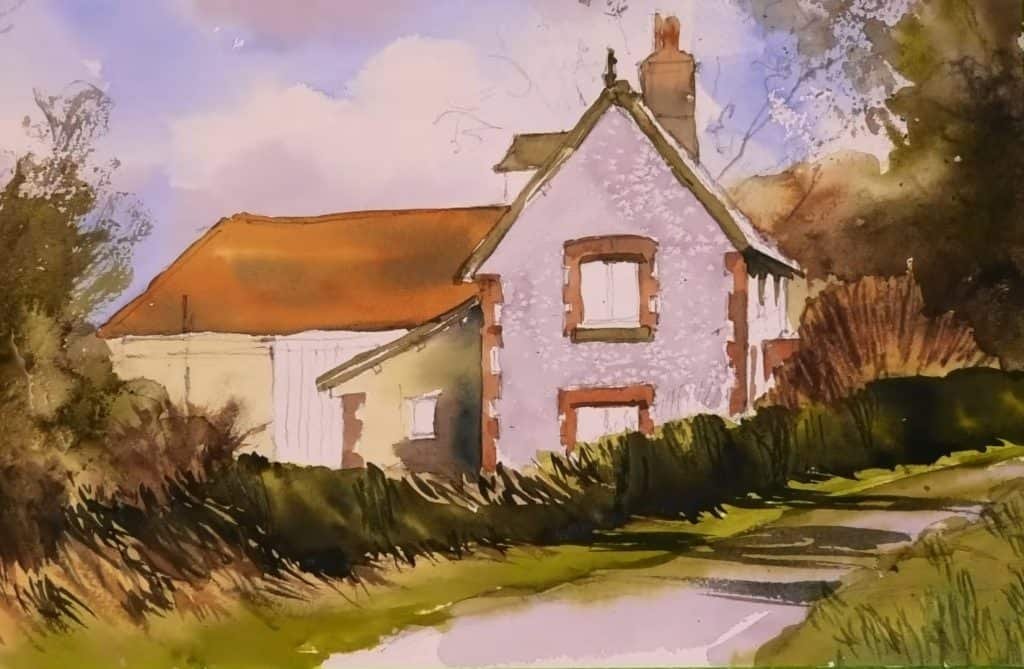
Step 9: Painting a Barn Door
Barn doors add charm to the farmhouse. Paul Clark chooses a bright blue.
While wet, he lifts light patches with a damp brush. He also adds a little orange. This stops the door from looking too new and polished.
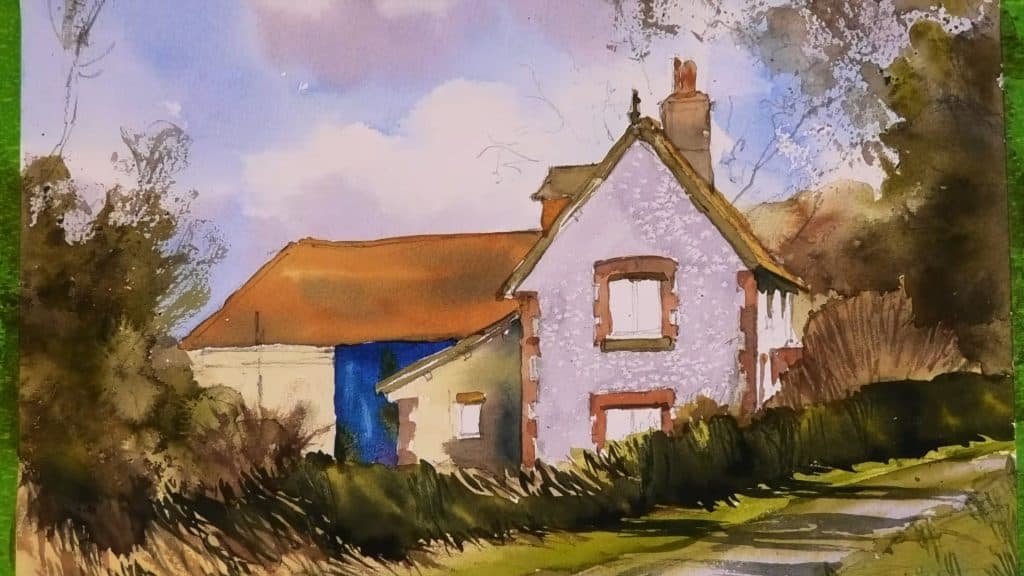
Step 10: Painting Realistic Trees
Trees are the final big element. Paul Clark uses two brushes here.
He paints trunks with a round brush. For branches, he switches to the rigger. This brush bends easily, giving natural, tapered lines. He advises painting branches in one quick motion to keep them lively.
While the paint is wet, he darkens parts of the tree. With the rigger, he also flicks in grass at the base. The result feels loose and fresh.
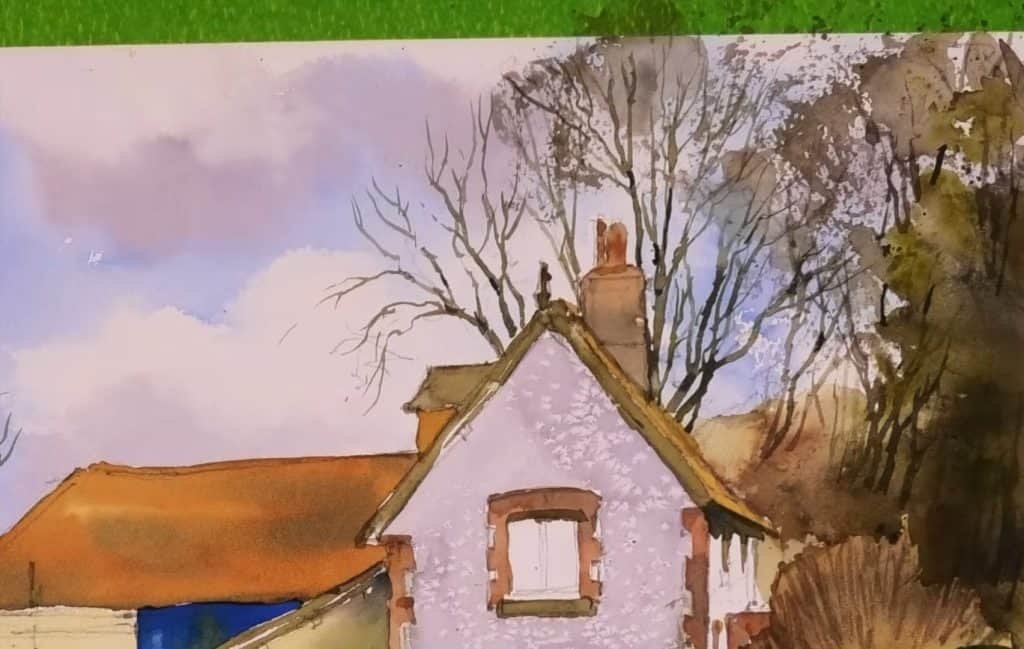
Step 11: Adding Final Watercolor Details
The last touches pull everything together. He adds dark greys to areas needing depth. He holds his brush closer for control but still avoids stiff lines.
Two strokes create a window. He lifts water at the base for light. Less detail keeps the painting fresh.
For highlights, Paul Clark uses a cream pastel pencil. Some artists call it cheating, but he believes any tool that works is valid. He avoids masking fluid, which can look unnatural. He softens pencil marks with his finger for a gentle finish.
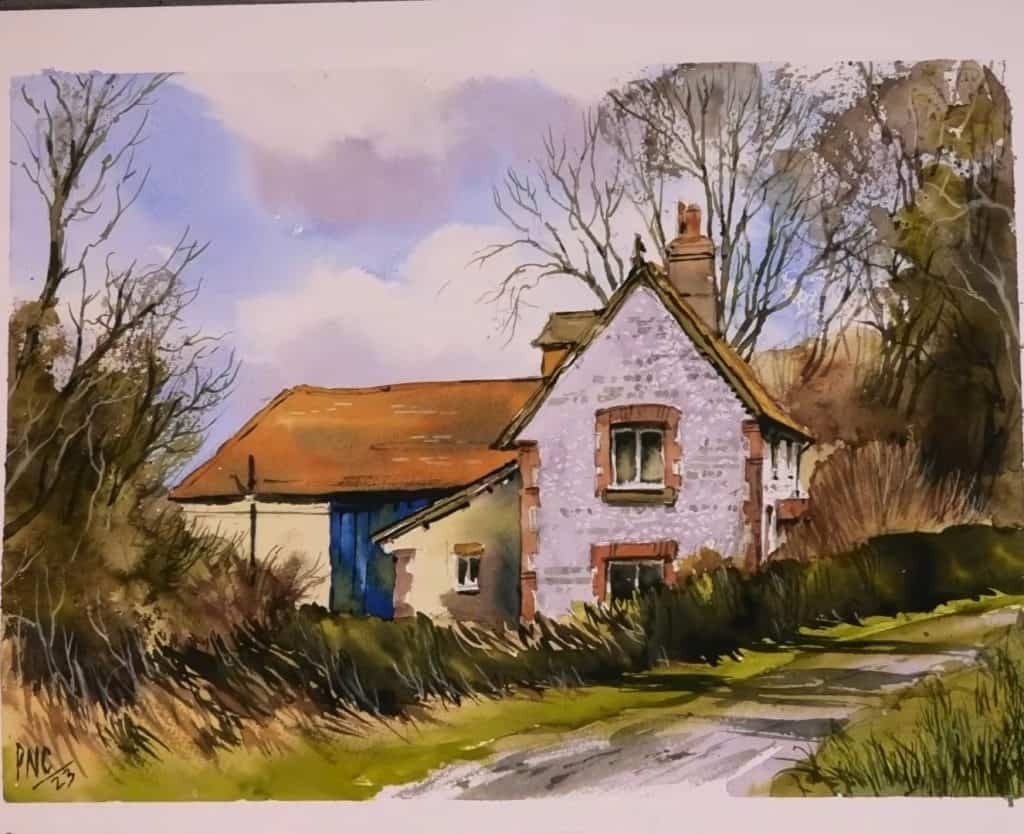
Final Thoughts
Paul Clark shows how simple tools and three colors can create a warm farmhouse painting full of life. His easy steps guide artists from sky washes to tree details with clarity and charm. Will you try his method next time you paint? Follow his guide and enjoy the process today.