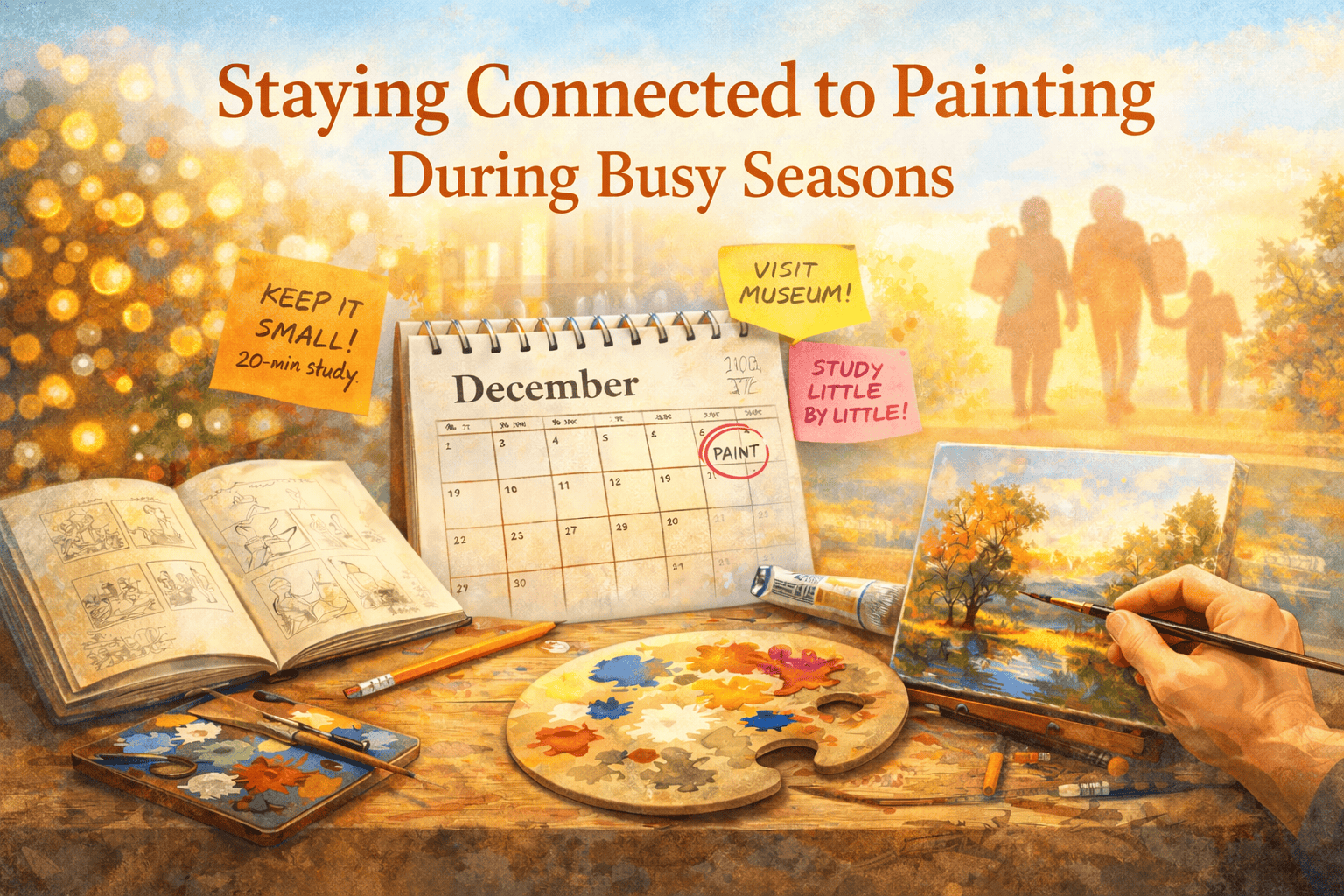
As the holiday season settles in, life seems to move a little faster. Errands multiply, calendars fill up, and quiet stretches of time begin to disappear. When painting is something that restores balance or brings calm, it often becomes one of the first things pushed aside.
I know this feeling well. Balancing my own studio practice while running Art Studio Life can feel especially challenging during busy times of year. Yet I’ve learned that protecting painting time matters more than we often realize. It not only supports growth as an artist, it also helps me show up more fully for everything else the season demands.
The encouraging part is this: staying consistent doesn’t require long studio days. Small, intentional habits can keep your creative momentum alive. Consistency isn’t about producing finished masterpieces — it’s about maintaining a living connection with your work.
Here are approaches that have helped me, and many painters in this community, continue painting even when life becomes full.
Contents
- 1 1. Keep a Sketchbook for Small Thumbnails
- 2 2. Schedule Painting Time — and Honor It
- 3 3. Study Art When Painting Isn’t Possible
- 4 4. Remember: Consistency Isn’t Daily Painting
- 5 5. Simplify Your Setup
- 6 6. Focus on Small Studies Instead of Large Paintings
- 7 7. Give Yourself Permission to Paint Imperfectly
- 8 Know That Seasons Change
1. Keep a Sketchbook for Small Thumbnails
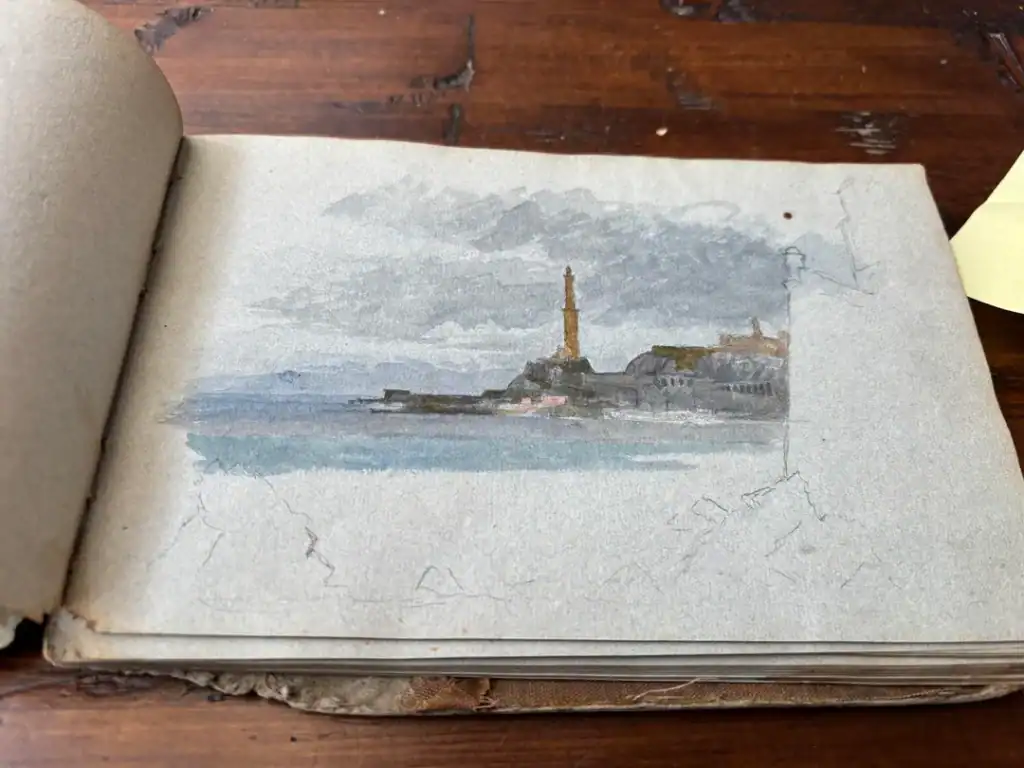
A sketchbook is one of the simplest ways I stay engaged with painting. These drawings don’t need to be polished — sometimes five minutes is enough.
Quick thumbnail sketches can:
- sharpen your sense of composition and value
- keep visual thinking active when painting isn’t possible
- maintain your artistic awareness
- require almost no setup or cleanup
Even a couple of small sketches each week keep both eye and hand responsive. And the skills developed here carry directly into larger paintings later on.
2. Schedule Painting Time — and Honor It
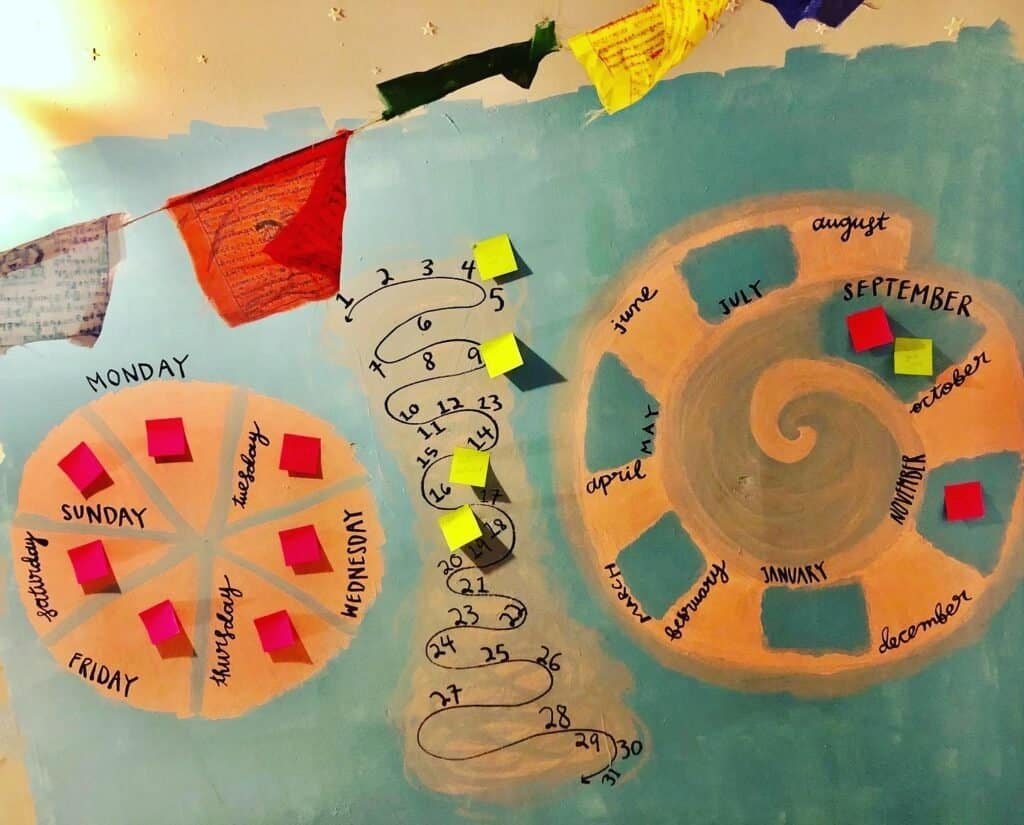
If painting time isn’t planned, it often disappears — especially during the holidays.
I’ve found it helpful to place painting on my calendar and treat it like a real commitment: an appointment with myself and my materials.
Scheduling works because it:
- removes the constant question of when to paint
- makes it easier to protect that time from interruptions
- reinforces the habit of valuing creative work
Whether it’s half an hour on a weekend morning or a couple of evenings each month, simply planning it greatly increases the chances that it happens.
3. Study Art When Painting Isn’t Possible
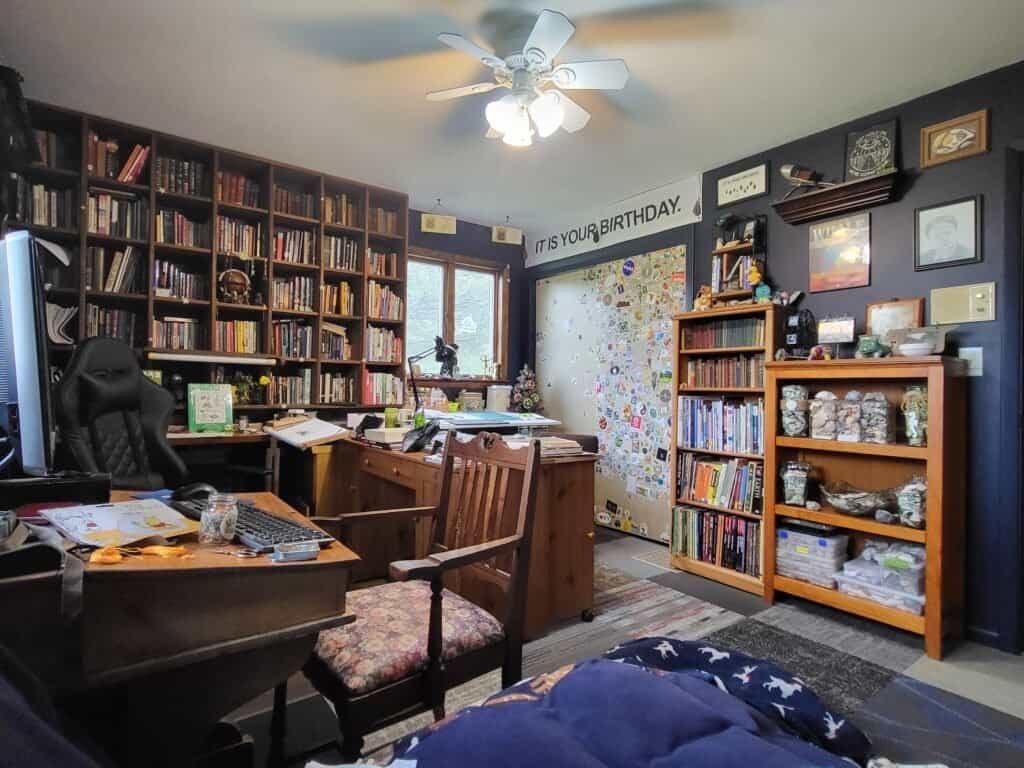
Practice doesn’t always require a brush in hand. Studying paintings can be incredibly productive and fits easily into short pockets of time.
Some simple ways to study include:
- visiting a museum and closely observing just a few works
- exploring a favorite artist’s paintings online
- looking through art books while sketching notes
- making a small master study to examine color or composition
Even without painting, this kind of observation deepens understanding. When I return to the easel, I often notice that my decisions feel clearer.
4. Remember: Consistency Isn’t Daily Painting
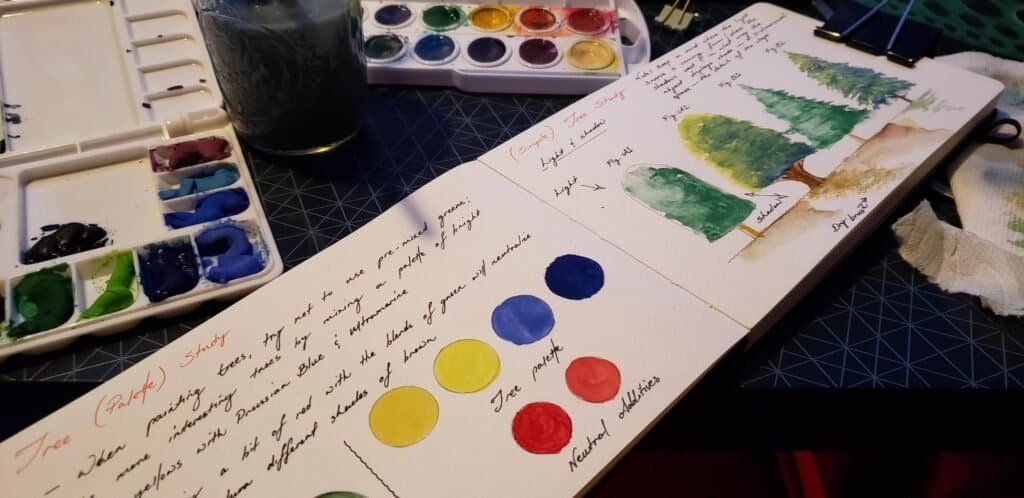
There’s a common belief that serious artists must paint every day. But consistency doesn’t mean frequency — it means continuity.
Painting once a week during a busy season can still:
- preserve your connection to your work
- support gradual progress
- maintain the rhythm of showing up
- strengthen trust in your own practice
The goal isn’t perfection. It’s simply staying present.
5. Simplify Your Setup
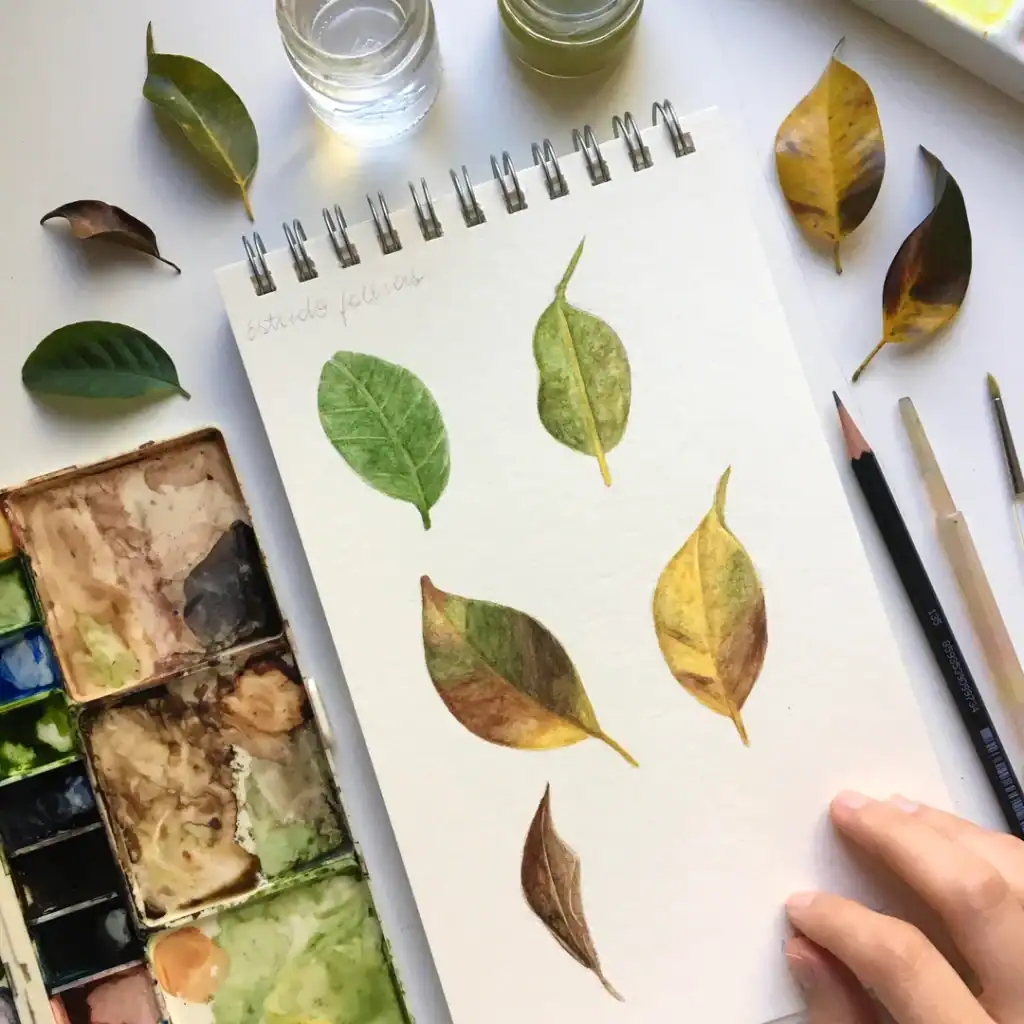
During busy periods, even small obstacles can prevent you from starting. The harder it feels to begin, the easier it is to postpone.
I try to reduce friction by preparing:
- a small, portable palette
- a limited selection of brushes
- just a few paint colors (monochrome studies work beautifully)
- a canvas or panel ready in advance
When everything is prepared, I can begin immediately — even if I only have twenty minutes.
6. Focus on Small Studies Instead of Large Paintings
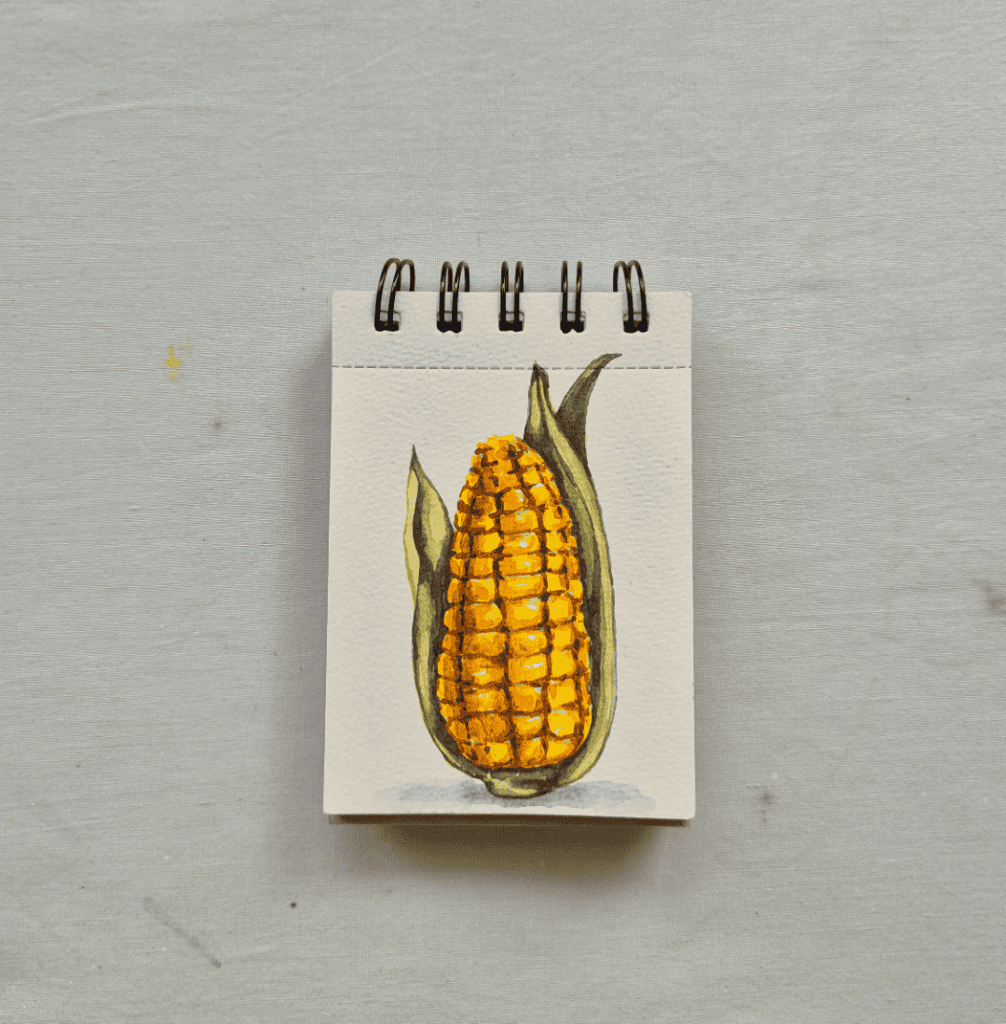
Big paintings demand long stretches of uninterrupted time. Small studies are far more forgiving.
You might try:
- short value studies
- quick color-block exercises
- simple still lifes completed in one sitting
- observational studies of small details rather than entire subjects
These exercises keep skills active without the pressure of committing to a large project.
7. Give Yourself Permission to Paint Imperfectly
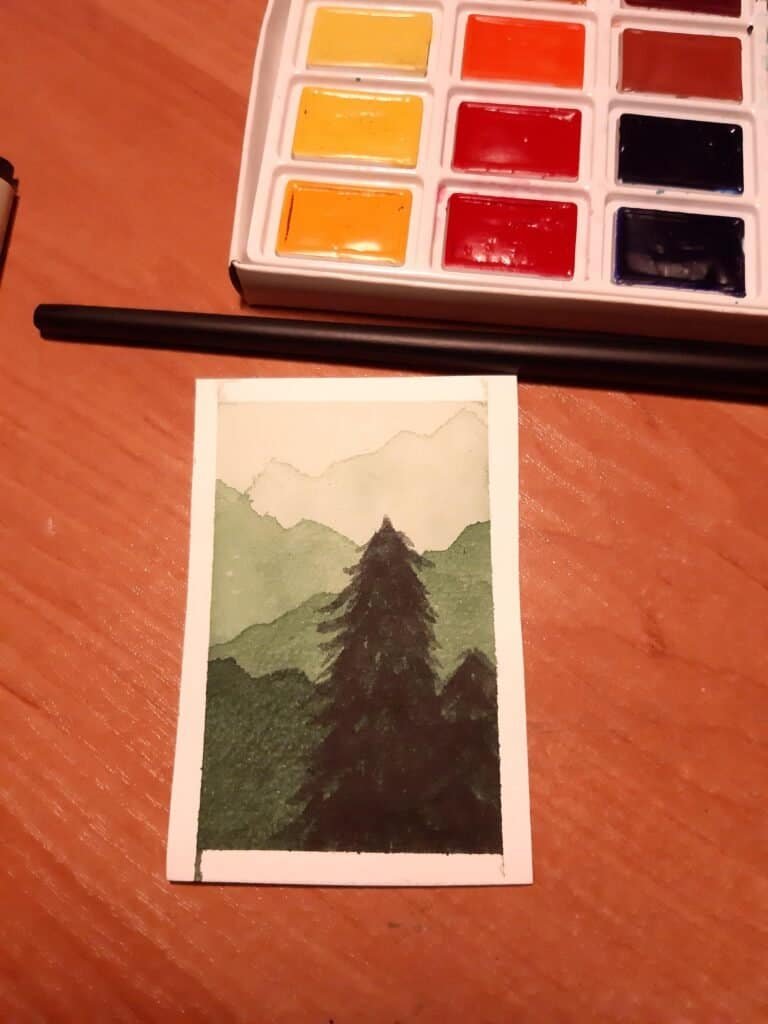
One of the biggest obstacles to consistency is the expectation to create something good every time.
Busy seasons call for kindness toward yourself. Allow space to:
- make rough sketches
- begin pieces you may never finish
- paint purely for exploration
- experiment without pressure
Painting isn’t only about completed works — it’s about maintaining a relationship with your creative self.
Know That Seasons Change
Every artist moves through periods of expansion and slowdown. For many of us, winter naturally becomes fuller and more demanding — and that’s okay. What matters is keeping a thread of connection to your practice so you can return fully when time opens again.
Consistency is built quietly over months and years, not measured by any single day.