Starting watercolor painting feels exciting—everything is new, from colors to brushes to techniques. But as Beala Art remembers from her early days, buying paints can quickly become confusing and unexpectedly expensive.
She made a few mistakes in the beginning that she wishes someone had warned her about.
Today, Beala Art is sharing one simple tip that completely changed how she buys watercolors. It would have saved her so much money—and she hopes it helps you too.
Full video: https://www.youtube.com/watch?v=RSIZ3l5eJnU
The Common Watercolor Mistake Many Beginners Make
When the artist first tries watercolor, the journey begins with a pre-made kit. It comes in a small box with a nice little selection. Many beginners probably start the same way because it’s easy, convenient, and fun to test out.
But soon, the artist falls in love with watercolor. More colors become exciting, so exploration of different brands begins. And like many beginners, the artist goes straight to YouTube.
Following Your Favorite Artists Can Backfire
The artist watches favorite watercolor creators and writes down their go-to colors. Their work looks beautiful, so their choices seem trustworthy. The artist buys the exact same paints they use.
But here’s the problem: those colors don’t always match the artist’s own style. Their favorite colors work beautifully in their palettes, but not necessarily in someone else’s.
When the artist tries mixing them with personal favorites, they simply don’t look right.
The Cost of Choosing the Wrong Paints
In the end, the artist collects a bunch of tube paints that never get used. They don’t blend well with the rest of the palette and don’t feel enjoyable to paint with. This leads to wasted money on paints that never fit the artist’s needs.
That’s why the artist wishes someone had introduced this simple solution earlier.
The Game-Changer: Discovering Dot Sheets
Here comes the tip the artist wishes they knew sooner: dot sheets. Not many people talk about them, but they’re incredibly handy.
Dot sheets were discovered about two years into the artist’s watercolor journey—and they changed everything.
What Is a Dot Sheet?
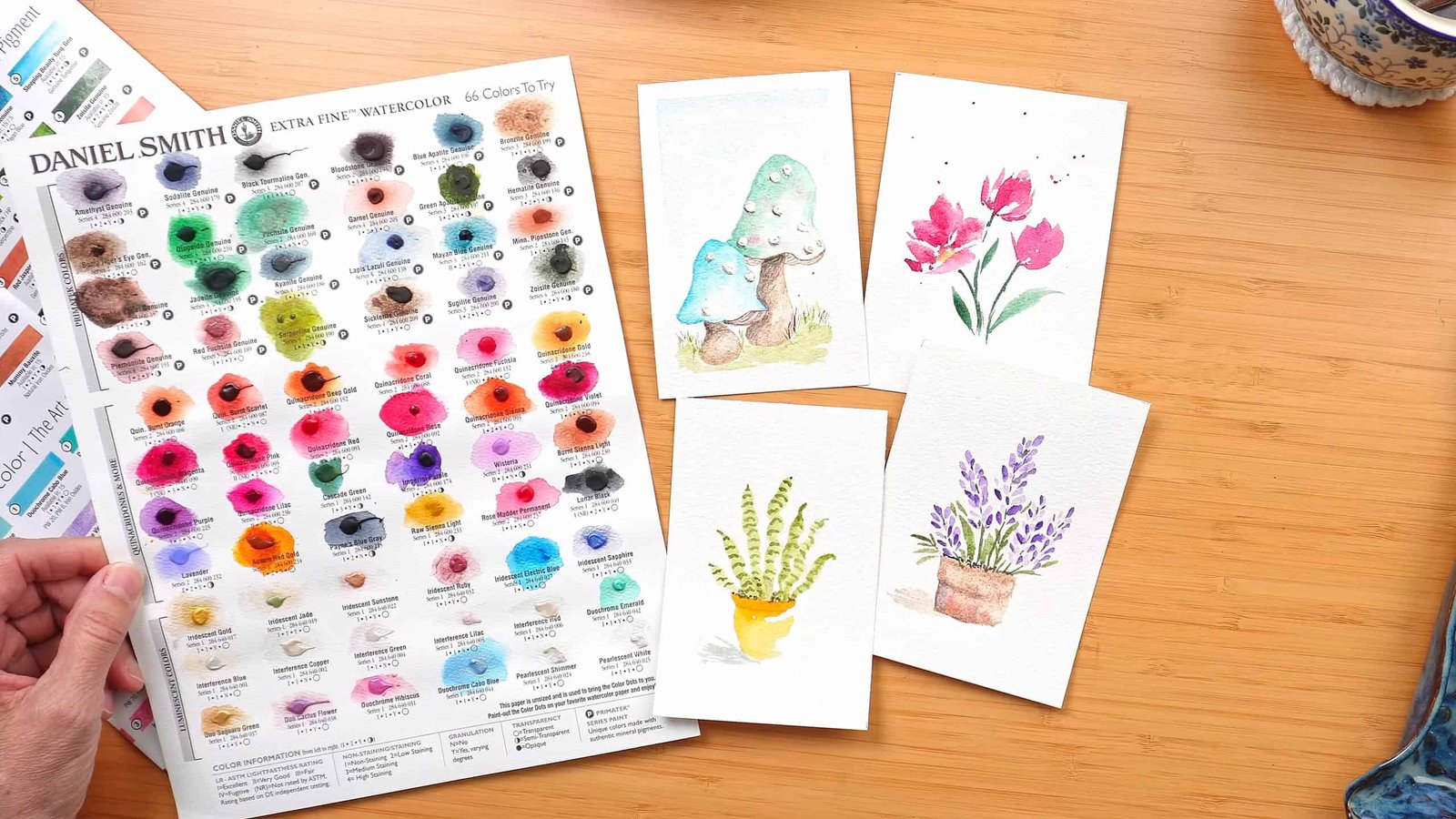
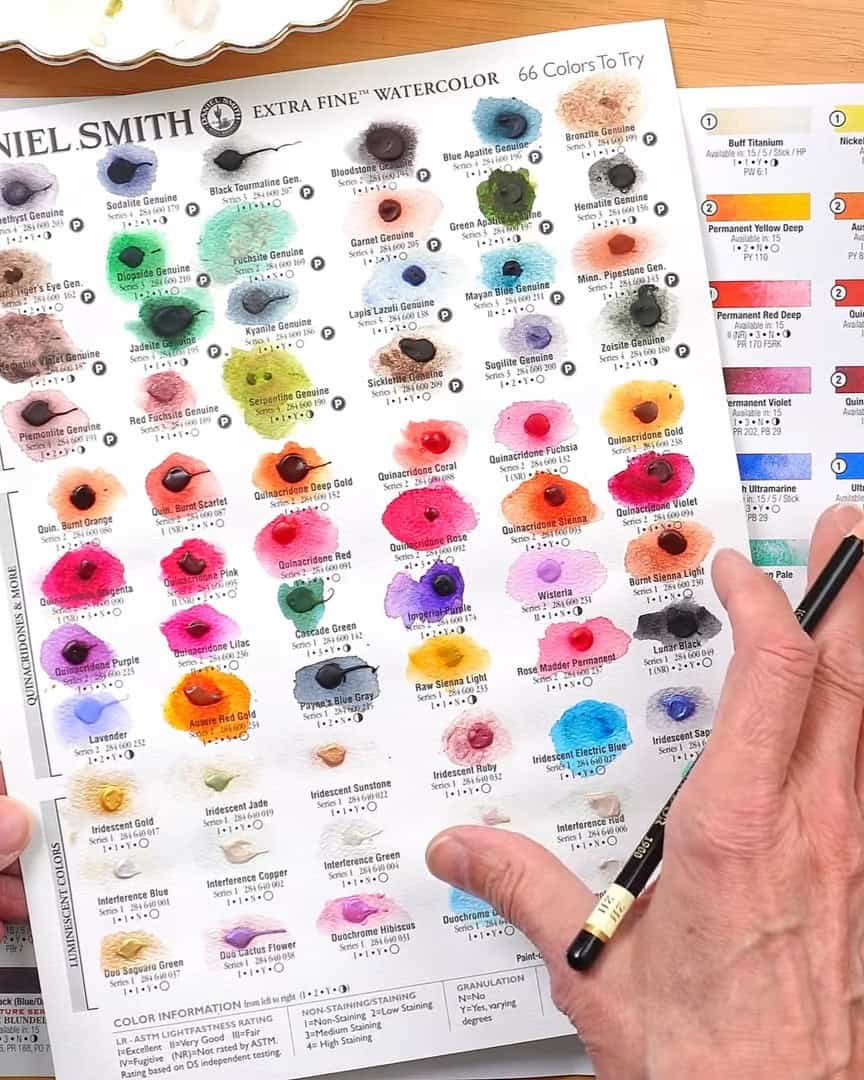
A dot sheet is a catalog of a paint brand’s watercolor line. Each sheet includes small dots of dried watercolor. The artist wets a brush, dabs the dot, and paints with it just like regular paint.
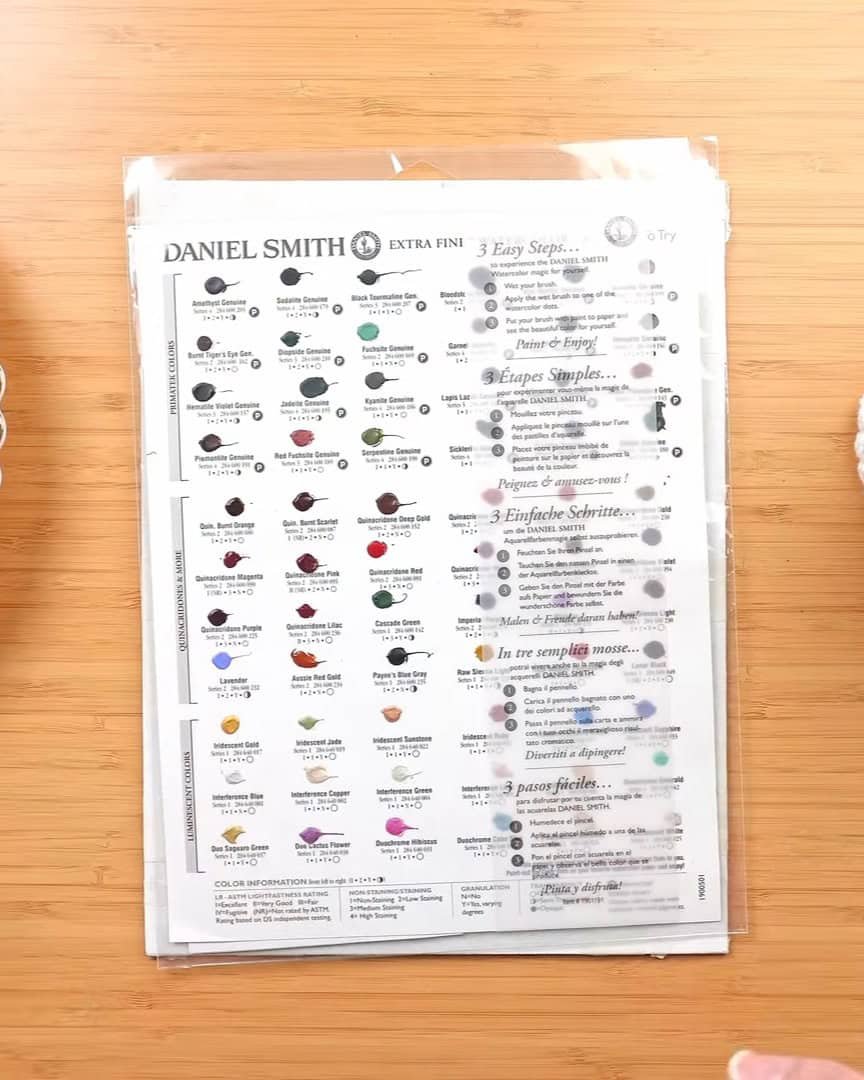
Why Dot Sheets Are So Useful
Dot sheets allow the artist to try a wide range of colors without buying full tubes. This makes it possible to see how each color behaves in actual painting before committing to a purchase.
The artist often thinks: If only this had been known earlier, so much money and so many unused paints could have been avoided.
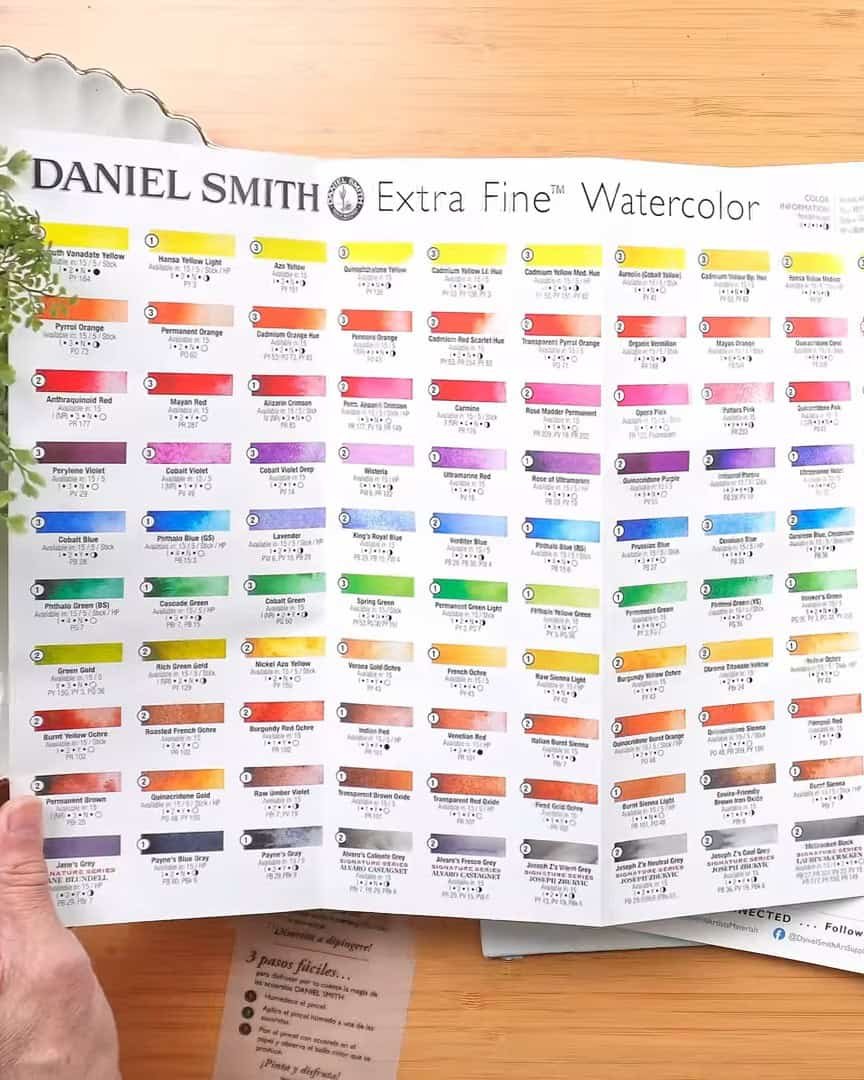
Even better, dot sheets provide essential pigment details:
- Pigment numbers like PR202, PB29, and more.
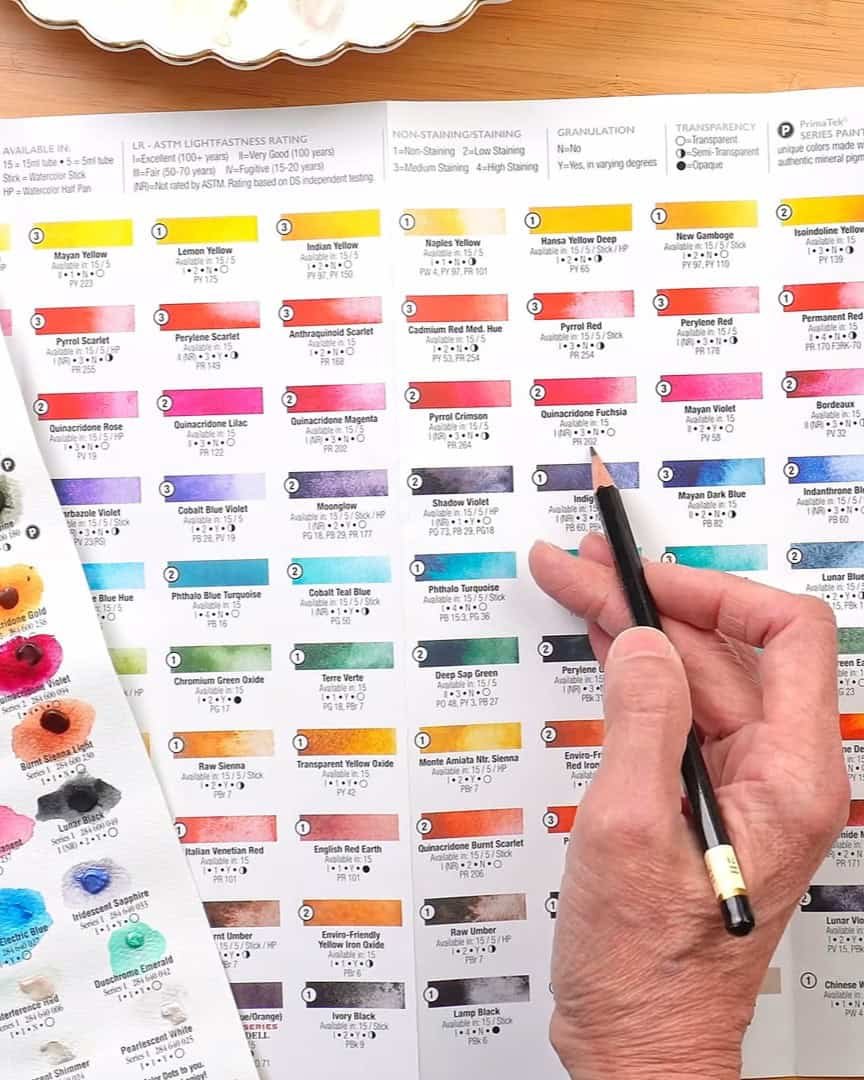
- Lightfastness ratings (how well the color resists fading).
- Whether the paint is staining or non-staining.
- Transparency level.
- Granulating effects.
- Series numbers, like Primatech or Luminescent.
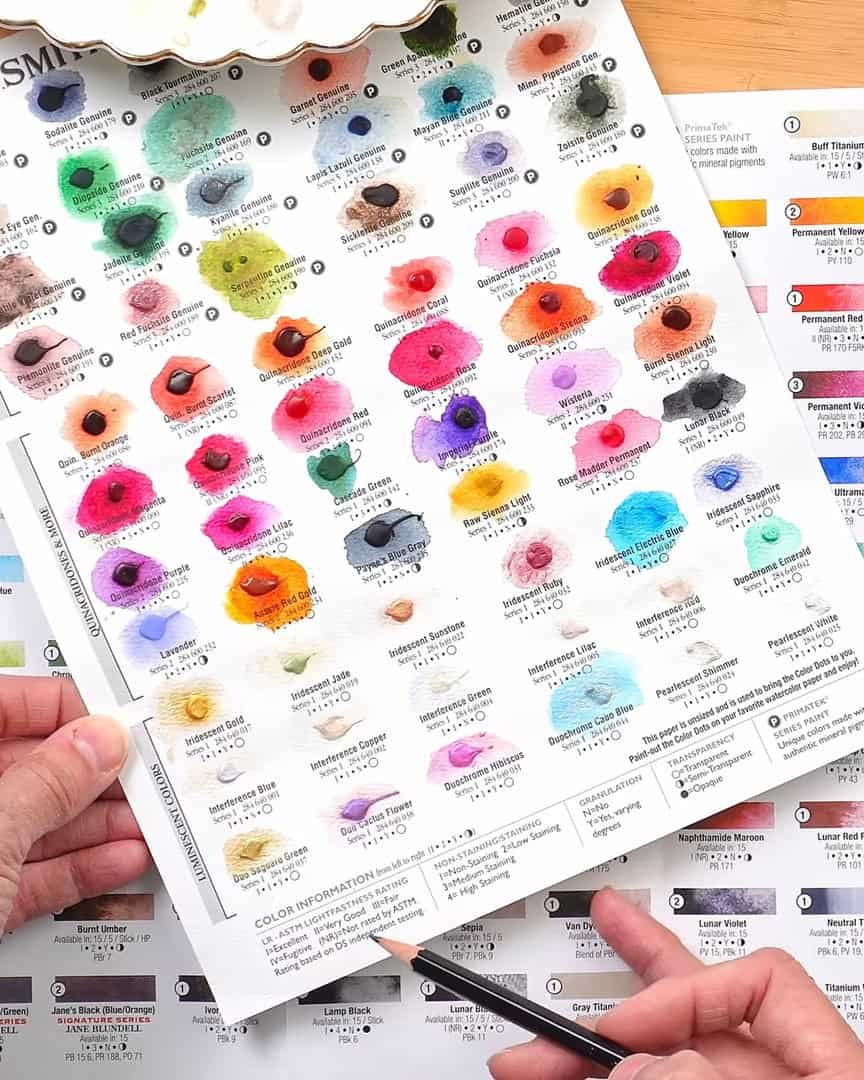
These details allow the artist to compare across brands. Names can be misleading—“Desert Sunset” might be completely different depending on the company, but pigment codes tell the real story.
How to Use Dot Sheets Effectively
Once the value of dot sheets becomes clear, the artist uses them intentionally:
- Wet the brush
- Rub it gently on a dot
- Paint on watercolor paper
Then, the artist cuts small pieces of watercolor paper and creates tiny artworks—potted plants, small landscapes, and miniature scenes.
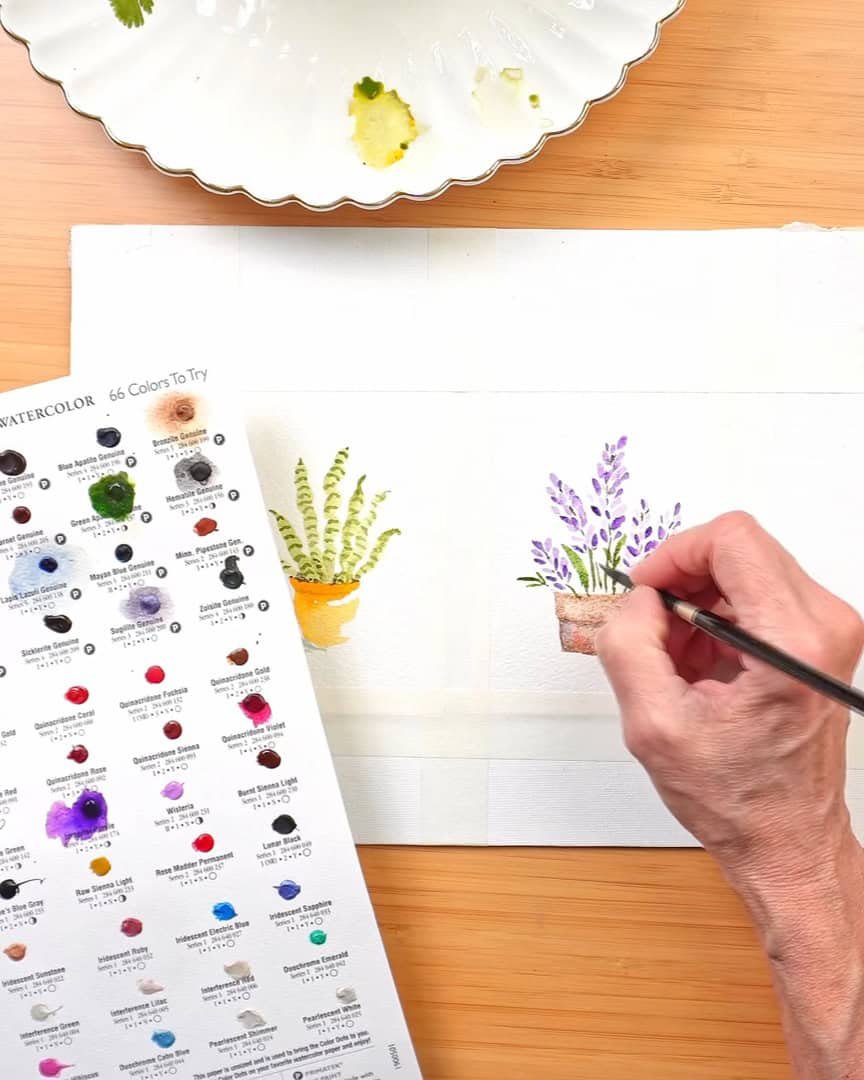
This shows exactly how each color behaves.
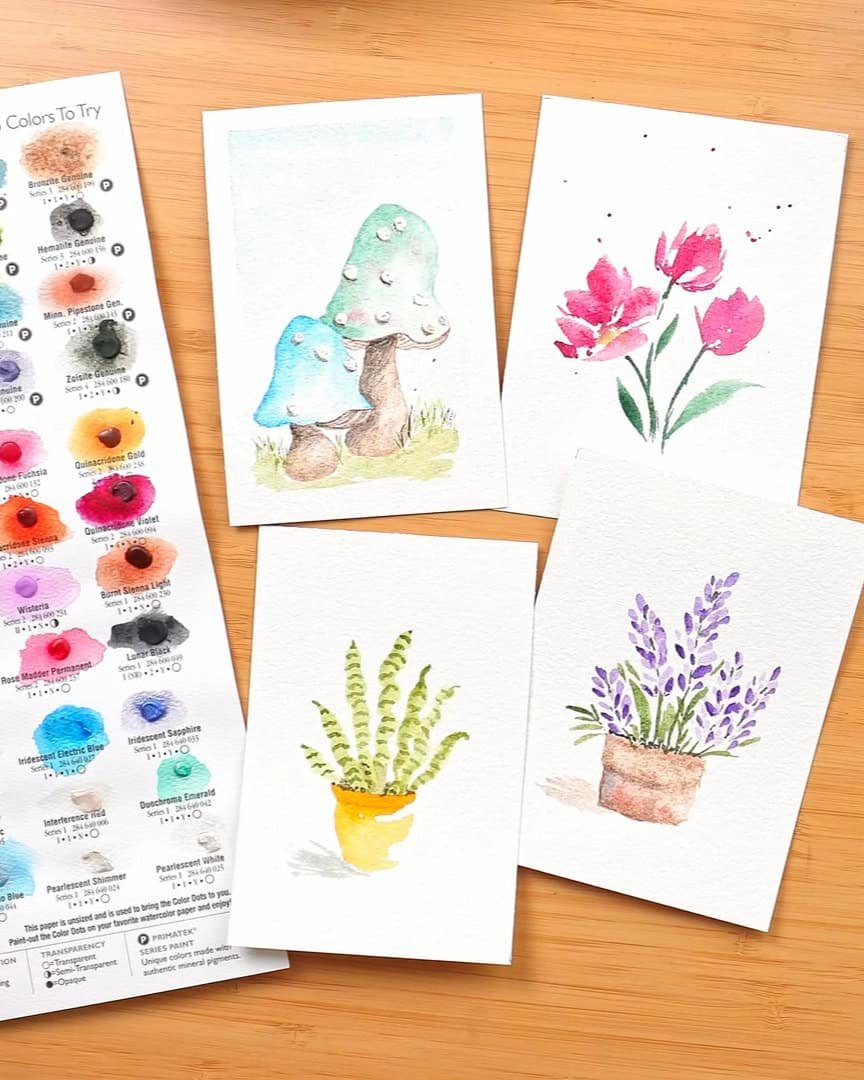
Evaluate and Compare Colors
While painting with dot sheets, the artist quickly notices some colors are nearly identical to those already in the palette. No need to buy duplicates.
Even if pigment codes differ slightly, a side-by-side comparison reveals whether two colors look almost the same.
On the other hand, the artist discovers colors to love—like certain blues from Daniel Smith. Those immediately go onto the future purchasing list.
What If a Color Isn’t Loved?
Sometimes the artist still ends up with a color that isn’t appealing. But that doesn’t mean it goes to waste. The secret? Mix it.
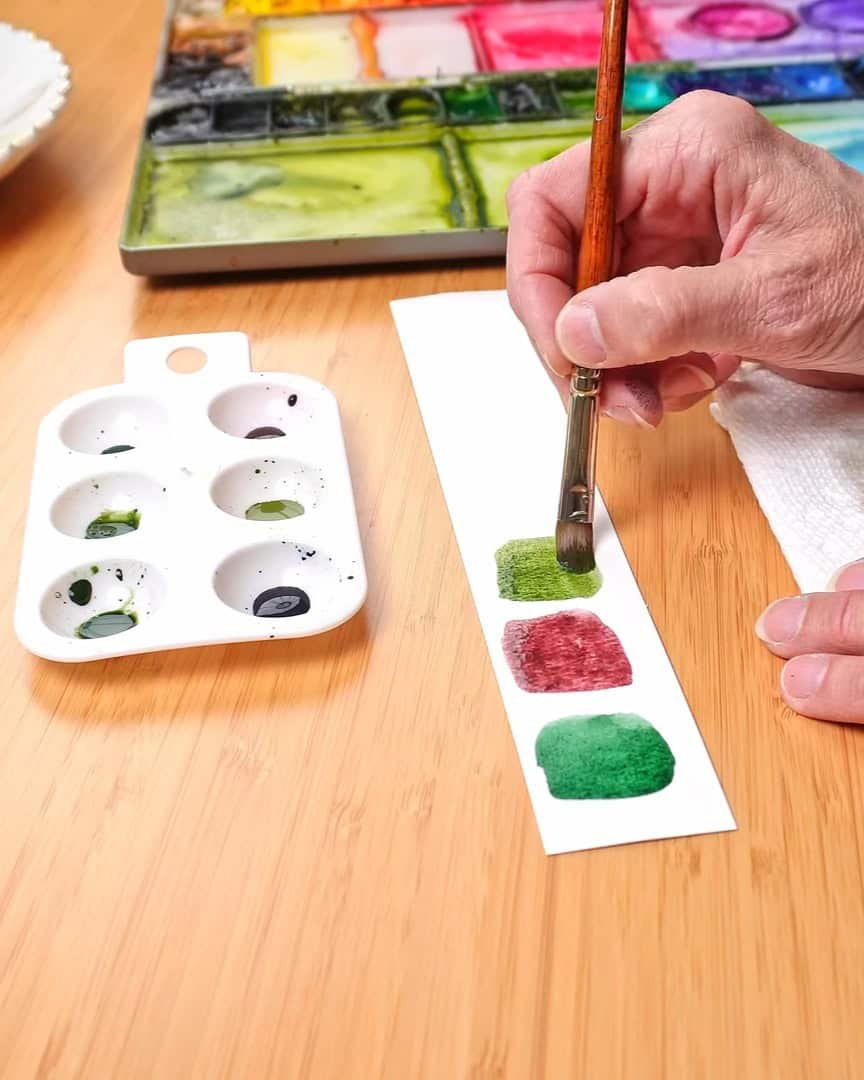
Hooker’s Green is the perfect example. It looks great in other artists’ work, but never quite works for this artist. Instead of tossing it, the artist experiments by mixing it with other paints.
A full swatch card is created using Hooker’s Green as the base. Every swatch is Hooker’s Green mixed with something else—and some of the results are surprisingly beautiful.
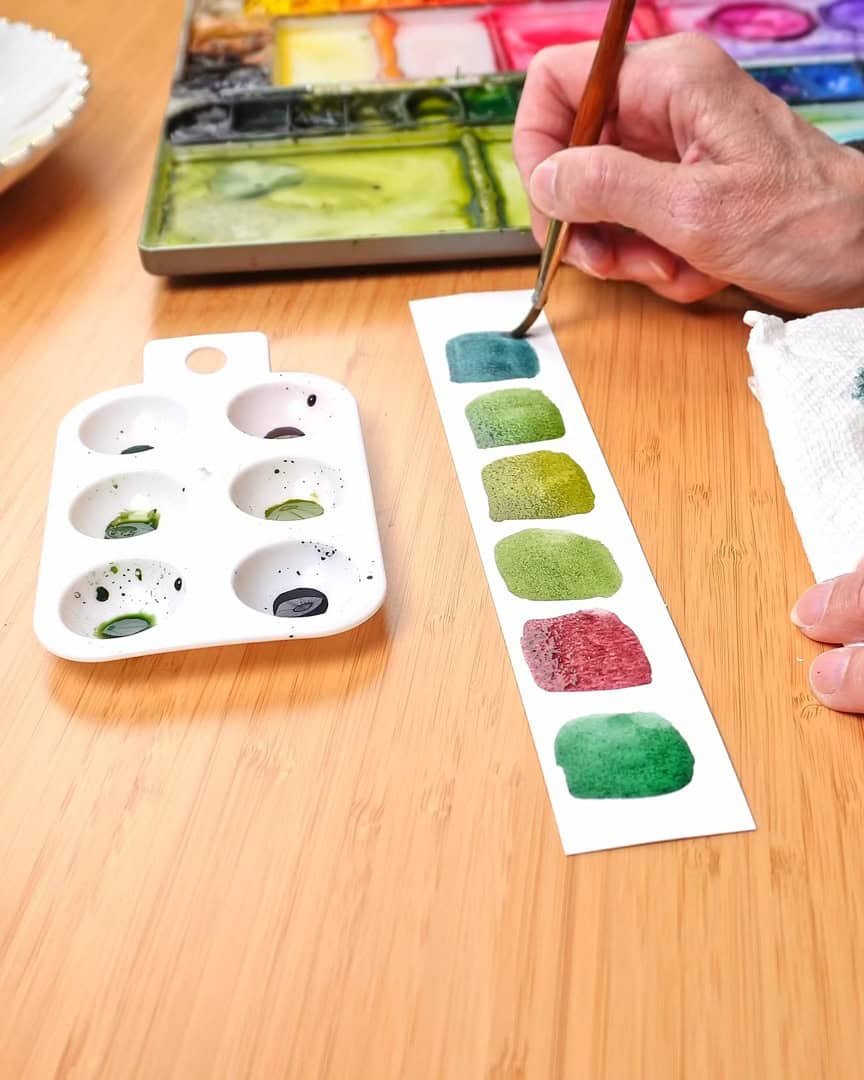
Mixing gives new life to otherwise unused colors and expands the palette without additional cost.
Buying Philosophy: Custom Palette vs. Pre-Mixed Colors
Some artists choose a very minimal palette and mix everything themselves. Others prefer convenience and buy ready-made colors.
Less Can Be More
Many artists stick with just 5 to 10 colors. They pick a warm and cool version of each primary and mix everything else. This works well and gives more control over the final color.
Enjoying Pre-Mixed Pigments
But personally, the artist enjoys pre-mixed pigments. It’s fun to try new shades and see how they behave on paper. That’s why dot sheets are perfect for the artist—they allow exploration without wasting money on full tubes.
If the viewer is like the artist and loves exploring, the viewer will enjoy playing with dot cards, too.
Wrapping Up
Dot sheets change the way the artist buys watercolor paints. They help the artist find colors they love, avoid costly mistakes, and understand what each pigment does. If the artist had known about them earlier, they would have saved money and frustration.
What about the viewer? Has the viewer tried a dot sheet yet? Give it a go and see which colors truly speak to the viewer!