
Are you ready to capture the charm of a lavender field in watercolour? In this guide, you can follow step-by-step instructions by Paul Clark from Art by Paul Clark.
He shares practical tips and techniques to make your painting journey simple and enjoyable. Let’s pick up your brushes and start painting!
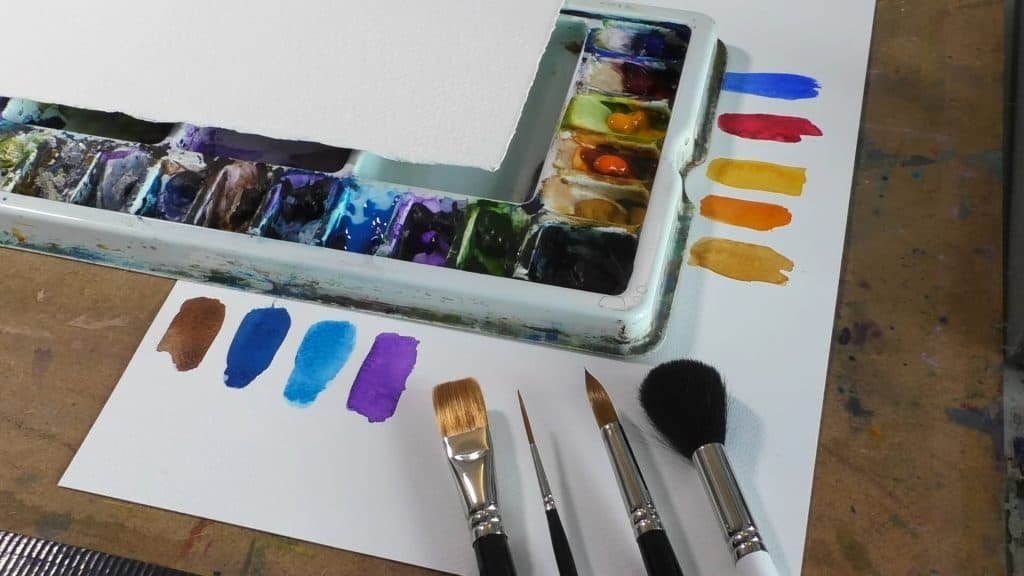
Step 1: Preparing Your Watercolor Materials
Paul Clark emphasizes the importance of having the right materials before painting.
For paper, he uses Saunders Waterford Rough 300 lb paper, which doesn’t need stretching, but any good watercolour paper will work.
For colours, he recommends:
- Cobalt blue
- Alizarin crimson
- Cadmium yellow
- Cadmium orange
- Yellow ochre
- Dioxazine purple
- Cerulean blue
- Prussian blue
- Burnt umber
His choice of brushes includes:
- ¾ inch flat brush
- #3 rigger
- #12 round brush
- Mop brush
Having everything ready makes painting faster and smoother. Paul Clark suggests setting up your workspace so all brushes and colours are easy to reach.
Step 2: Preparing Your Sketch for a Lavender Field Painting
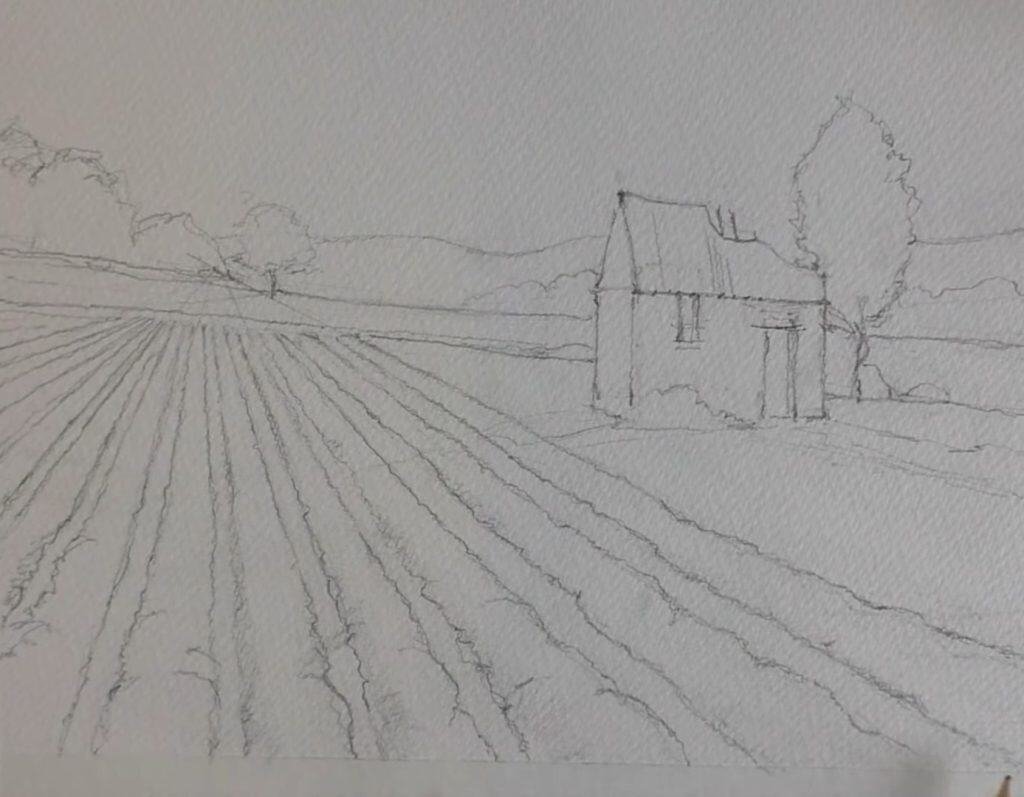
Next, it is time to sketch your lavender field. Paul Clark provides a free downloadable drawing on his website. You can follow his sketch or create your own.
The key to a realistic lavender field is perspective. All lavender rows are parallel and meet at a vanishing point. Paul Clark suggests placing the vanishing point slightly above the center of your field.
Once your sketch is ready, you are set to start painting.
Step 3: Painting the Sky in Watercolor
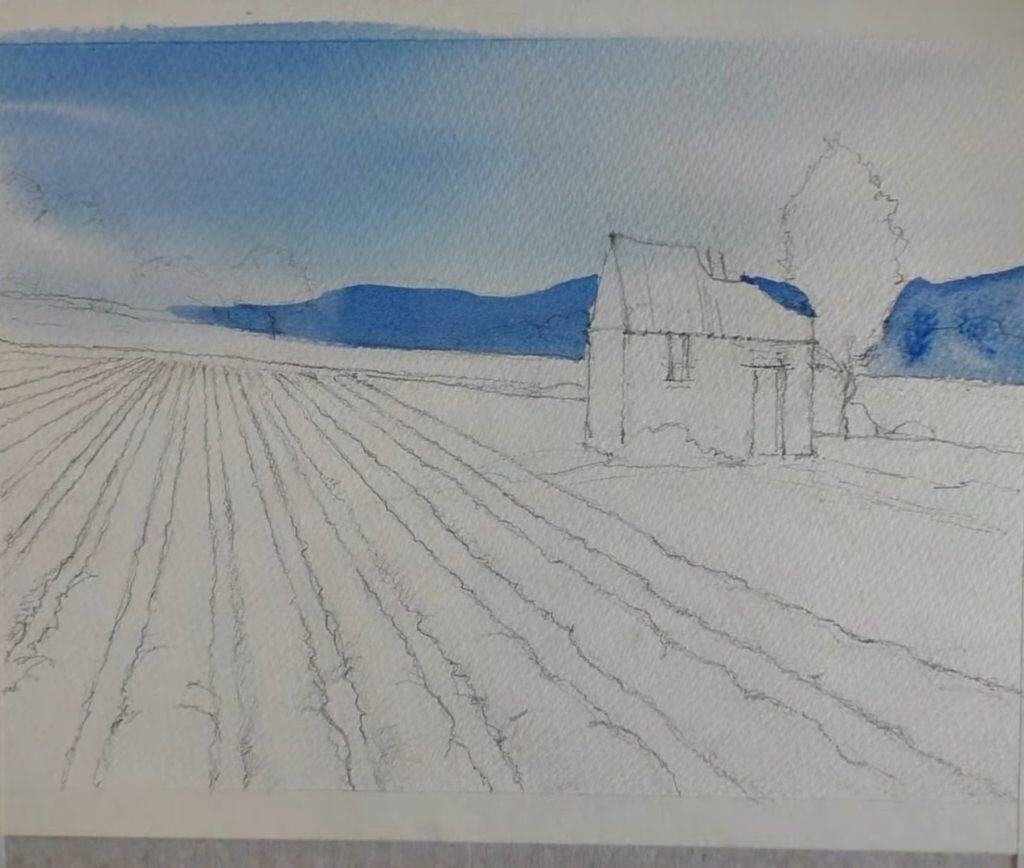
The sky sets the mood of your painting. Paul Clark mixes cobalt blue and cerulean blue in a 50/50 ratio for the base sky colour.
Begin by wetting the sky area with clean water using a mop brush. Then, apply the blue mix, keeping it lighter on the right side, which is where the light comes from.
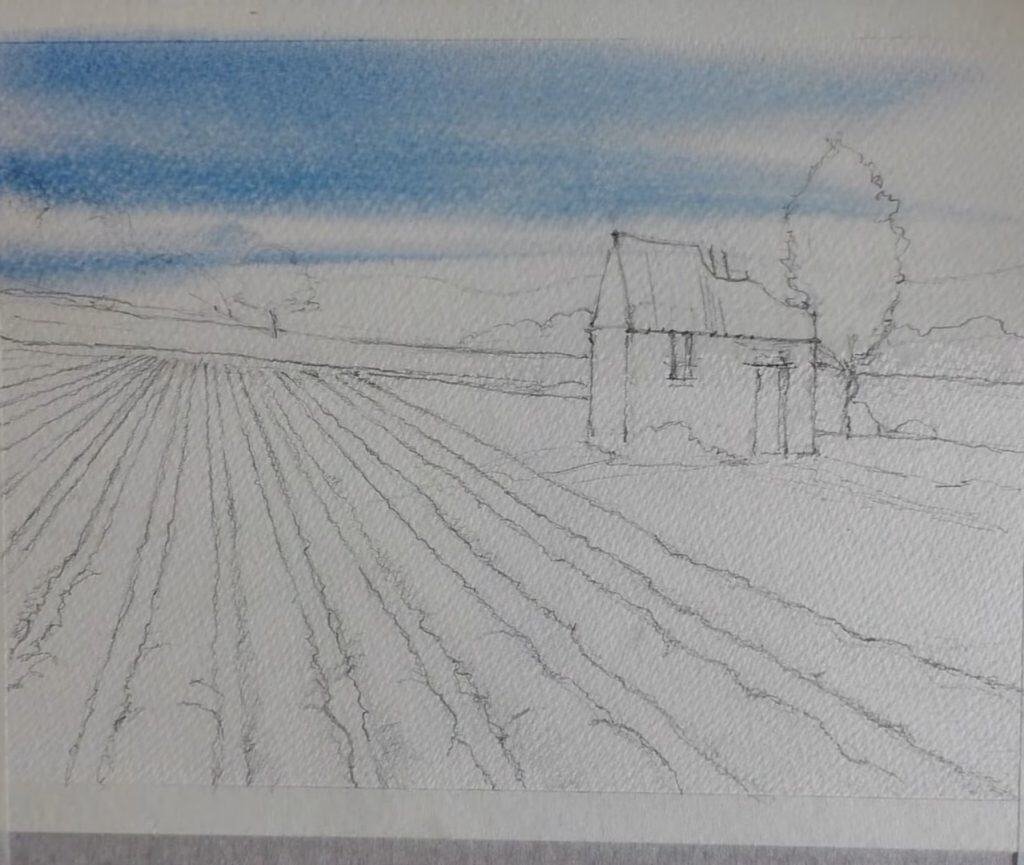
For distant hills, Paul Clark dabs a tiny amount of cadmium yellow into the blue mix. This adds a soft warmth and depth. He emphasizes keeping the colours light and fluid to capture the natural sky effect.
Step 4: Laying the Base Colours of Your Lavender Field
With the sky complete, Paul Clark moves on to the lavender field. He pre-mixes several colours to work efficiently wet-in-wet:
- Prussian blue with a small amount of alizarin crimson for shadows
- Yellow ochre with burnt umber for the ground
- 50/50 cadmium yellow and cobalt blue for green foliage
- Dioxazine purple for lavender
He wets the field area with clean water and uses a #12 brush to paint in gaps with the yellow ochre mix. Then he applies the purple, stronger in the foreground, followed by the Prussian blue for the shadowed areas.
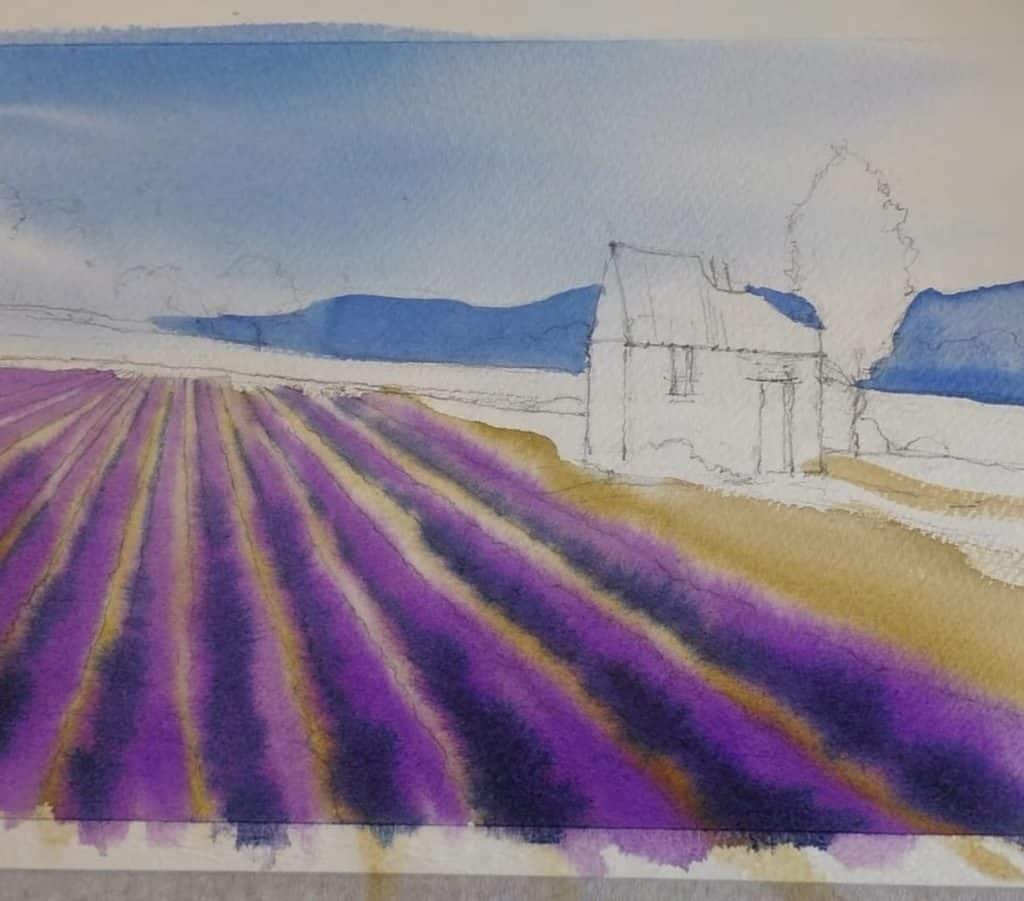
For the green foliage, he splats the green mix in the foreground. This technique adds randomness and texture without disturbing the underlying paint.
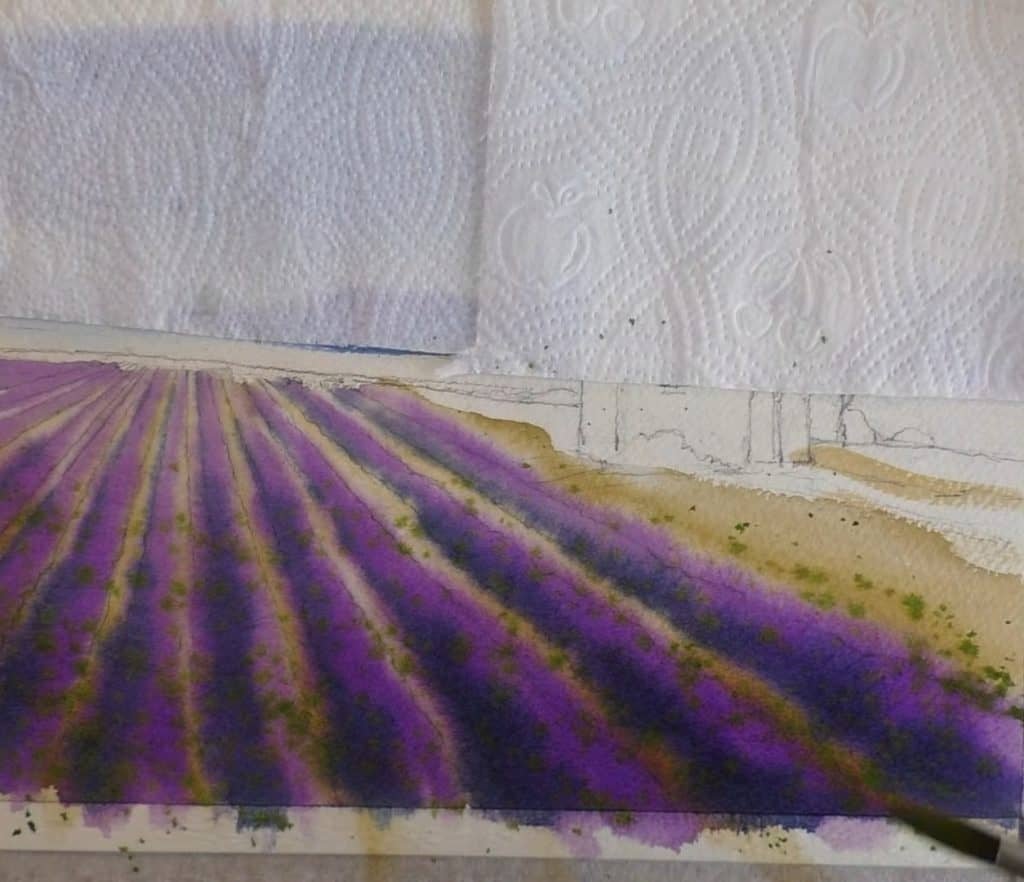
Yellow ochre is used again for distant fields and to suggest a small track at the side.
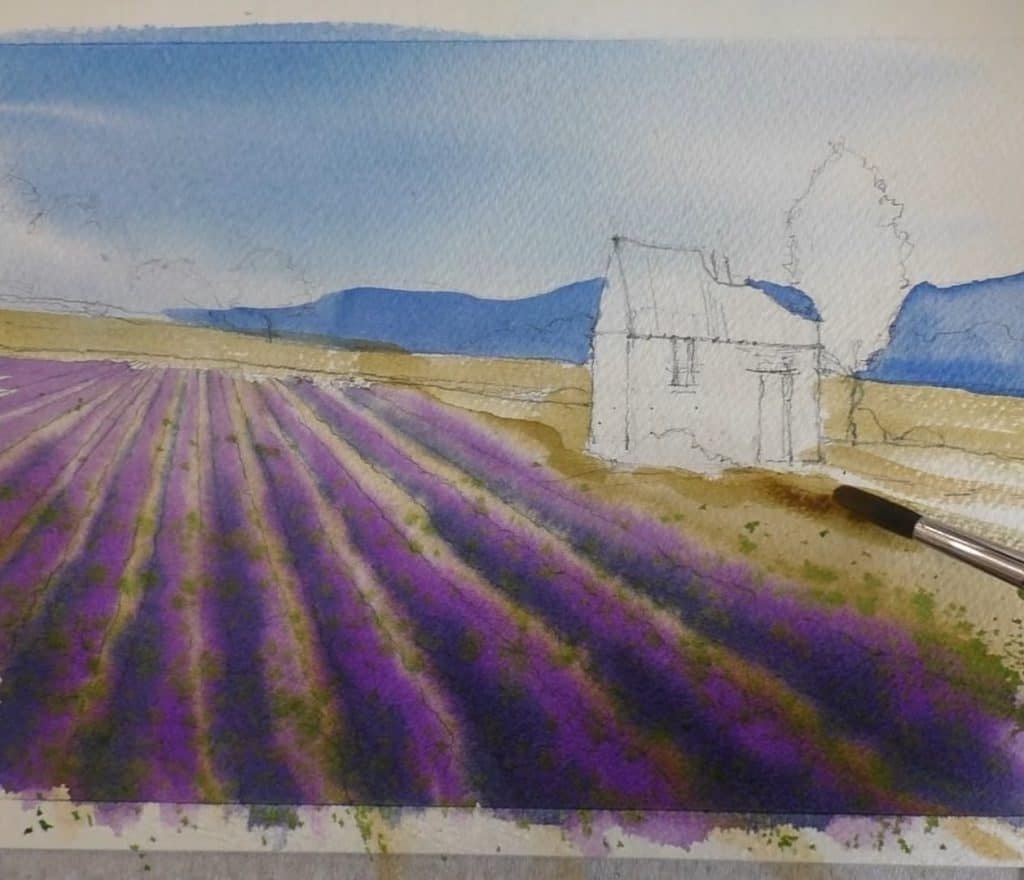
Paul Clark shows how to use a flat brush for trees. He drops in darker tones along the bottom and layers yellowy-green for highlights. Using the wooden end of the brush, he scores fine details into the paper, creating texture naturally.
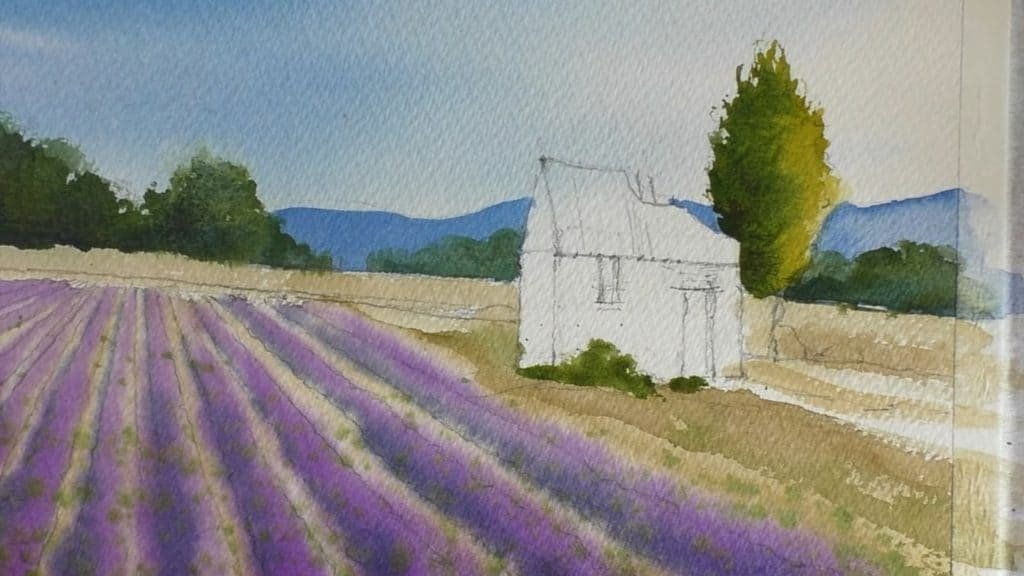
Step 5: Painting the Hut
Next, the hut comes to life. Paul Clark starts with the yellow ochre mix for the walls. Burnt umber adds texture to the ground, while a small hedge is painted along the edges.
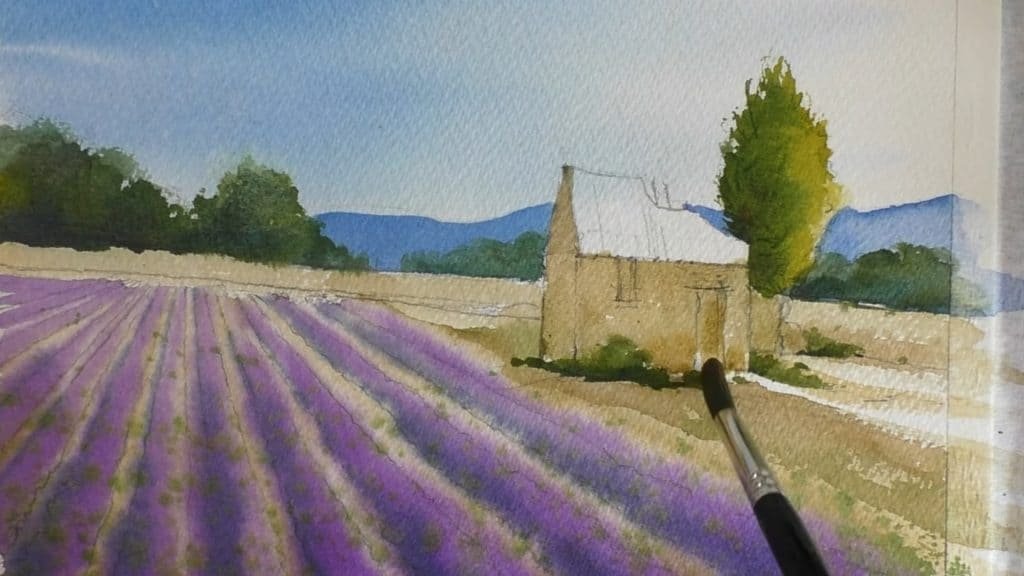
For the roof, he uses cadmium orange, then drops in burnt umber wet-in-wet. Shadows fall to the left since the sun is coming from the right, so he adds stronger burnt umber tones to the shadowed areas. Small touches of purple suggest distant lavender nearby.
This step creates a realistic focal point in the painting and balances the vibrant colours of the field.
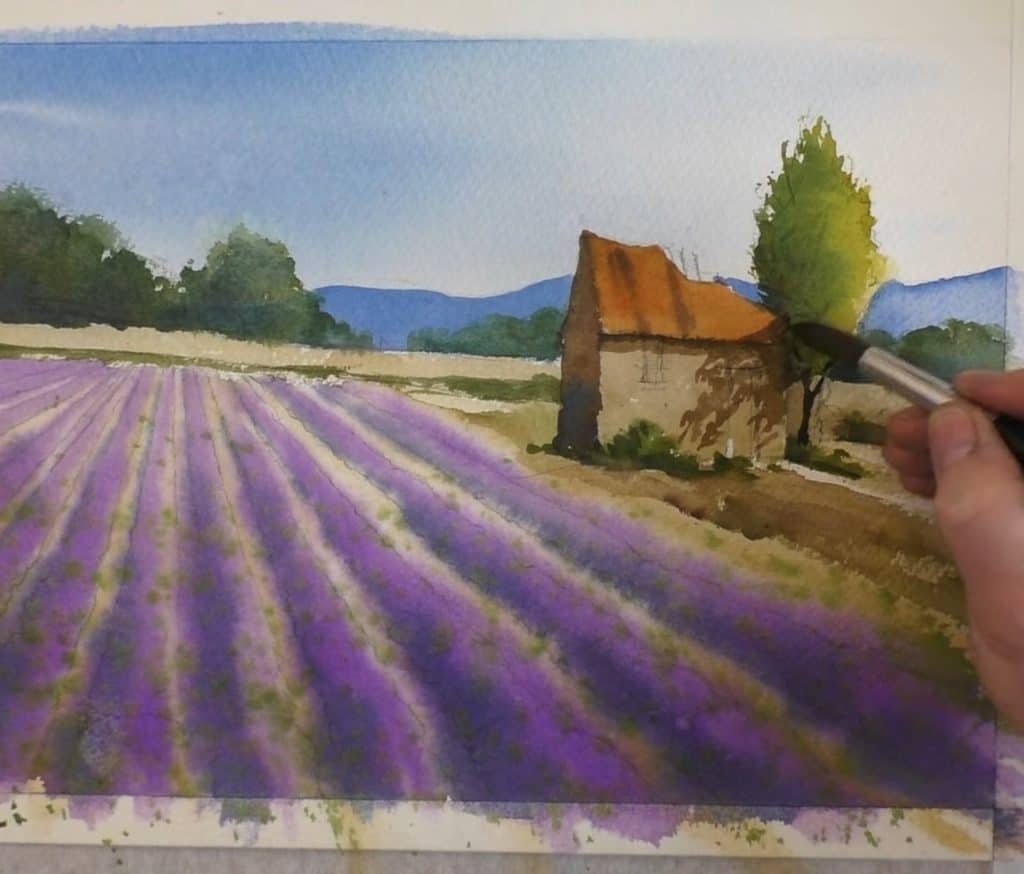
Step 6: Adding Lavender Details and Texture
To bring the lavender to life, Paul Clark splats dioxazine purple randomly across the field. Large blobs appear in the foreground, gradually getting smaller toward the horizon. Masking the area above ensures the paint stays contained.
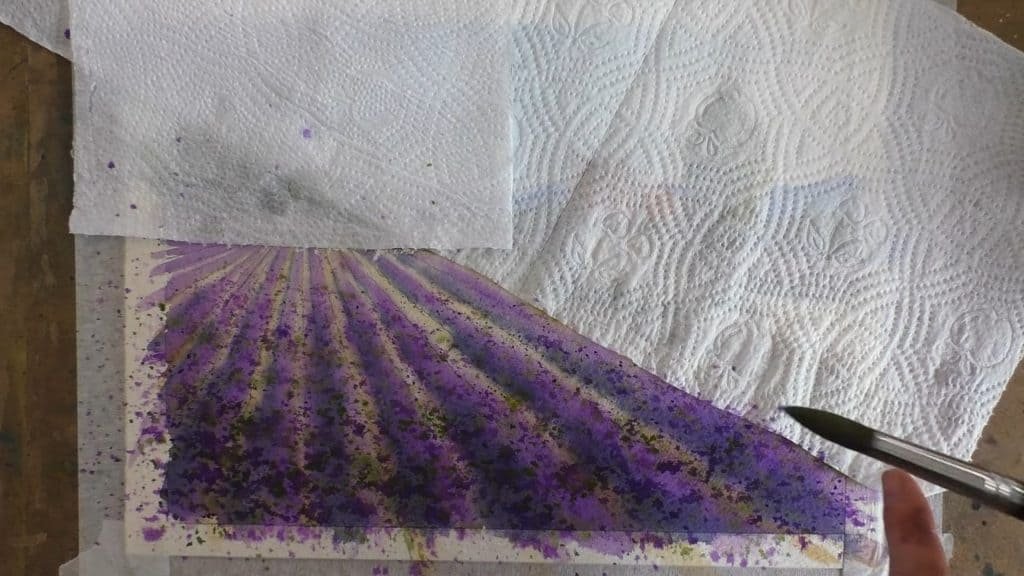
While waiting for some areas to dry, he adds detail to the hut with #12 round brush, mixing burnt umber with Prussian blue. Using a rigger brush, he creates stony textures and fine lines.
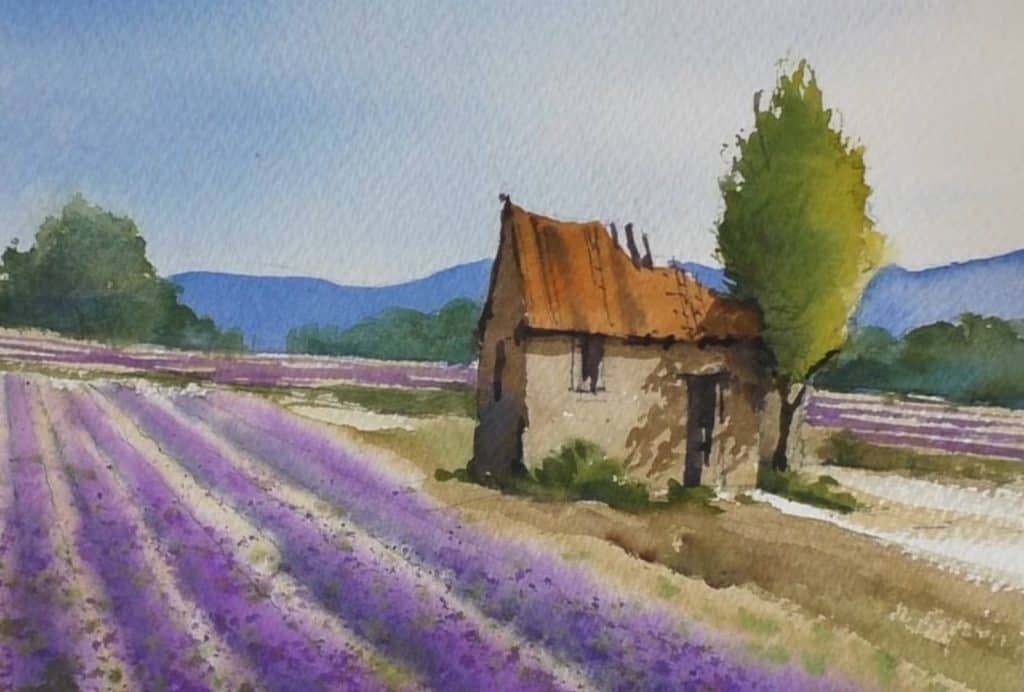
Paul Clark also refreshes the field with a light spray of water and uses the Prussian blue mix for shadows along each lavender row. In this way, he can add depth and keep the colors vibrant.

Step 7: Creating Shadows and Depth
Paul Clark focuses on shadows to create realism. Ground shadows are painted with burnt umber, while deeper shadows on the lavender use dark purple. This avoids a flat grey wash and keeps the colours vibrant.
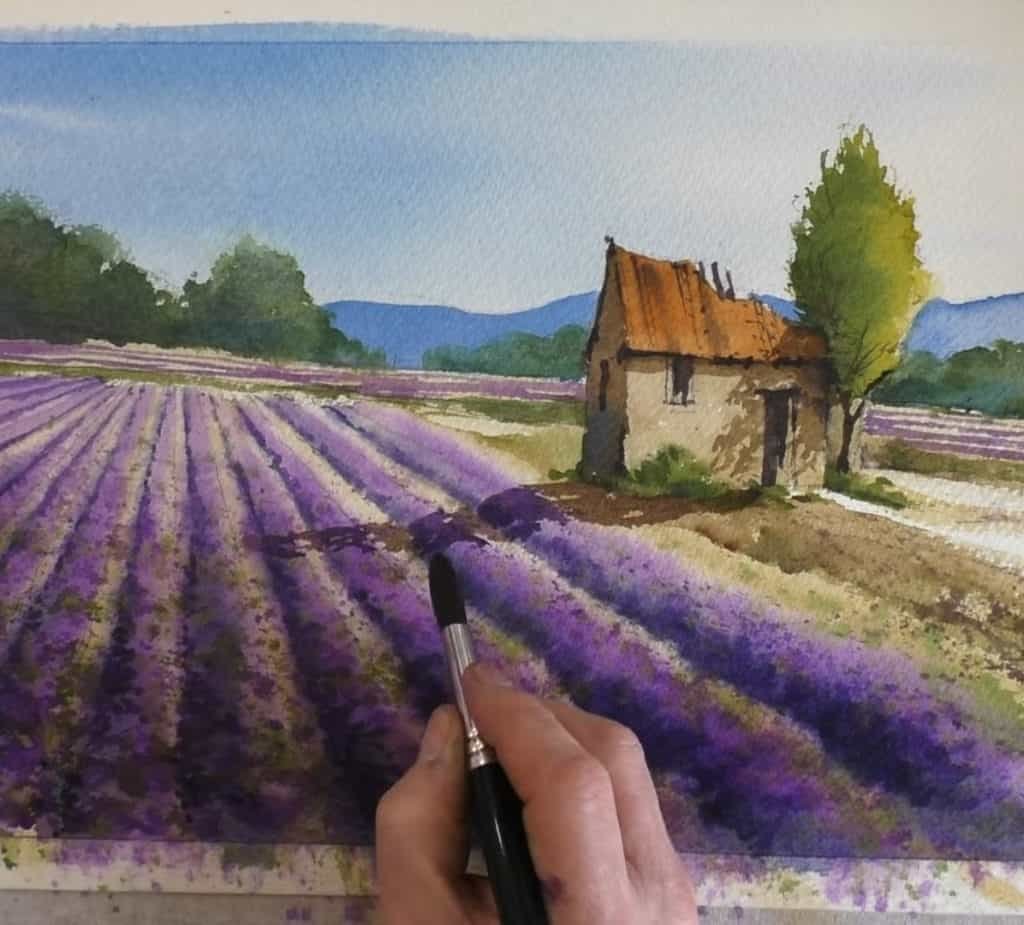
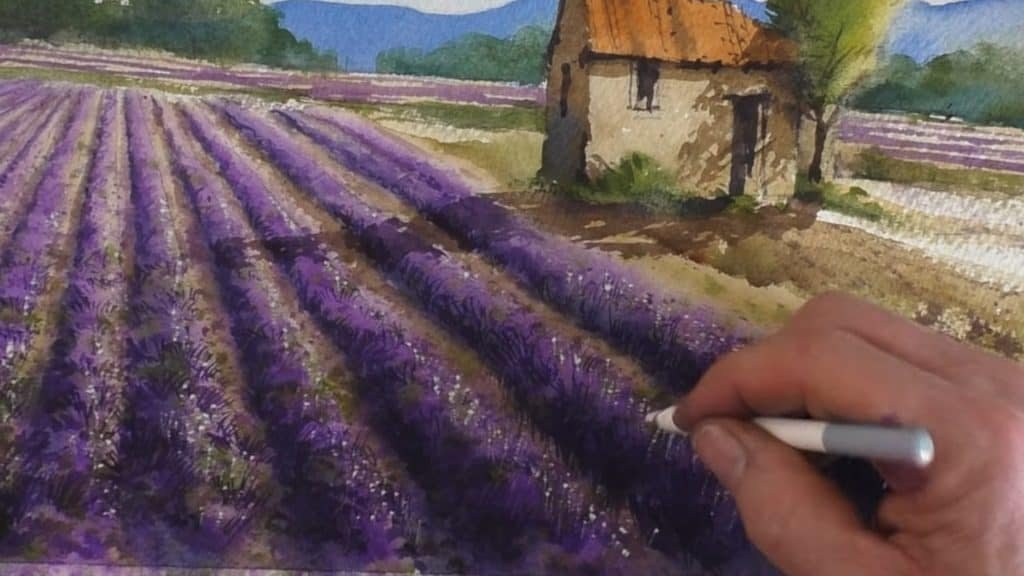
In the foreground, he adds tiny strokes with the rigger brush to define lavender stems. A little watery purple enhances the flowers, and burnt umber adds subtle ground shadows. Softening a few hard edges with damp kitchen paper creates a gentle, natural effect.
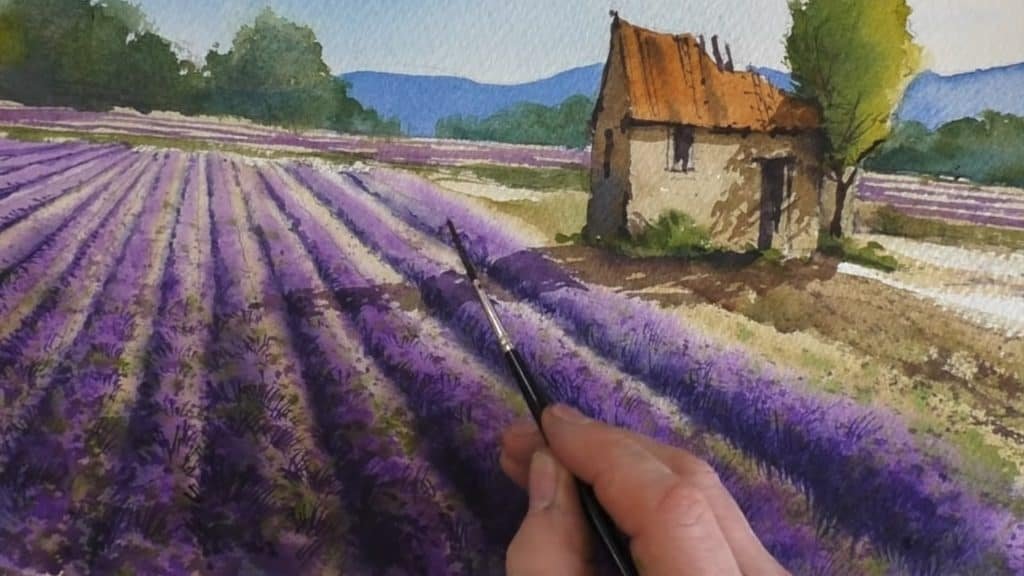
Using a scalpel, he scratches highlights into the paper, limited to about halfway across the painting, to guide the eye.
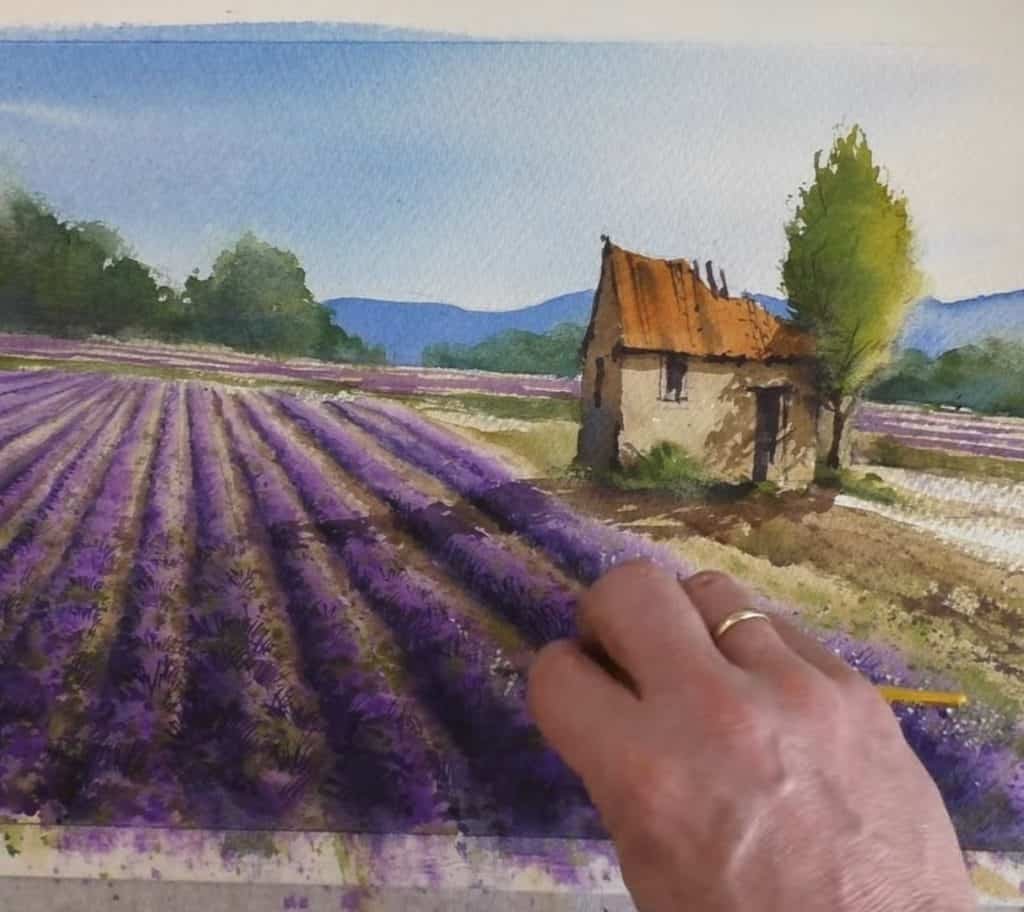
Pastel pencils add stem details for the final touches.
Step 8: Final Touches and Finishing Painting
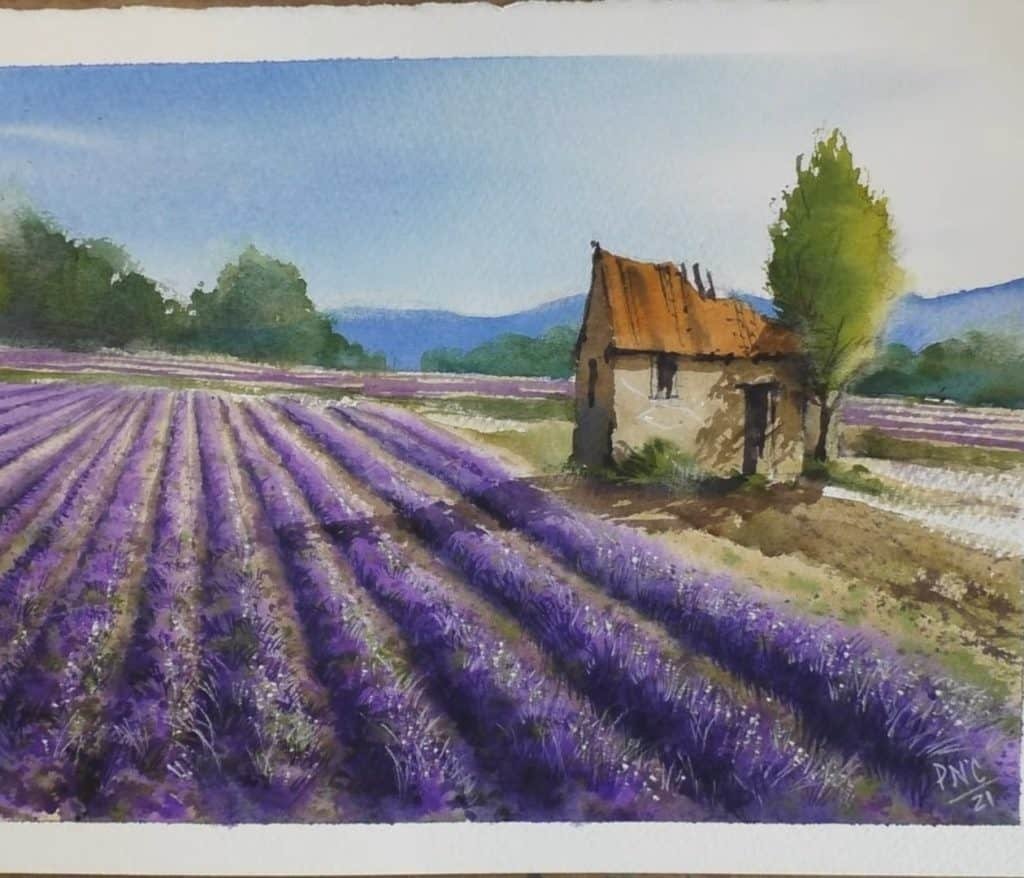
The last step is about refinement. Paul Clark examines the painting to avoid overworking it. He adds small details, softens edges, and ensures the shadows are consistent. Once satisfied, he signs the artwork.
These final touches give the painting a polished, realistic look while keeping it vibrant and fresh.
The Bottom Line
It’s both fun and rewarding to paint a lavender field in watercolor. Focus on the steps from Paul Clark’s guide to create depth and realism. Pick up your brushes, experiment with the techniques, and enjoy seeing your lavender landscape come to life on paper.