
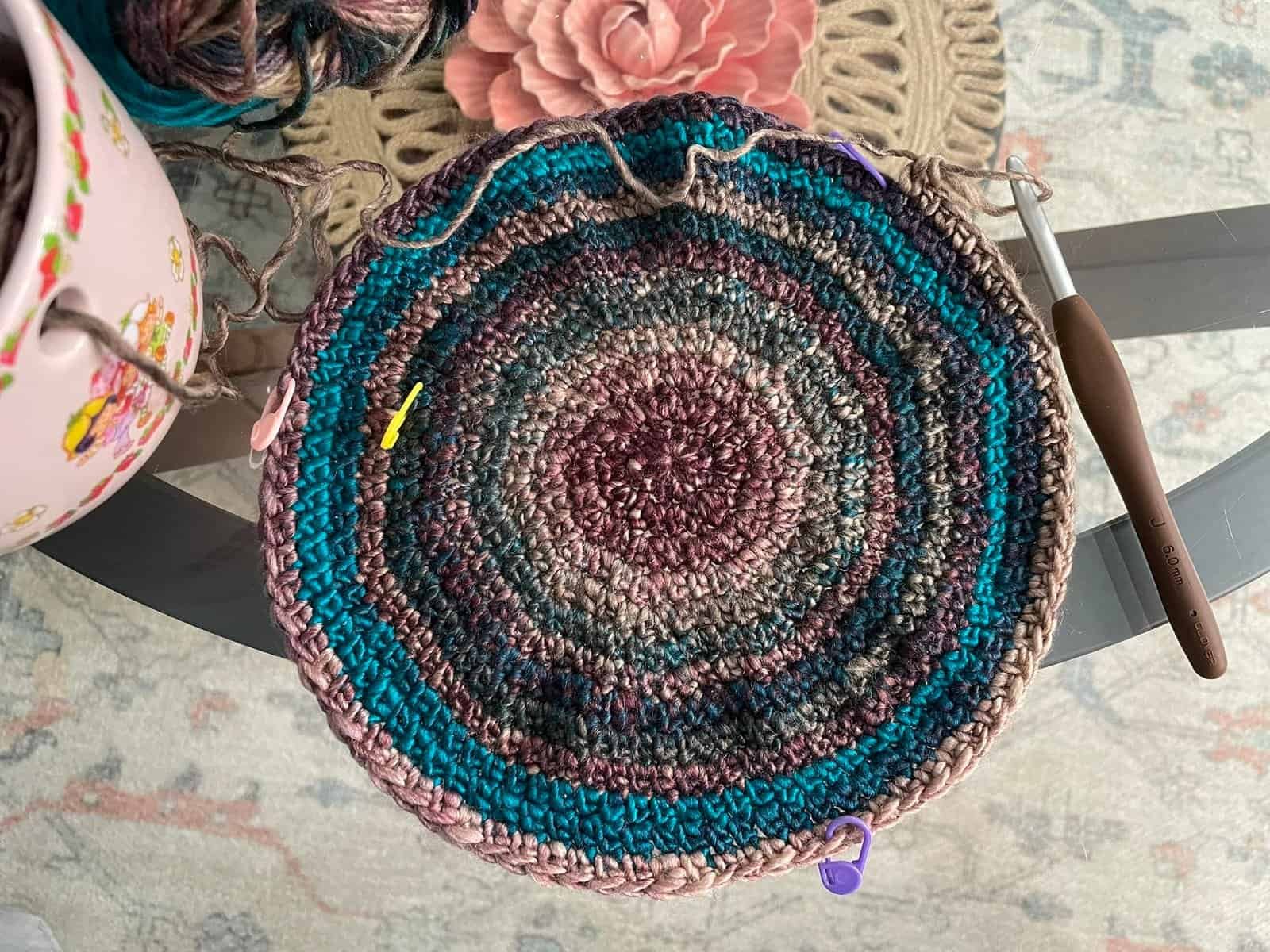
If you’ve ever tried crocheting in the round and ended up with something that looks more like a ruffled lettuce leaf or a tiny yarn bowl… you are not alone.
Priscilla from The Stitch Queen Crochet breaks down the two most common crochet circle problems and—more importantly—how to fix them. Her goal is simple: help you crochet circles that actually lie flat, without frustration or mystery.
Let’s talk about what’s really going on when your circle decides to rebel.

Contents
When Your Circle Gets Wavy and Dramatic (Ruffling)
If your crochet circle is rippling, folding, or trying to cosplay as a sea creature, the issue is usually too many stitches in the first round. More stitches mean more fabric—and when there’s nowhere for that fabric to go, it ruffles. Crochet physics. Don’t ask me why.
Priscilla demonstrates this with a half double crochet circle that has extra stitches and instantly starts waving back at her.
What helps fix ruffling:
- Use fewer stitches in the first round
- For half double crochet, aim for about 10–12 stitches
- Try small adjustments—11, 12, maybe 13—and see what behaves best with your yarn and tension
She also reminds us that tension and yarn choice matter. If you crochet tightly or loosely, your ideal stitch count might be slightly different. There’s no universal magic number here—just some experimenting.
Another trick: Keep the stitch count the same but use a smaller hook. A tighter fabric can calm those ruffles right down. Just keep in mind that a smaller hook will also make your finished piece smaller. I’m just the messenger.
When Your Circle Turns Into a Bowl (Cupping)
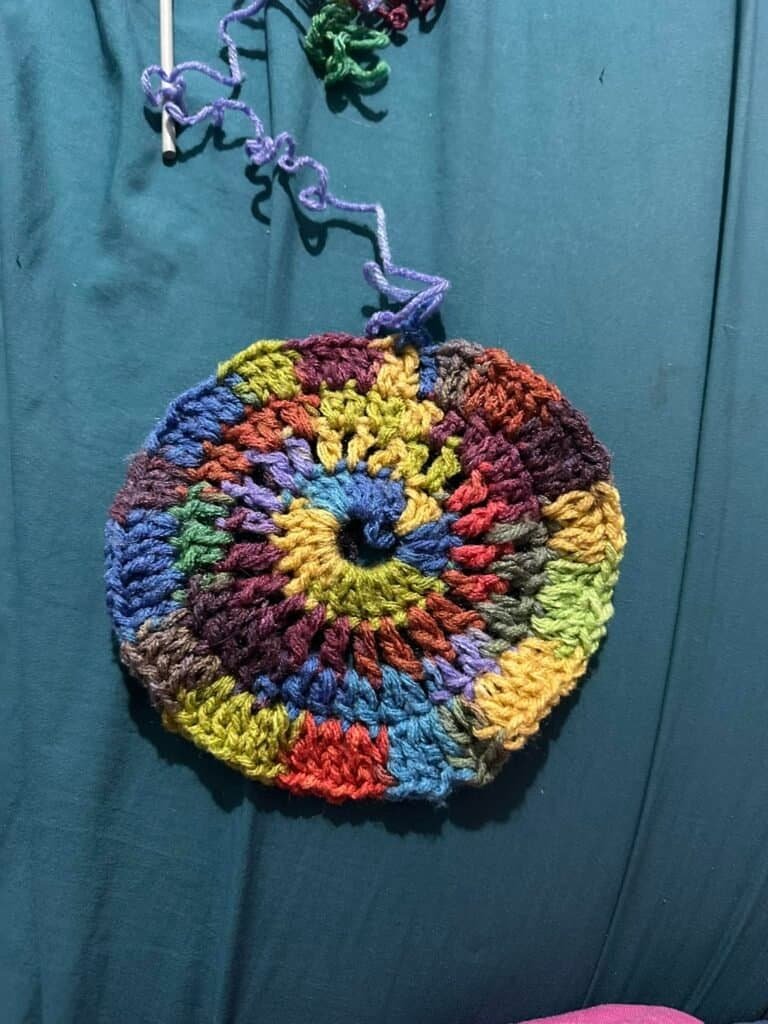
Now let’s flip the problem. If your circle is curling up into a bowl shape, that means you’ve gone in the opposite direction—not enough stitches in the first round.
Priscilla shows this with a double crochet circle that starts cupping because it doesn’t have enough stitches to spread out.
How to fix cupping:
- Add more stitches to the first round
(If you started with 12, try 15 or 16) - Use a larger hook to loosen the fabric
- Loosen your tension if you tend to crochet tightly
For example, switching from a 5 mm hook to a much larger one can help the stitches relax and spread out, allowing the circle to flatten. Again, testing is key—your yarn will tell you what it wants if you listen.

The Big Secret: There Is No One “Right” Answer
If you were hoping for a single perfect stitch count that works every time… I hate to break it to you, but crochet doesn’t work that way. Different yarns, hook sizes, stitch types, and even your mood that day can affect how a circle behaves.
Priscilla encourages crocheters to:
- Experiment freely
- Adjust stitch counts, hook sizes, and tension
- Be patient with the process
Crochet is part math, part art, and part “let’s see what happens if I try this instead.”
Extra Help and What’s Coming Next
To support crocheters even more, Priscilla points viewers to:
- A previous video on how to start crocheting in the round
- A free quick pattern for practicing crochet in the round
- An upcoming tutorial focused specifically on crocheting flat circles with single crochet
She also invites viewers to comment with questions or requests for a part two—because troubleshooting is way easier when we do it together.
Final Thoughts
Priscilla wraps up by thanking her viewers and calling them her beloved “crochet kings and queens,” because obviously we deserve that title. Her message is clear: flat circles are absolutely achievable, and a little trial and error is part of the journey—not a failure.
So if your circle ruffles, cups, or just refuses to cooperate, take a breath, tweak a stitch count, change a hook, and try again. You’ve got this—and your circles will behave eventually.
