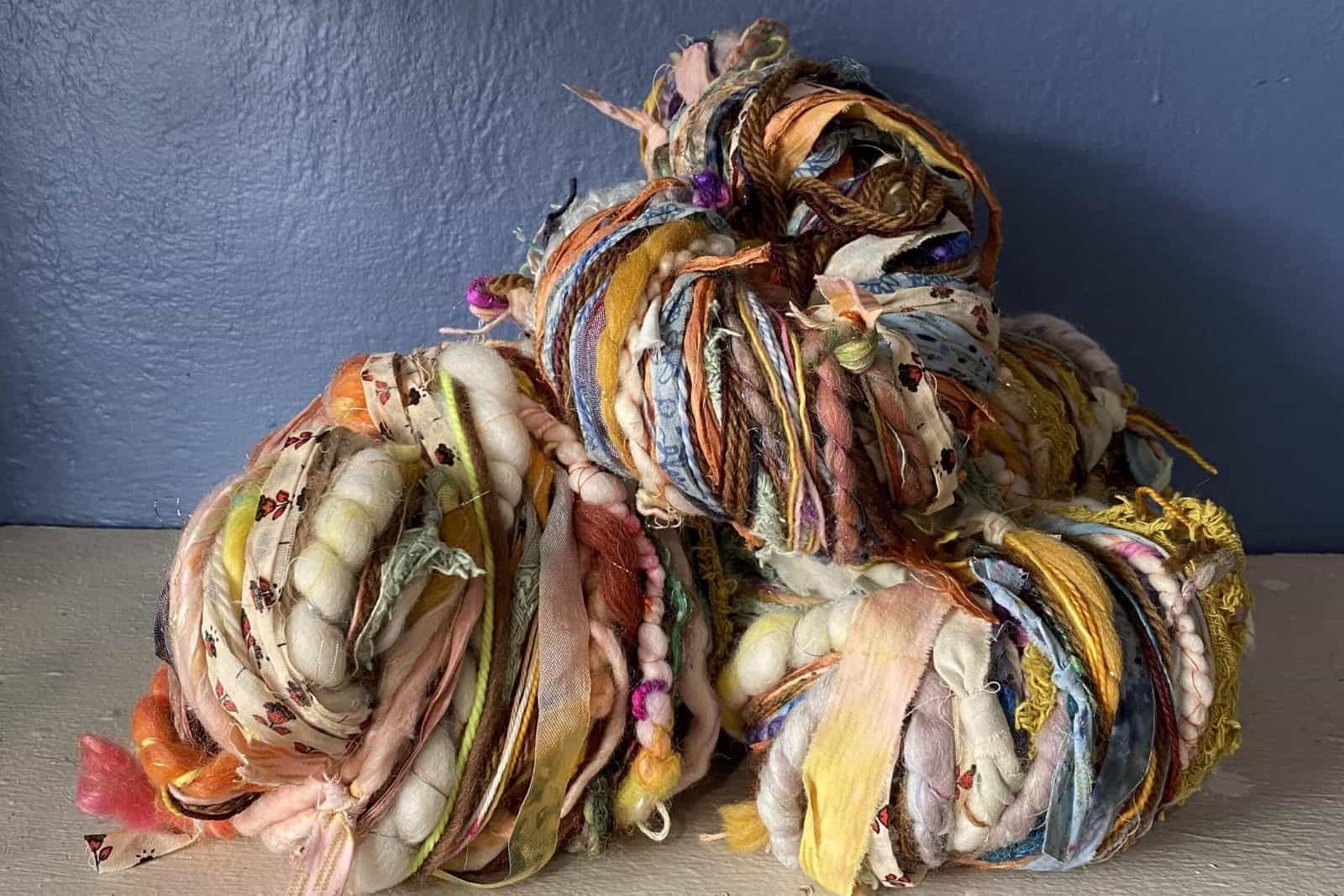
Leftover yarn has a way of multiplying. One small ball comes from a finished hat, another from a sweater, and before long, a knitter may have an entire box filled with scraps, odd lengths, and mystery skeins.
In his guide to scrap yarn projects, Norman from NimbleNeedles shares ten practical and creative ways to put those leftovers to use instead of throwing them away. His ideas range from useful household items and small gifts to colorwork projects, decorative details, and even practice swatches.
Before getting started, Norman recommends one simple organizational rule: secure the tail of each leftover ball with a rust-free hair clip and attach the original yarn label using scrap yarn or a stitch marker. If the yarn is wound into a cake, the label can be stored inside it. This keeps scraps from becoming a tangled pile of unidentified yarn.
1. Knit Small Pot Holders and Coasters
Norman’s first recommendation comes from a familiar source: his grandmother.
She often kept a small pot holder on her needles, and decades later, Norman says he understands why. A simple pot holder can use as little as around 30 grams of DK-weight cotton yarn.
If there is not enough yarn for a single-color version, scraps from different projects can be combined.
Small Household Projects Have Many Uses
Norman uses knitted pot holders for handling hot cookware and even for opening a fireplace door with a hot handle.
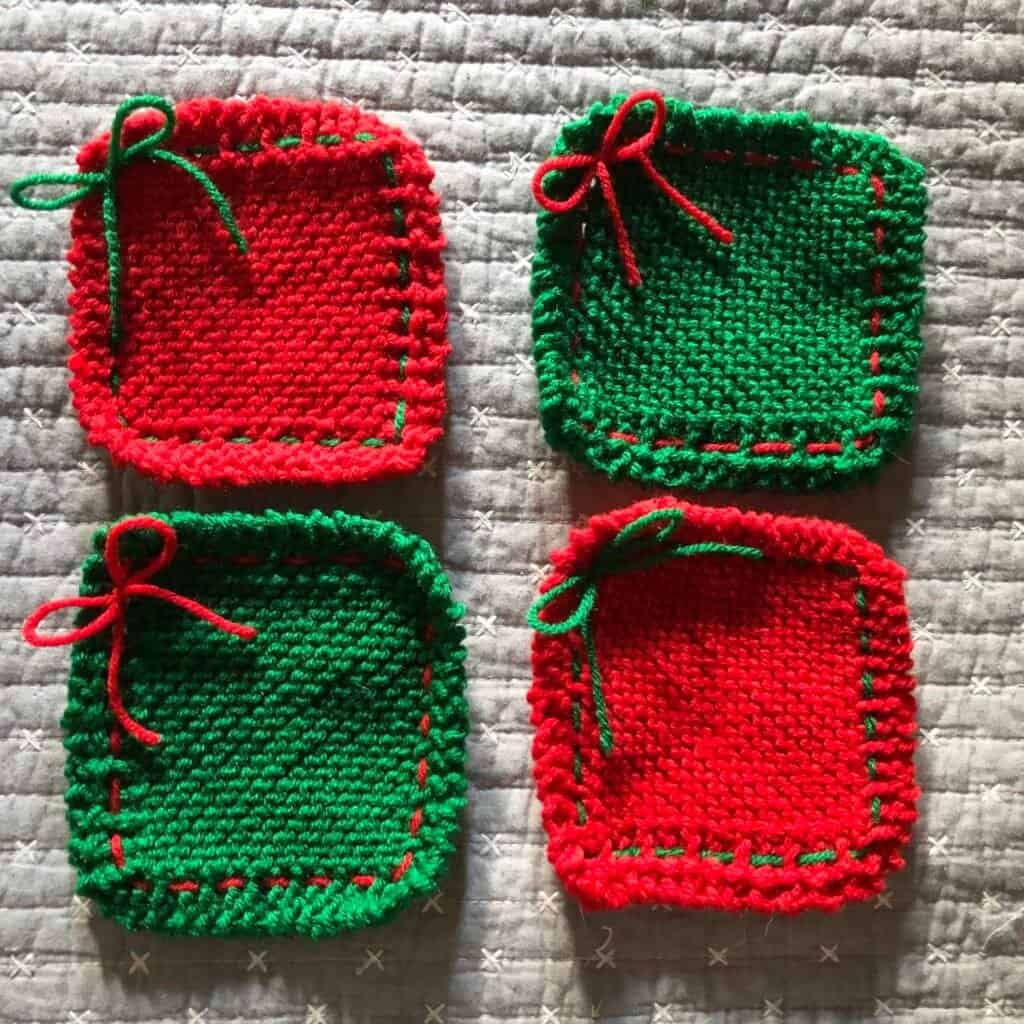
The same small pieces can also work as coasters. He places them underneath vases on glass tables to help protect the surface and uses them under cold drinks.
With fringes added, a basic coaster can also become what he calls a small “mug rug” for coffee or tea.
2. Make Small Plushies and Decorative Toys
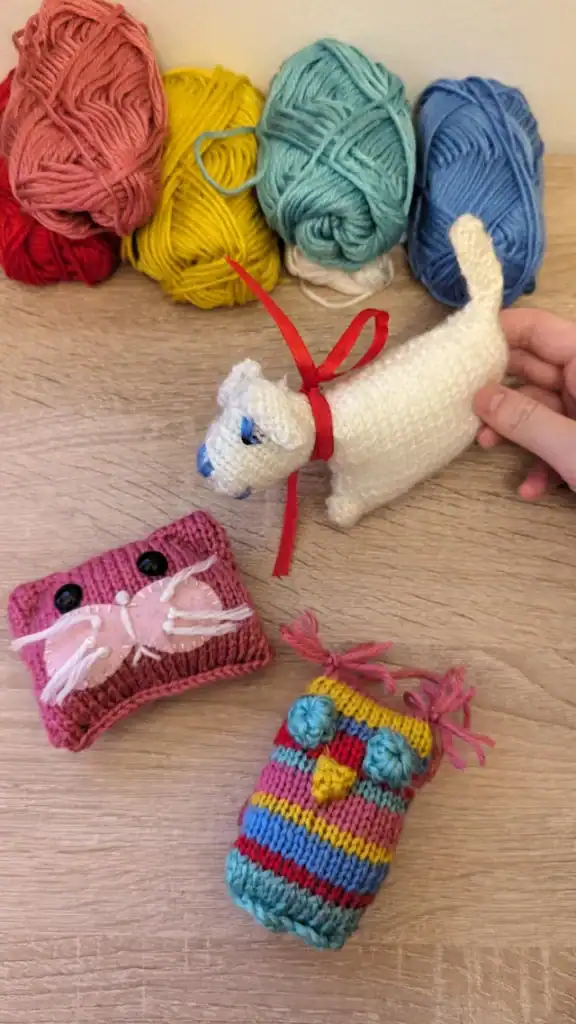
Small stuffed projects are another excellent way to use tiny quantities of yarn.
Norman mentions his knitted mushroom and pumpkin patterns, including a pumpkin with an optional vine and another with a textured, warty appearance.
One pumpkin, for example, may use only around 12 grams of orange yarn and a few additional grams for the vine.
He also discusses a humpback whale plushie that uses relatively small quantities of several colors.
Scrap Yarn Toys Can Make Thoughtful Gifts
Norman often gives handmade toys to friends or family members who are expecting a baby.
Depending on the recipient, he might make a teddy bear, bunny, unicorn, or another animal that fits the nursery.
The point is simple: many plushie patterns require surprisingly little yarn, making them ideal when there is not enough leftover for a full garment.
3. Save Tiny Yarn Tails for Stuffing
Not every scrap is long enough to knit with.
Norman recommends saving all those very short tails left over after weaving in ends instead of throwing them away.
He collects them in a large jar throughout the year.
Once enough have accumulated, they can be used as stuffing for small toys.
If the collection grows large enough, Norman suggests they could even be used to stuff something bigger, such as a pillow.
4. Make a Magic Knot Scrap Yarn Ball
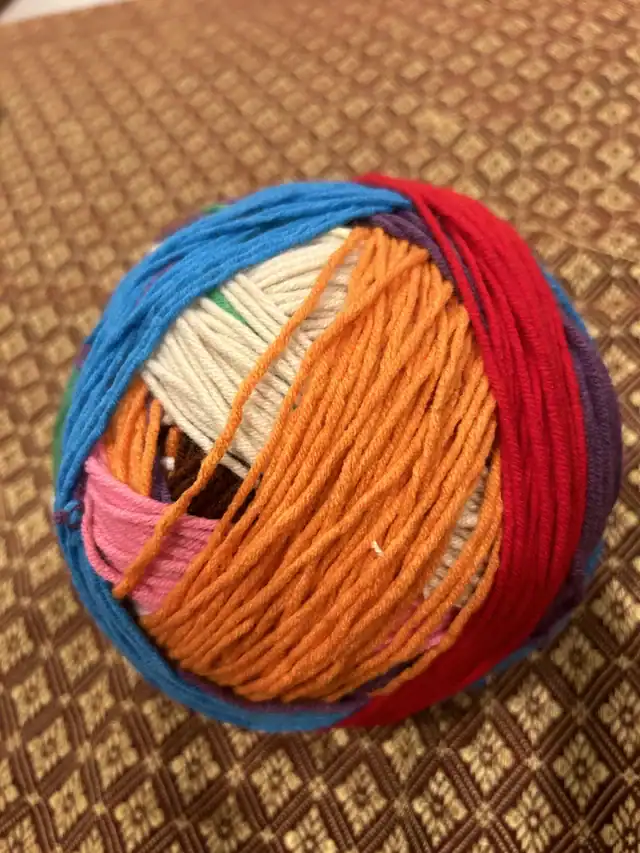
Another option is to connect many short yarn pieces into one larger ball.
Norman demonstrates a magic knot by tying an overhand knot with one tail, then another overhand knot around the second tail. The knots are pulled tight and the excess ends are trimmed.
Repeating this process creates a colorful, unpredictable scrap yarn ball.
Use Magic Knot Yarn Carefully
Norman adds an important warning: knots can come undone.
For that reason, he prefers this method with slightly fuzzy or feltable fibers and does not recommend it for projects that will experience heavy wear.
He specifically says the heel of a sock would not be a good choice.
Instead, the scrap ball could work for items such as a dishcloth, floor mop, scarf, or coaster, especially where the random color changes are part of the appeal.
5. Use Natural Fiber Scraps for Bird Nesting Material
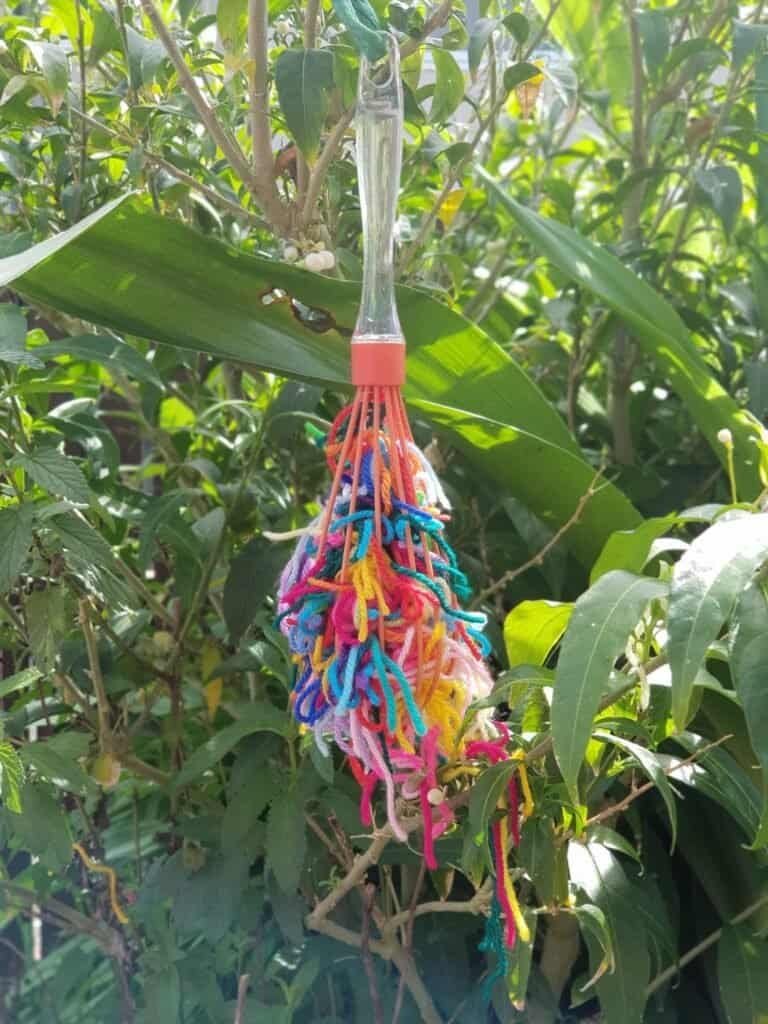
Norman also shares a less conventional idea: offering suitable yarn scraps to birds.
He places small pieces of yarn inside a simple wire cage and hangs it from a tree or bush so birds can take material for their nests.
Research Local Birds First
This idea comes with several cautions.
Norman strongly recommends researching the nesting habits of local bird species before putting yarn outside. Some birds may prefer short pieces, while others may be better suited to roving or separated fibers.
He also says to use natural fibers only, because plastic-based materials do not belong in bird nests.
For anyone who knows how to spin, turning scraps back into roving is another possibility he mentions.
6. Knit Seasonal Ornaments and Small Decorations
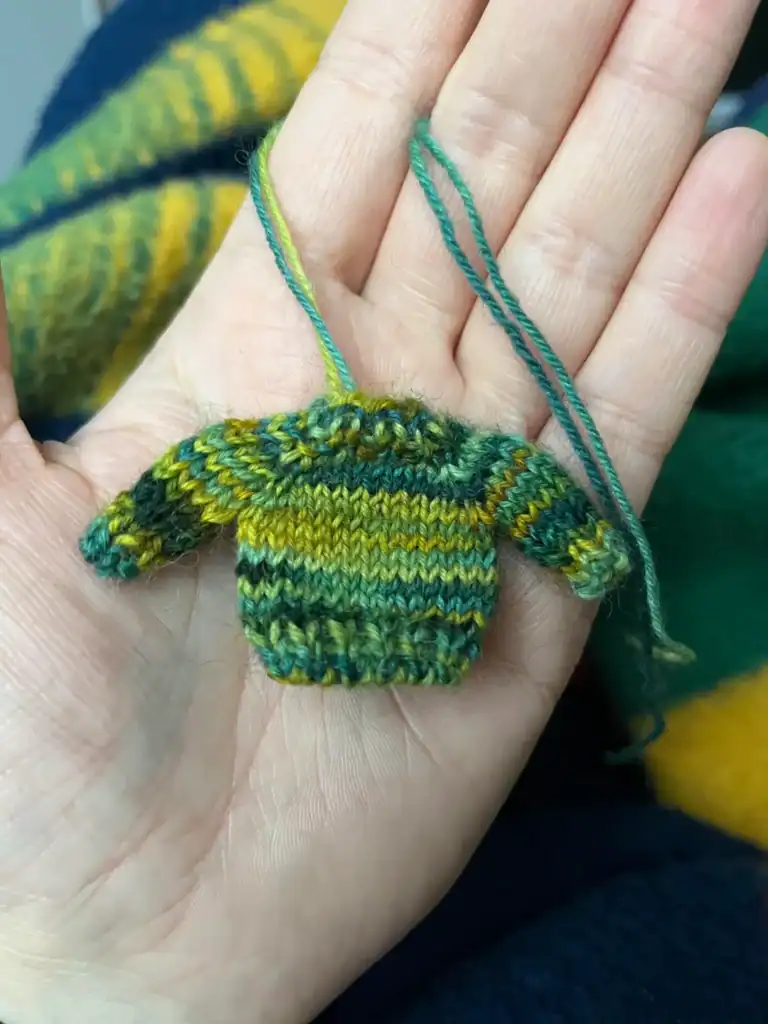
Tiny ornaments are one of the most efficient ways to use very small scraps.
Norman highlights knitted snowflakes, gingerbread figures, Easter eggs, maple leaves, hearts, and even simple Halloween spider webs.
Many of these projects use only a few meters of yarn.
A knitted heart can be attached to a Valentine’s Day card, while a snowflake can be added to a Christmas card.
A small Easter egg can become a gift for an Easter brunch.
Norman’s main point is that these projects are fast, personal, and effective despite using very little material.
7. Use Larger Leftovers for Colorwork
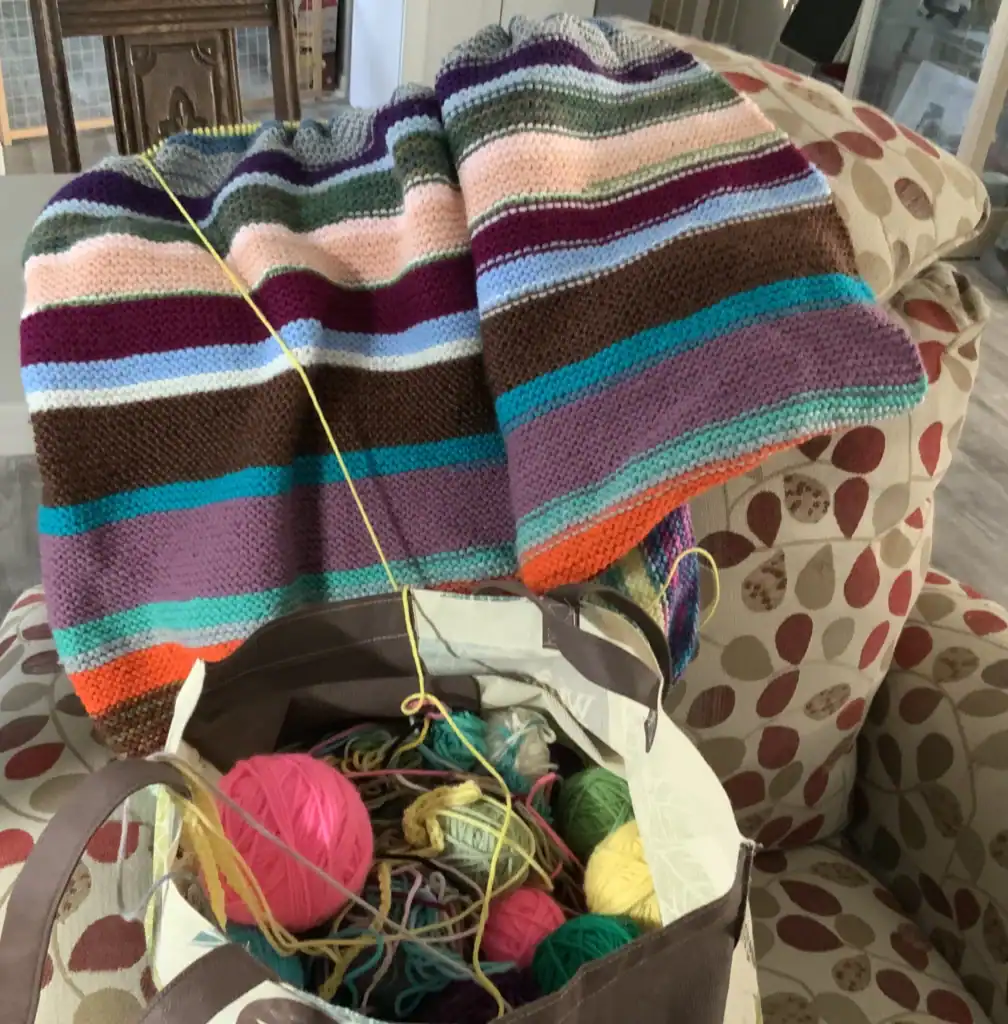
When the leftover balls are a little bigger, Norman recommends turning to colorwork.
He shows mosaic socks using a brick-style pattern, where only small amounts of each contrast color are needed.
A main background color may still be necessary, but the decorative sections can be made from scraps.
Fair Isle, Mosaic, and Intarsia Work Well
Norman also shows Fair Isle mittens and intarsia socks as examples.
In Fair Isle projects, a dominant background color can be paired with many small scrap colors in the decorative sections.
Likewise, intarsia can use leftover yarn for motifs, branches, flowers, cuffs, and other details.
He specifically recommends mosaic, Fair Isle, and intarsia for using up larger pieces of scrap yarn.
8. Knit Scrappy Helix Socks
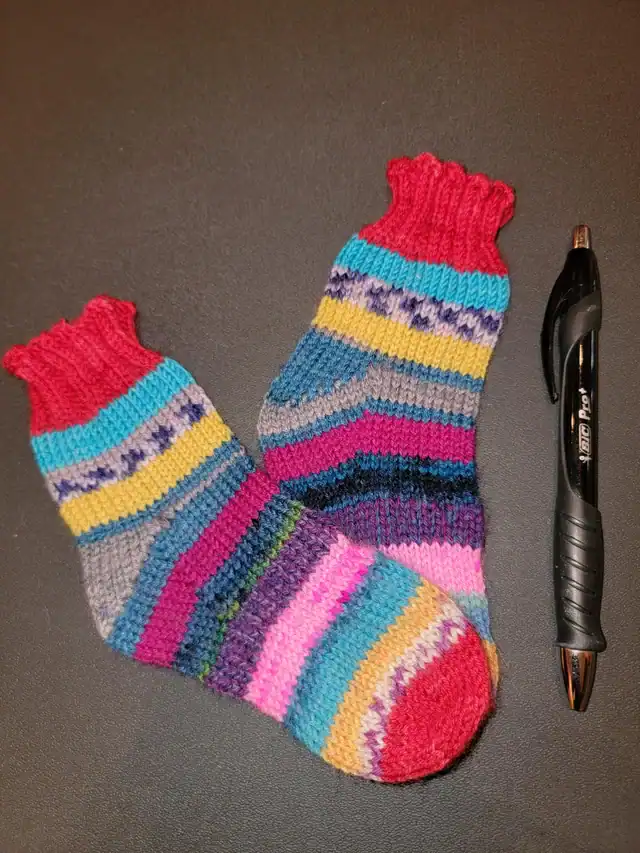
Socks deserve their own mention because not every scrap will fit neatly into a planned colorwork chart.
Norman recommends helix knitting as a particularly useful technique.
Instead of completing a full round before changing colors, the knitter stops a few stitches before the color change and begins working with another yarn.
This creates stripes without the obvious jog that appears in ordinary one-round stripes.
Helix Knitting Works With Many Sock Patterns
Norman explains that helix knitting can be applied to almost any sock pattern.
He also suggests knitting socks toe-up if there is concern about running out of yarn.
The same idea can be used for a simple beanie or hat.
And if the colors turn out a little unusual, Norman sees no real problem. Scrappy socks can be playful, practical, and mostly hidden inside shoes anyway.
9. Add Tassels, Pom-Poms, and Fringes
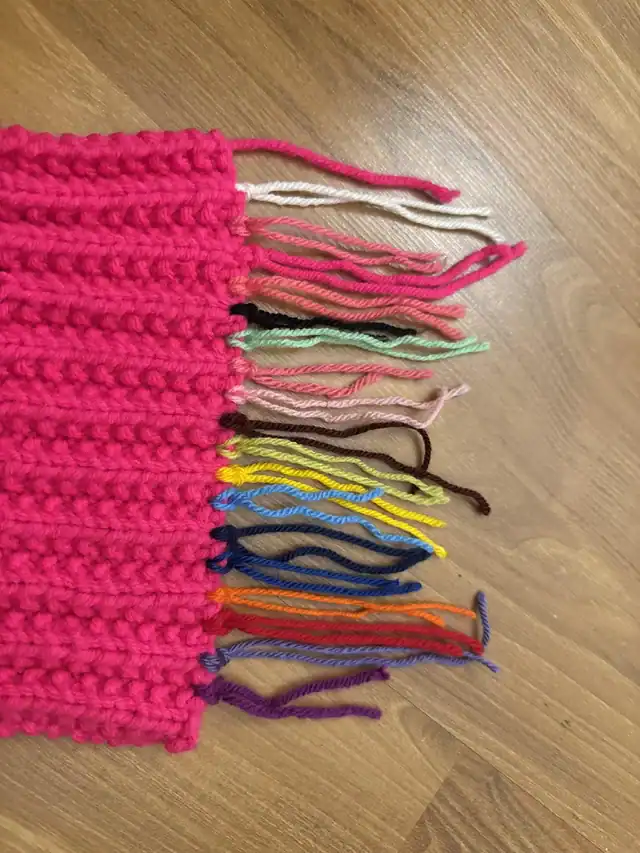
Scrap yarn does not always need to become the main fabric of a project.
It can also be used for finishing details.
Norman shows a shawl with contrasting tassels and explains that tassels can make a plain scarf or garter-stitch shawl look much more interesting.
Pom-poms can use a surprising amount of yarn, so leftover yarn is especially useful here.
He also recommends fringes for scarves and shawls.
A colorful scrap-yarn pom-pom on a neutral hat or scarf can become a deliberate design feature rather than simply a way to use leftovers.
10. Use Scrap Yarn for Swatching and Practice
Norman’s final suggestion is one he personally uses constantly: swatching.
If a pattern includes a new technique, there is no reason to practice it using the main project yarn first.
A small scrap can be used to test a cast-on, increase, decrease, edge stitch, or bind-off.
Small Swatches Can Answer Big Questions
Norman often casts on only around 10 to 12 stitches and works approximately 10 rows.
That may take just a few minutes, but it can reveal whether a technique looks and behaves the way he wants.
He also stresses that knitting contains very few absolute right or wrong answers.
For questions such as which bind-off looks best or whether two edges should match, personal preference matters.
A small swatch made with scrap yarn gives the knitter a chance to decide for themselves instead of blindly following someone else’s preference.
Conclusion
Leftover yarn does not have to become clutter.
As Norman from NimbleNeedles demonstrates, even tiny scraps can still become useful, decorative, or educational.
Small amounts can turn into pot holders, coasters, toys, ornaments, tassels, or practice swatches. Larger leftovers can find a home in mosaic, Fair Isle, intarsia, or helix-knit projects. Even the shortest tails can be collected for stuffing instead of being discarded.
Norman’s larger message is to look at leftover yarn as a resource rather than waste.
Whether it becomes a colorful pair of socks, a tiny seasonal decoration, a pom-pom, or simply a five-minute test swatch, scrap yarn can continue to be useful long after the original project is finished.