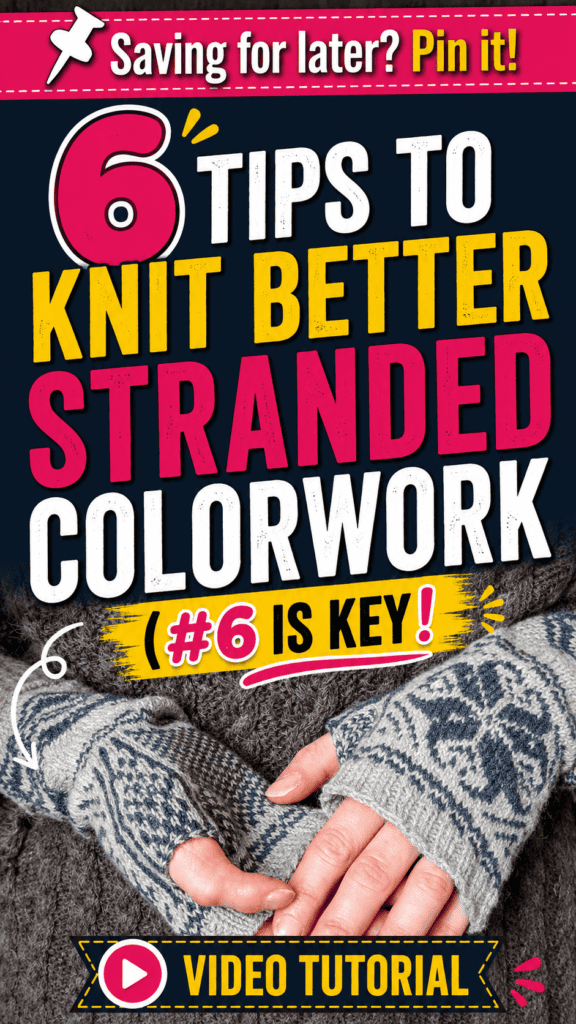
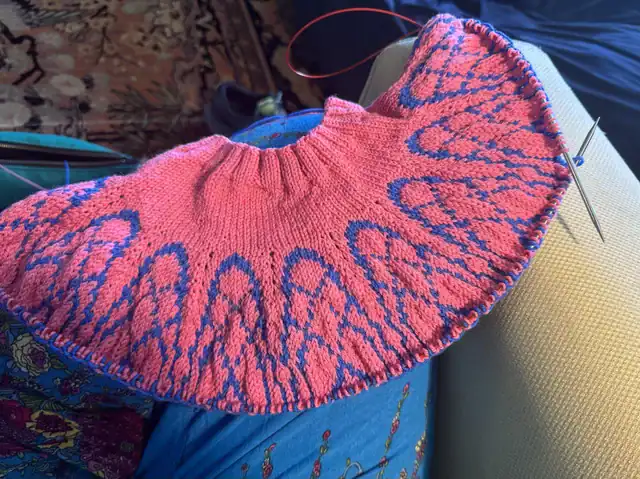
Stranded colorwork can look intimidating at first, especially when two yarns, floats, charts, and color dominance all come into play at once. But with a few thoughtful choices and some attention to technique, the process can become much more manageable.
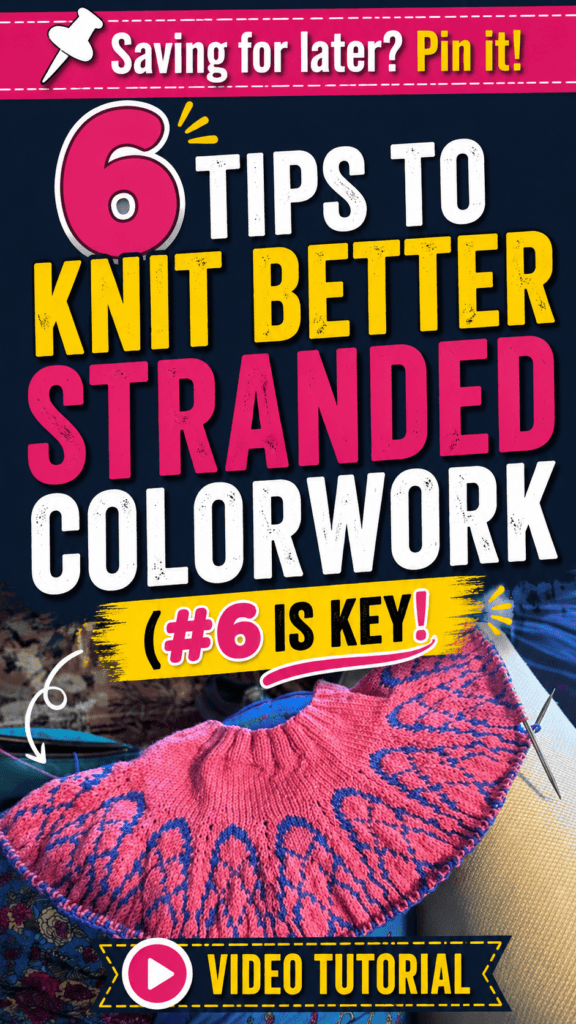
In her tutorial, Clo Knits explains what stranded colorwork is, how it differs from Fair Isle knitting, and which habits can help a first colorwork project succeed. She also shares one especially important technique for preventing puckering by making sure floats are long enough.
Before getting into the tips, Clo makes one distinction clear: Fair Isle is a type of stranded colorwork, but not all stranded colorwork is Fair Isle. Fair Isle is associated with the Shetland Islands in Scotland and traditionally uses particular color arrangements and motifs. Stranded colorwork, on the other hand, is a broader category in which two colors are used in the same row and strands, or floats, run across the back of the work.
1. Choose the Right Yarn for Stranded Colorwork
Clo’s first recommendation is to think carefully about yarn.
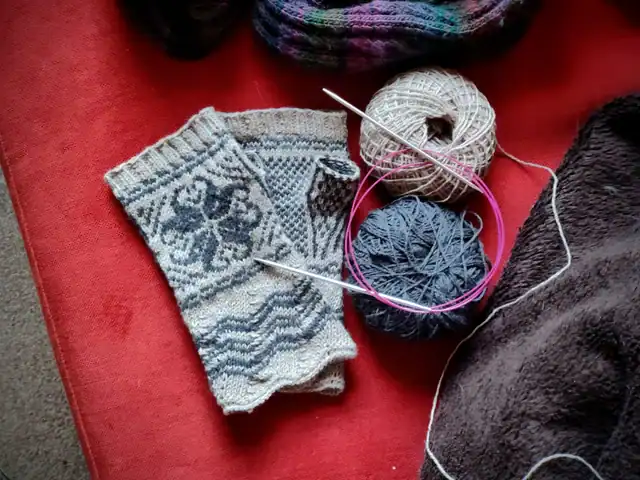
She explains that stranded knitting often looks especially good in untreated wool. Untreated wool has a small halo and tends to bloom after washing. As the fibers expand, individual stitches begin to visually blend together.
The result can create a softer, more unified appearance where the stitches seem to melt into one another.
Rustic Wool Can Help With Tension
Clo also likes untreated wool because it has more grip.
A rustic, slightly sticky wool helps keep floats from moving around as much, which can make tension easier to control.
Other fibers can still work, but they create a different effect.
Cotton and linen do not have the same stretch, while superwash wool tends to produce much crisper stitch definition. That crispness may be desirable, but Clo notes that slippery superwash yarn can make it harder to keep even tension in stranded colorwork.
2. Pay Attention to Color Value
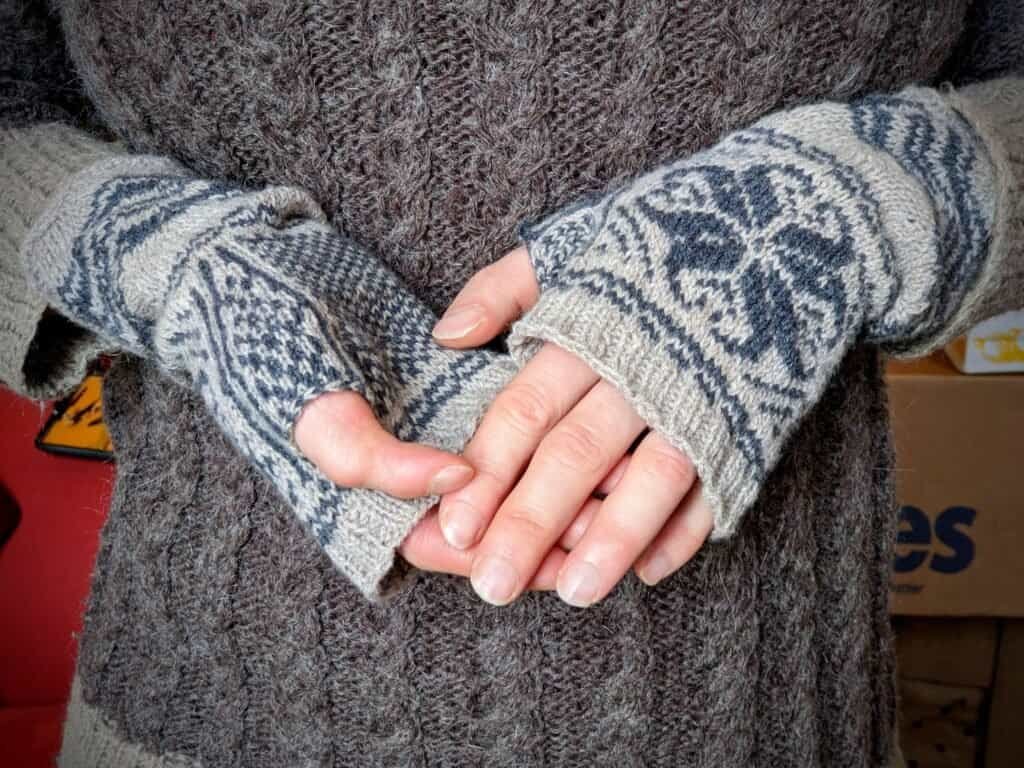
Choosing two beautiful colors does not automatically mean they will work well together in a colorwork pattern.
Clo emphasizes the importance of contrast and color value.
Two shades may look lovely side by side but still be too similar to clearly show a stranded motif.
If the goal is a subtle, blended effect, that may be perfectly fine. But if the design is supposed to stand out clearly, the values need enough difference.
Be Careful With Multicolored Yarn
Clo also warns about pairing multicolored yarns with contrast colors that overlap with shades already present in the variegated skein.
For example, if a multicolored yarn contains yellow, pink, and purple, using another yarn with one of those same colors may cause sections of the motif to disappear visually.
Her advice is to make sure the two yarns complement one another without sharing too many identical shades.
She also mentions that charts can be confusing if the colors in the project are reversed from the colors shown in the pattern.
If the chart shows the main color as light and the motif as dark, but the project uses the opposite arrangement, every row may require extra mental effort.
For a first project, she suggests staying close to the light-dark arrangement shown in the original chart whenever possible.
3. Choose a Beginner-Friendly Pattern
Pattern selection can have a huge impact on whether a first stranded colorwork project feels enjoyable or overwhelming.
Clo recommends choosing something highly repetitive.
A short repeat is easier to remember and easier to track while knitting.
Avoid Long Runs of One Color at First
She also suggests choosing a design where there are not too many consecutive stitches in the same color.
Patterns with one, two, or three stitches of a color at a time are much easier to manage than patterns with long stretches of five, six, seven, or eight stitches.
Fair Isle patterns can work well for this reason because they often avoid very long runs of a single color.
A repetitive chart with a short repeat gives beginners more chances to recognize the pattern and catch mistakes before they spread too far.
4. Read the Chart in a Way That Helps You Stay Oriented
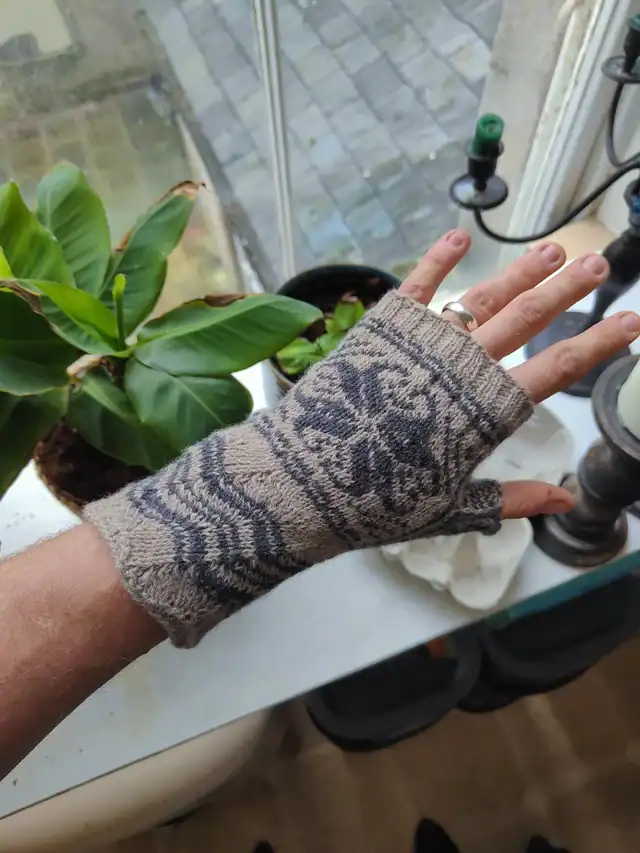
Clo offers a simple chart-reading tip that can make colorwork easier to follow.
Instead of covering the rows that have already been completed, she recommends covering the top portion of the chart.
This leaves the current row visible along with the row beneath it.
Use the Previous Row as a Reference
Why does that matter?
When knitting stranded colorwork, the stitches visible underneath the needle correspond to the row below the one currently being worked.
Clo likes being able to compare the color of the stitch below with the chart to make sure she is still in the correct position.
She also recommends using plenty of stitch markers.
Markers can be placed at every pattern repeat or every other repeat, depending on the size of the motif. This helps divide a large chart into smaller, more manageable sections.
5. Decide How You Want to Hold and Position Your Yarns
There is no single correct way to hold two yarns in stranded colorwork.
Clo discusses several options.
An English-style knitter may use the right hand for both colors, picking up one yarn, dropping it, and then picking up the other.
Clo often uses one yarn in each hand, knitting English style with one color and Continental style with the other.
She prefers this when one color appears much more often than the other.
Holding Both Yarns in One Hand
If the two colors are used in roughly equal amounts, Clo may hold both yarns in her left hand and tension them together over the index finger.
Other knitters may hold both yarns in the right hand or use a knitting thimble with built-in yarn guides.
For Clo, all of these options can work as long as both colors maintain consistent tension.
The key is to find a method that feels manageable and repeatable.
Understanding Color Dominance
Clo also explains that the way the two yarns are positioned can affect which color visually stands out.
One approach is to cross the yarns at every color change. This can reduce color dominance, but it also twists the yarns together and requires frequent untangling.
Her preferred method is to keep one yarn consistently on the right and the other consistently on the left.
She keeps the background color on the right and the pattern color—the one she wants to appear more prominent—on the left.
Why Consistency Matters
When the yarns stay in the same relative positions, one strand consistently travels underneath the other.
The strand that travels farther creates slightly larger stitches, which produces the visual effect known as color dominance.
Clo stresses that switching the yarn positions halfway through a project can create a noticeable change in the appearance of the motif.
That is why consistency matters more than the specific hand used to hold each yarn.
Catch Floats Only When You Feel You Need To
Long floats are one of the most common concerns in stranded knitting.
Clo’s answer to how often floats should be caught is very personal: as often as you want.
She herself catches floats very rarely.
Why Clo Usually Leaves Floats Alone
Catching floats adds an extra movement that interrupts her knitting rhythm.
She also feels trapped floats can sometimes become visible from the front.
Because she often works with untreated wool, the floats tend to grip and stick together naturally.
However, she does catch longer floats in situations where fingers could easily snag them, such as socks, mitts, or sleeves.
She also emphasizes that float length matters more than a fixed number of stitches.
Seven stitches in fine yarn create a very different float length from seven stitches in bulky yarn.
6. Stretch the Stitches Before Changing Colors
Clo’s final tip is the one she considers especially important for anyone struggling with puckering.
When several consecutive stitches are worked in the same color, she deliberately spreads those stitches across the left needle before knitting the next stitch in the other color.
Give the Float Enough Length
For example, if five pale stitches have just been knitted before switching back to a dark color, Clo spreads those five stitches so they occupy approximately the same width they will have in the finished fabric.
Only then does she knit the next dark stitch.
If those stitches are compressed together on the needle when the new color is picked up, the float running behind them may be too short.
That short float prevents the fabric from stretching naturally and can create puckering.
Clo says she generally performs this stretching step whenever she has worked at least three stitches in the same color.
She uses the same technique for both colors.
The goal is simple: the float should match the width the stitches will occupy in the final fabric.
Conclusion
Successful stranded colorwork depends on much more than following a chart.
According to Clo Knits, yarn choice, color contrast, pattern complexity, chart organization, yarn positioning, and float management can all affect the finished result.
Untreated wool can provide helpful grip and a blended appearance, while strong color-value differences can make motifs easier to read. A repetitive pattern with short color runs can make a first project much more approachable, and consistent yarn positioning helps maintain color dominance throughout the work.
When it comes to floats, Clo encourages knitters to experiment rather than follow a rigid rule about how often they should be caught.
Most importantly, for knitters struggling with puckering, she recommends spreading the stitches to their natural width before changing colors. That small adjustment gives the float enough room and can make a dramatic difference in the appearance and flexibility of stranded colorwork.
With those habits in place, colorwork can become less intimidating and much more enjoyable to knit.