Struggling to paint more loosely in watercolor can feel frustrating. You want to let go, enjoy the process, and still create something that looks good.
On his YouTube channel, LironYan shares three practical tips to help artists relax and loosen up. He explains how these exercises prepare you to focus on what really matters in watercolor.
Let’s follow along and try them in your own practice today.
Tip 1: Use a Small Piece of Paper and a Big Brush
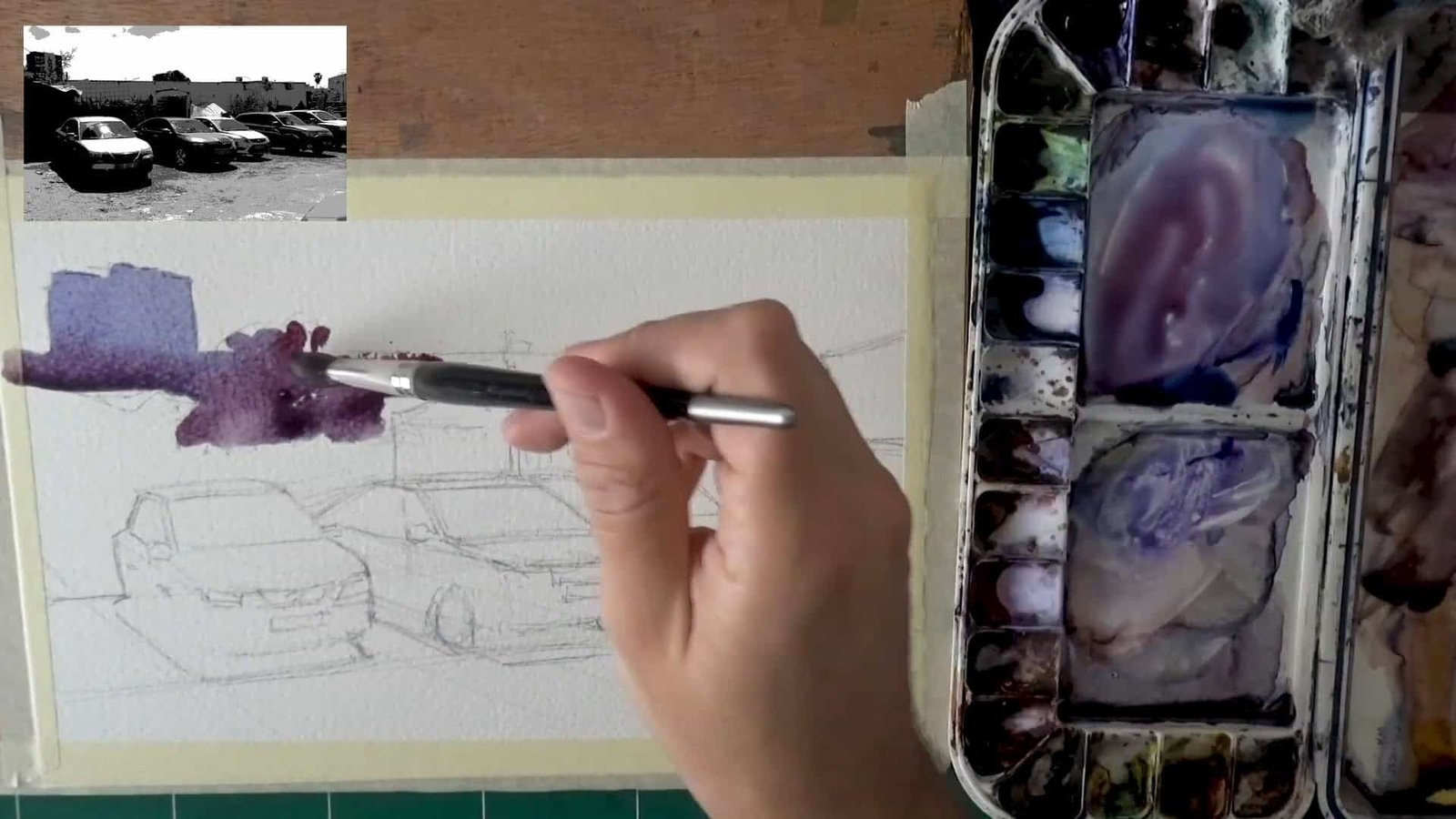
Painting loosely often begins with tools and setup. LironYan highlights that using a smaller sheet of paper and a larger brush can change your approach immediately.
Why a Smaller Paper and Larger Brush Matter
When you use a big brush, you naturally lose some control. On a small piece of paper, you cannot fuss over too many details. This forces you to simplify and focus on the larger picture instead of every tiny shape.
Learning to Simplify Scenes
According to LironYan, one of the biggest lessons is to simplify a scene into basic shapes. Instead of chasing every detail, look at the big light and shadow areas.
If a scene does not have strong shapes, he suggests considering another subject. As a result, you practice capturing the essence rather than getting lost in distractions.
An Experimental Approach
He stresses it is not a permanent rule for every painting. Instead, think of it as an experiment.
By trying this method, you train yourself to loosen up. Later, you can use any brush and paper size.
His advice is clear: take it or leave it, but test it yourself.
Tip 2: Hold the Brush at the Very Tip
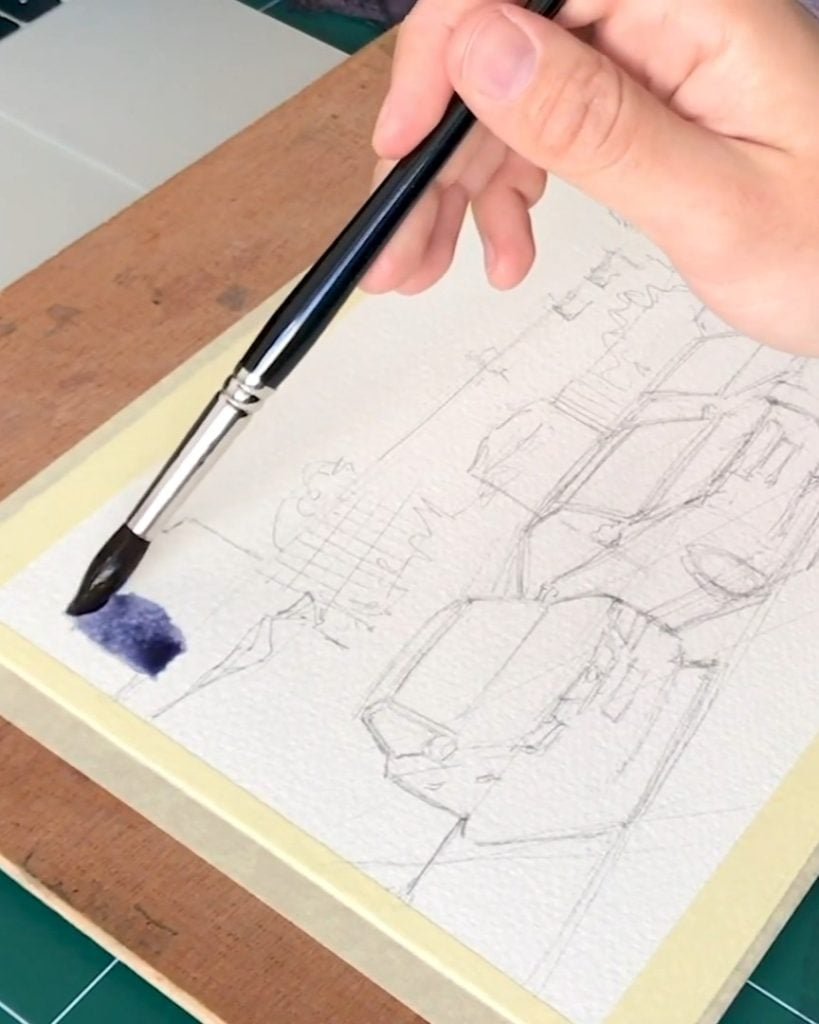
Once you have tried simplifying with brush and paper size, the next step is how you hold the brush. LironYan recommends holding it at the very tip.
Giving Up Control for Freedom
When you grip the brush at the tip, you give up some control. This means your strokes are freer and less stiff.
It may feel difficult at first, but it teaches your hand to create softer, more natural shapes. Over time, you gain a new type of control, one that helps you move with ease.
Inspiration and Practice
LironYan explains that he learned this method from watercolor master Alvaro Castagnet. Seeing him use it gave LironYan the courage to try.
At the beginning, he admits it felt tough. Practice is the only way to get used to it. He even suggests simple exercises to train your muscles so the motion becomes more natural.
Balance Between Loose and Detailed
He also points out that this is not about giving up detail completely. When you need fine work, it is fine to hold the brush closer to the bristles. The real benefit is expanding your range of motion.
By practicing both grips, you prepare yourself to switch easily between loose washes and precise details.
Tip 3: Use Pure Paints Without Mixing
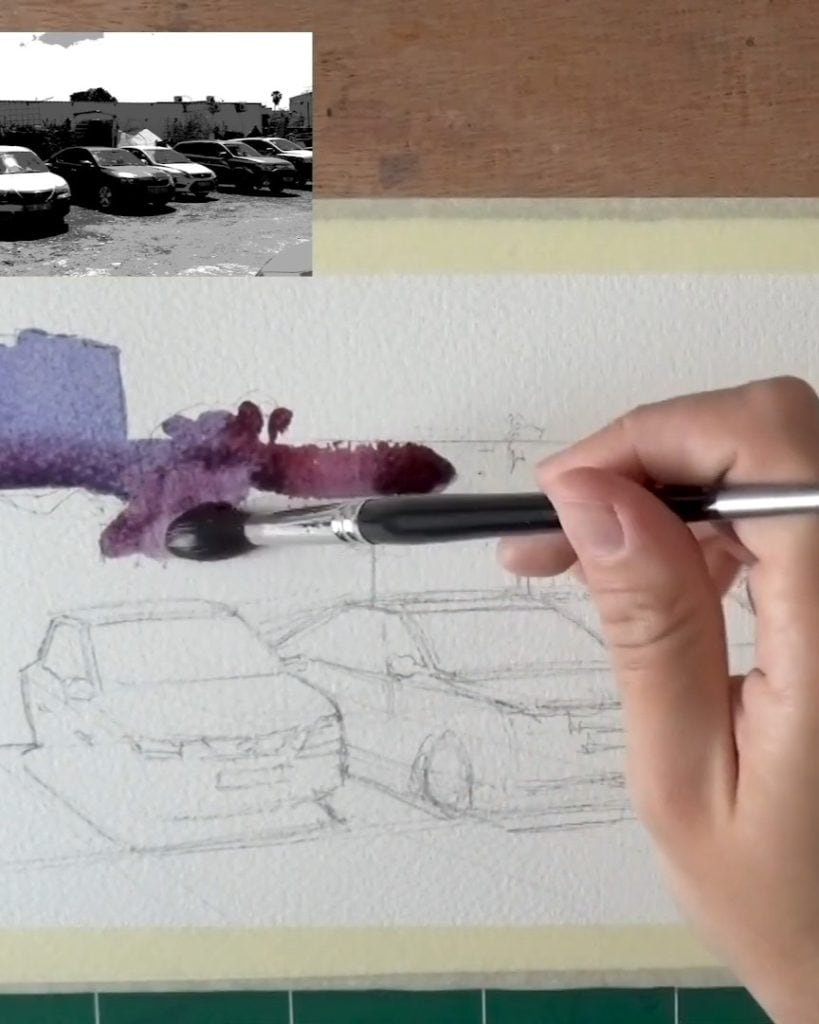
After learning about brush and grip, let’s move on to color. LironYan’s third tip may surprise you: he recommends painting with pure paints, without mixing.
Why Skip Mixing?
According to LironYan, skipping mixing makes the painting process faster. You do not waste time trying to match the perfect shade.
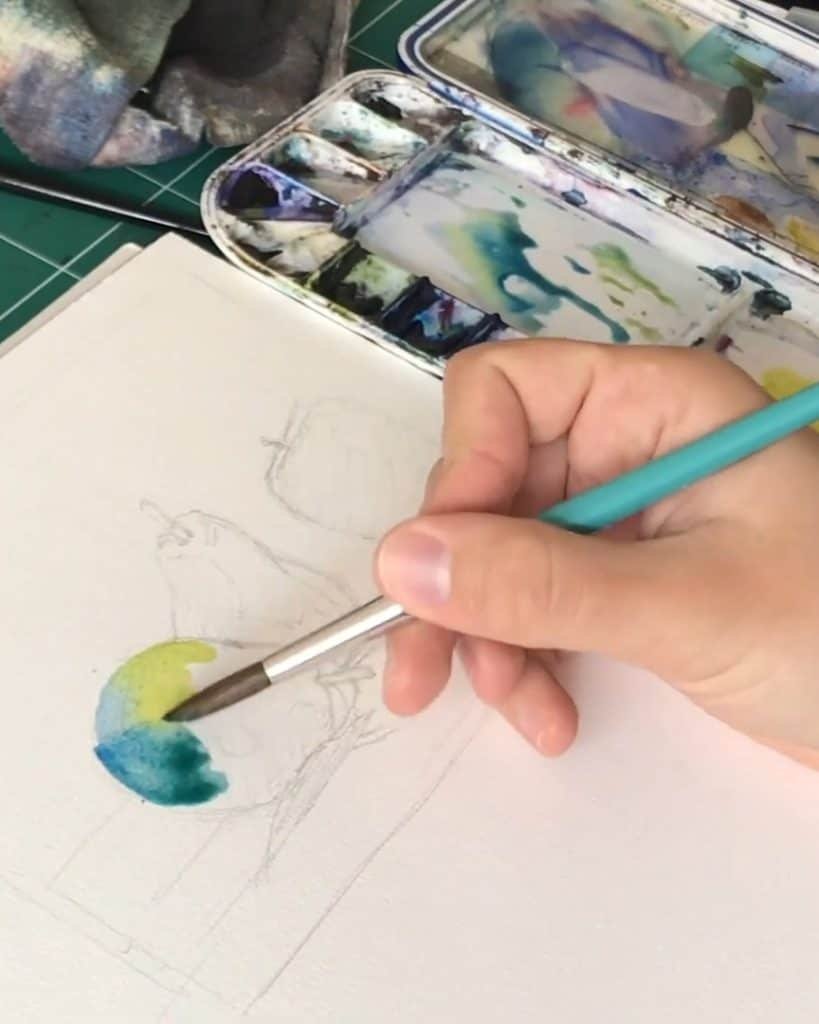
Instead, you focus on composition, edges, big shapes, and values. These are the elements that truly create impact in watercolor painting.
Building Depth Through Layers
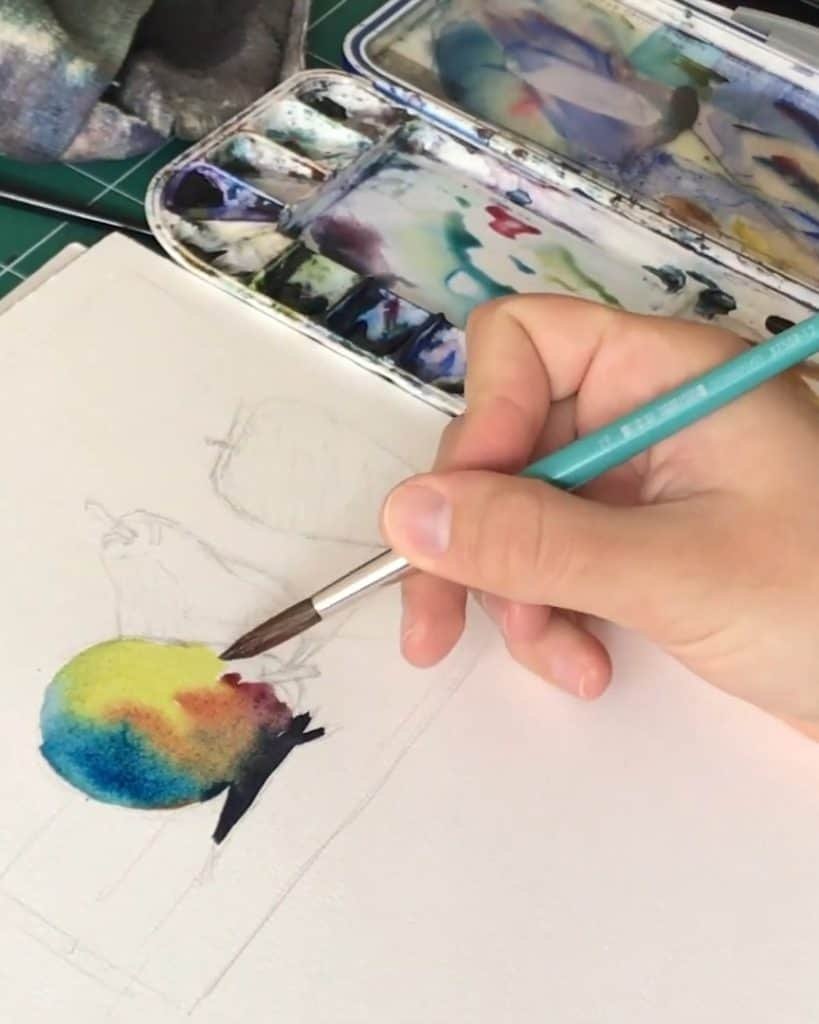
When you use pure paints, the first washes may look strange. But LironYan explains that as you glaze new layers on top, the colors naturally settle and neutralize. For example:
- Use pure yellow for a wall
- Use pure blue for a sky
- Add red for mid-values or areas of interest
Later, layering softens everything. The highlights remain bright, and the painting comes together beautifully.
Working with a Limited Palette
The approach also works well with a limited palette. LironYan often uses just red, blue, and yellow.
By not mixing or mixing very little, he finds it easier to focus. The limited set keeps the process simple, spontaneous, and less stressful.
LironYan’s View on Black and Values
Some artists avoid black paint completely, but LironYan says that he uses it at times.
For example, in monochromatic studies or as a convenience mix with other colors. Still, LironYan insists that values matter far more than the exact color.
Many painters use black or neutral tints successfully, so it is a matter of personal style. His advice remains: experiment, take what helps, and find what works for you.
Wrapping Up
Now that you know three simple tips to loosen up your watercolor work: use small paper with a big brush, hold your brush at the very tip, and try painting with pure colors.
LironYan highlights that these are experiments, not fixed rules. You can test them, practice them, and keep what works for you.