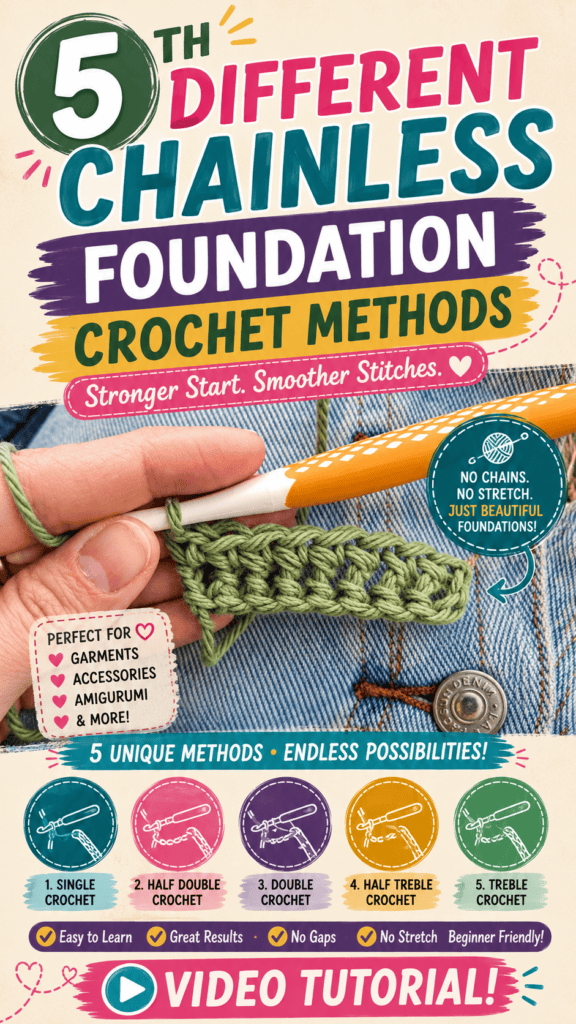
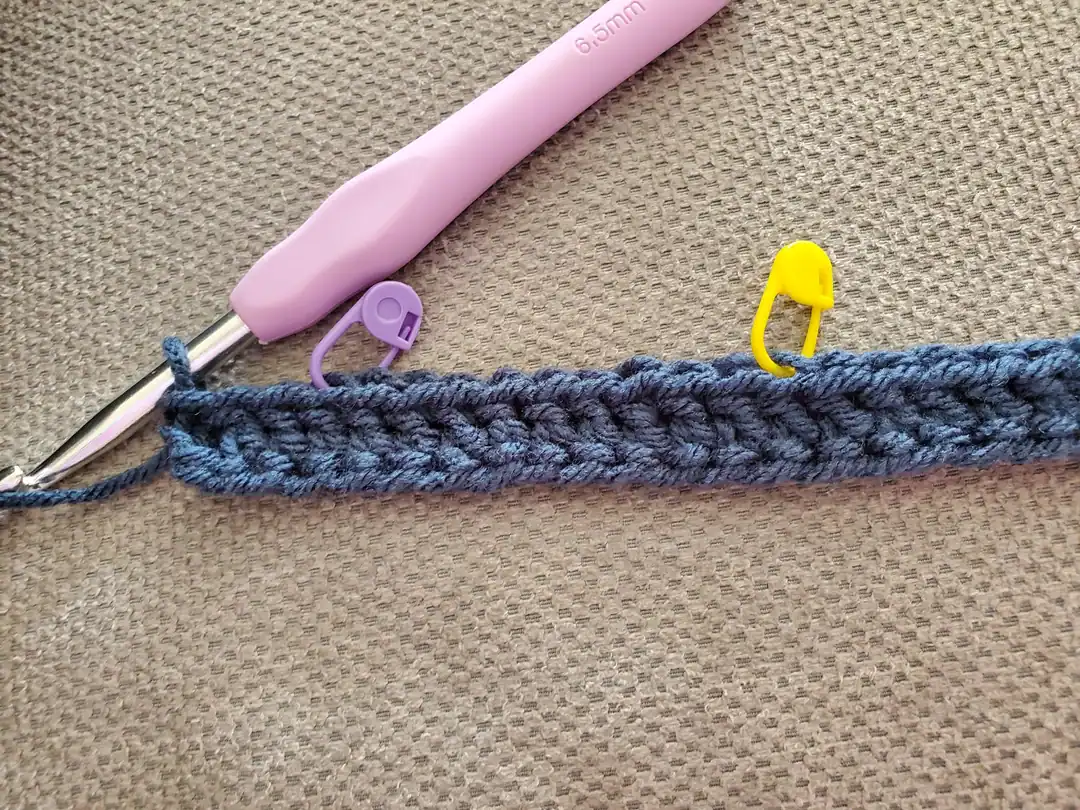
Starting a crochet project with a traditional foundation chain can sometimes feel awkward, especially when the chain becomes too tight, twists easily, or creates an uneven edge. Chainless foundation techniques offer a practical alternative by combining the foundation and first row into one process. In this tutorial, Tuula Maaria from Crochet with Tuula Maaria introduces a fifth foundation crochet method that produces a flexible, decorative starting edge.
Tuula has previously demonstrated four other foundation techniques, each with its own appearance and purpose. This fifth method adds another useful option for crocheters who want more control over the stretch, texture, and look of the bottom edge of a project.
What Is Chainless Foundation Crochet?
Chainless foundation crochet is a way to begin a project without first making a long row of chains and then working back into them.
Instead, the crocheter builds the foundation edge stitch by stitch. Depending on the method, this may create both the chain portion and the first row at the same time, or it may form a cord-like base that can be worked into afterward.
These methods are useful because they can:
- Create a stretchier starting edge
- Reduce chain twisting
- Make stitch placement easier
- Produce a more decorative finish
- Improve tension along the first row
Tuula explains that there is more than one way to create a crochet foundation. Her fifth method has a distinctive texture and can be used as the bottom edge for many different projects.
A Quick Look at Four Other Foundation Methods
Before demonstrating the new technique, Tuula briefly reviews four foundation methods she has already shared.
Each one produces a different type of edge, showing that crocheters do not have to rely on a single approach for every project.
Basic Foundation Single Crochet
The basic foundation single crochet, often abbreviated as FSC, is the method most patterns refer to when they call for a foundation single crochet row.
It creates the chain and single crochet row together. This method is popular because it produces a flexible edge and eliminates the need to work back into a long chain.
In many patterns, another foundation technique can be substituted, as long as the stitch count, structure, and stretch remain suitable.
I-Cord Foundation
Another option is to create a quick crochet I-cord and then work the first row directly into it.
According to Tuula, this technique may create one of the nicest-looking starting edges. Its rounded, cord-like appearance can add a polished finish to garments, accessories, or decorative pieces.
Quick Foundation Method
Tuula also mentions a faster technique that works somewhat like a simplified version of basic foundation crochet.
Although it may not produce the most attractive edge, it can be especially useful when stitches will need to be picked up later.
This makes it a practical choice for projects where the foundation edge will eventually be joined, covered, or worked into again.
Long-Tail Foundation
The long-tail foundation method may feel familiar to knitters because its movements resemble a knitted cast-on.
It offers another way to build a flexible starting edge and can be helpful for makers who are comfortable handling both the working yarn and a long tail.
The Fifth Chainless Foundation Method
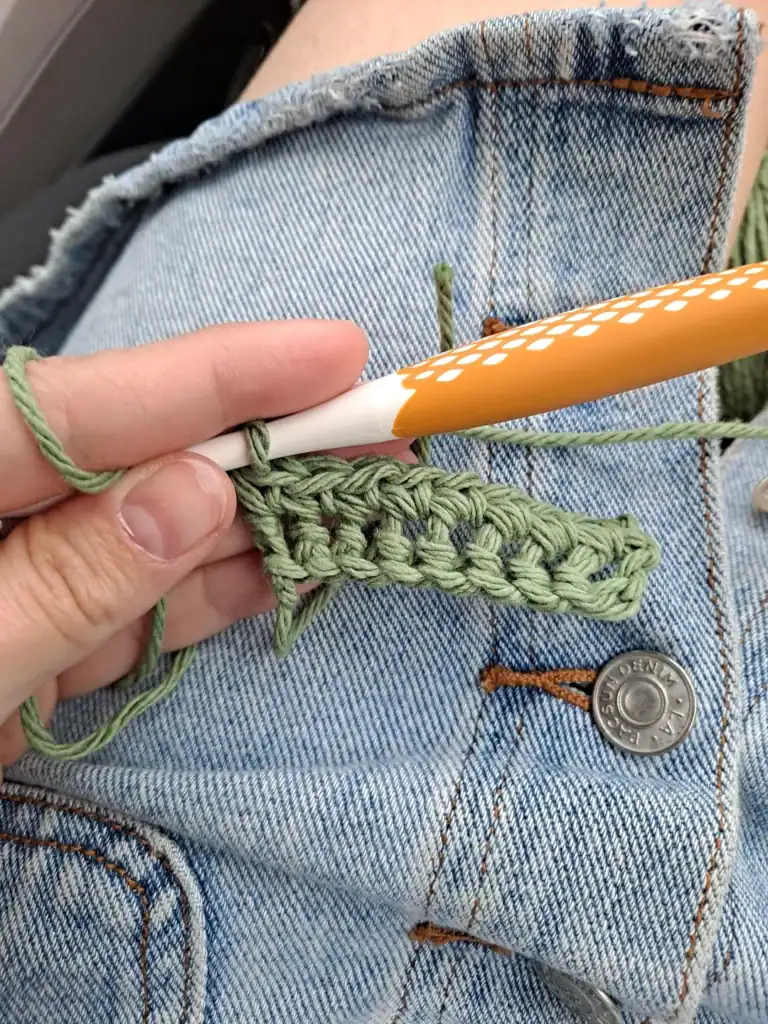
The fifth technique begins with a slip knot and uses a repeated wrapping motion around the index finger.
Unlike traditional FSC, this method creates a line of visible bumps along the lower edge. These bumps give the foundation a decorative texture that can become part of the finished design.
Choosing the Right Hook and Yarn
Tuula emphasizes that the yarn and hook should work well together for this method.
Avoid Using an Oversized Hook
A hook that is too large may create loose, uneven spaces in the foundation. The stitches need to stay close together so the edge remains stable and well defined.
The ideal hook should move comfortably through the yarn without creating excessive looseness.
Crocheters should consider:
- Yarn thickness
- Yarn texture
- Hook shape
- Personal tension
- Desired amount of stretch
Making a short practice section can help determine whether the hook size is appropriate before beginning a full project.
How to Make the 5th Foundation Stitch
The method uses a simple sequence that becomes faster with practice.
Step 1: Make a Slip Knot
Begin with a slip knot using the crocheter’s preferred method.
The knot should sit comfortably on the hook without being overly tight.
Step 2: Wrap the Yarn Around the Index Finger
Wrap the working yarn around the index finger so that it forms a loop with a slight twist.
The exact hand movement may vary depending on how the crocheter holds the yarn and hook. The important part is creating a loop that can be transferred onto the hook.
Step 3: Insert the Hook Through the Loop
Pass the crochet hook through the wrapped loop and bring the loop onto the hook.
This creates the next part of the foundation.
Step 4: Yarn Over and Pull Through
Yarn over and pull through the loops on the hook to complete the stitch.
The stitch should be brought close to the previous one so that no long strand of yarn remains between them.
Step 5: Repeat the Process
Continue by wrapping the yarn around the index finger, placing the loop on the hook, and pulling through.
After several stitches, the movement becomes more natural and can be worked at a steady pace.
Keep the Stitches Close Together
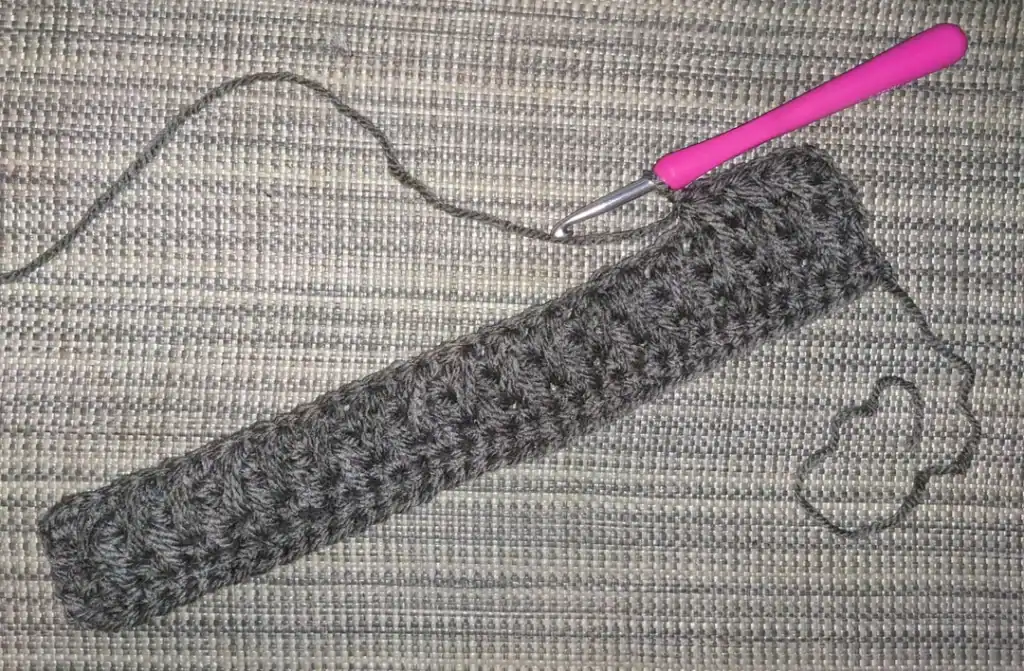
One of the most important tips in the tutorial is to avoid leaving a loose stretch of yarn between stitches.
When creating each new loop, it should sit close to the previous foundation stitch. Large spaces can make the edge look uneven and may weaken its structure.
At the same time, the stitches should not be pulled so tightly that the foundation loses its flexibility.
The goal is a balanced tension that creates:
- Clearly defined stitches
- An even lower edge
- Comfortable stretch
- Easy access to the top loops
What the Finished Foundation Looks Like
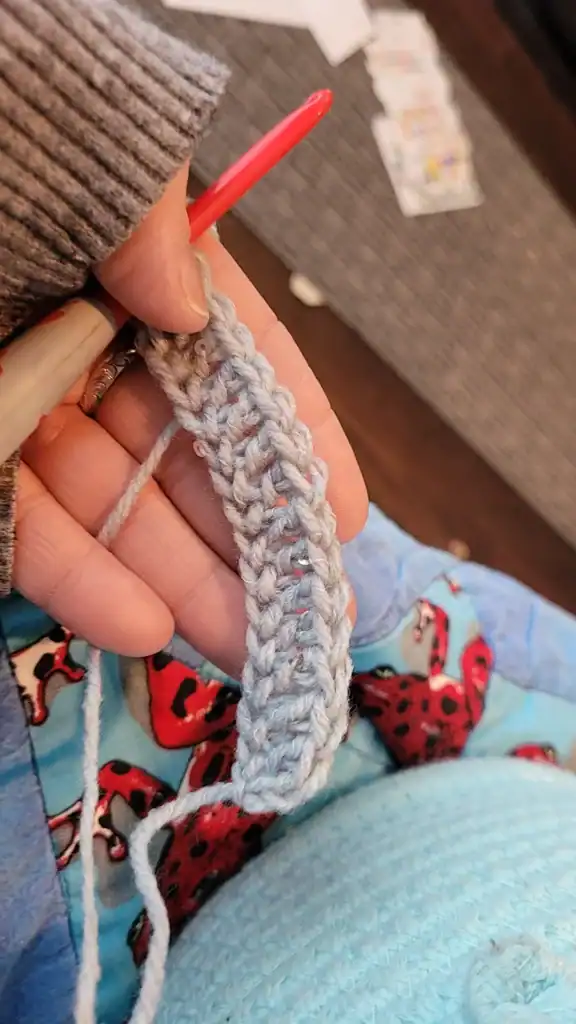
When viewed closely, the edge has a series of small raised bumps.
These bumps make the fifth method look different from the other foundation techniques. Rather than hiding the foundation, a crocheter can allow it to become a decorative element.
Tuula notes that she likes the finished appearance and believes it could work well as the bottom edge of many projects.
The technique may be especially attractive for:
- Sweaters
- Cardigans
- Scarves
- Cowls
- Blankets
- Bags
- Decorative panels
The final look will also depend on the yarn. Smooth yarn will show the bumps clearly, while fuzzy or textured yarn may create a softer, less defined edge.
Working the First Row into the Foundation
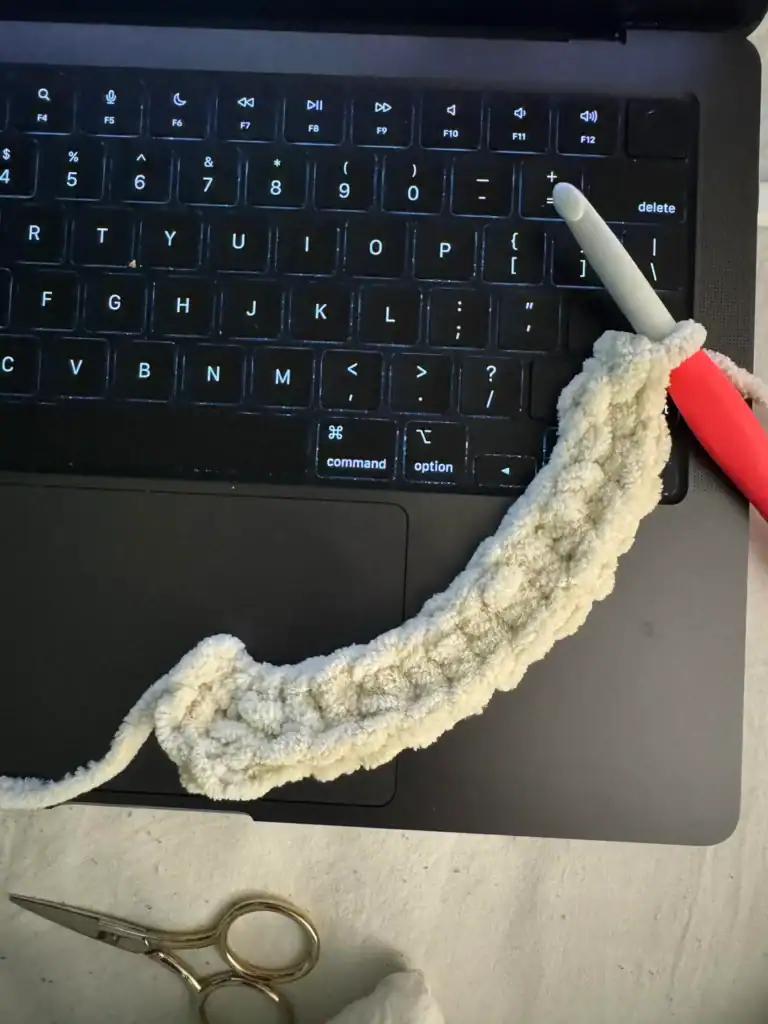
After creating the desired number of foundation stitches, the crocheter can begin the main stitch pattern.
Tuula demonstrates this by chaining two, turning the work, and adding double crochet stitches.
Easy-to-See Top Loops
One advantage of this foundation is that the top stitches are clearly visible.
Even when viewing the back side of the foundation, the crocheter can identify where the hook should be inserted. This makes the first row easier to work than a tight or twisted traditional chain.
The foundation can support many different stitches, including:
- Single crochet
- Half double crochet
- Double crochet
- Treble crochet
- Textured stitch patterns
The foundation method does not require the project itself to be made in single crochet.
How Stretchy Is This Foundation?
Tuula describes the finished edge as fairly stretchy.
The exact amount of stretch depends on how large the foundation stitches are made and how tightly the yarn is held.
A looser foundation creates more flexibility, while tighter stitches produce a firmer edge.
This makes it important to consider the project’s purpose. A garment hem may need comfortable stretch, while a bag or household item may benefit from a more stable foundation.
When to Use This Method
This fifth foundation technique is especially useful when a crocheter wants both flexibility and visual interest.
It can be a strong choice when:
- A traditional chain feels too tight
- The starting edge will remain visible
- A decorative lower border is desired
- The first-row stitches need to be easy to identify
- The project requires moderate stretch
Because every foundation method behaves differently, Tuula encourages crocheters to learn several options and choose the one that best fits each project.
Conclusion
There is no single foundation crochet method that is perfect for every design. Each technique offers a different combination of stretch, structure, speed, and appearance.
In this tutorial, Tuula Maaria from Crochet with Tuula Maaria introduces a fifth chainless foundation method made by wrapping the yarn around the index finger and forming each stitch directly on the hook. The result is a flexible edge with distinctive decorative bumps and clearly visible top loops.
For crocheters who want an alternative to the traditional chain or basic foundation single crochet, this method is a useful technique to add to their skills. With balanced tension and a well-matched hook, it can create an attractive and practical beginning for many future crochet projects.