Continental knitting can feel fast, fluid, and surprisingly comfortable once the hand movements start to click. But for many knitters, especially those who learned English-style knitting first, the transition can feel awkward at the beginning.
In her tutorial, Clo Knits explains why she chose to learn Continental knitting and shares the small adjustments that helped the method feel natural to her. Her focus is not on speed for its own sake. Instead, she emphasizes comfort, reduced hand movement, and enjoying the knitting process.
Clo originally learned to knit with the yarn in her right hand, following the style she saw around her in Quebec. Later, after discovering colorwork and realizing she could hold one yarn in each hand, she decided to teach herself Continental knitting. Eventually, she challenged herself to knit an entire hat that way.
That experience changed her knitting style for good.
Why Clo Switched to Continental Knitting
Clo says she did not set out to completely change the way she knitted. She simply wanted to experiment.
What she discovered was that Continental knitting felt comfortable, flowed well, and reduced unnecessary hand movement.
It also made her faster over time.
However, she makes an important point: speed should not be the main goal.
For Clo, the real goal is to create a beautiful finished project while enjoying the process. If a technique feels comfortable and efficient, speed may naturally improve as a side effect.
How Clo Tensions the Yarn
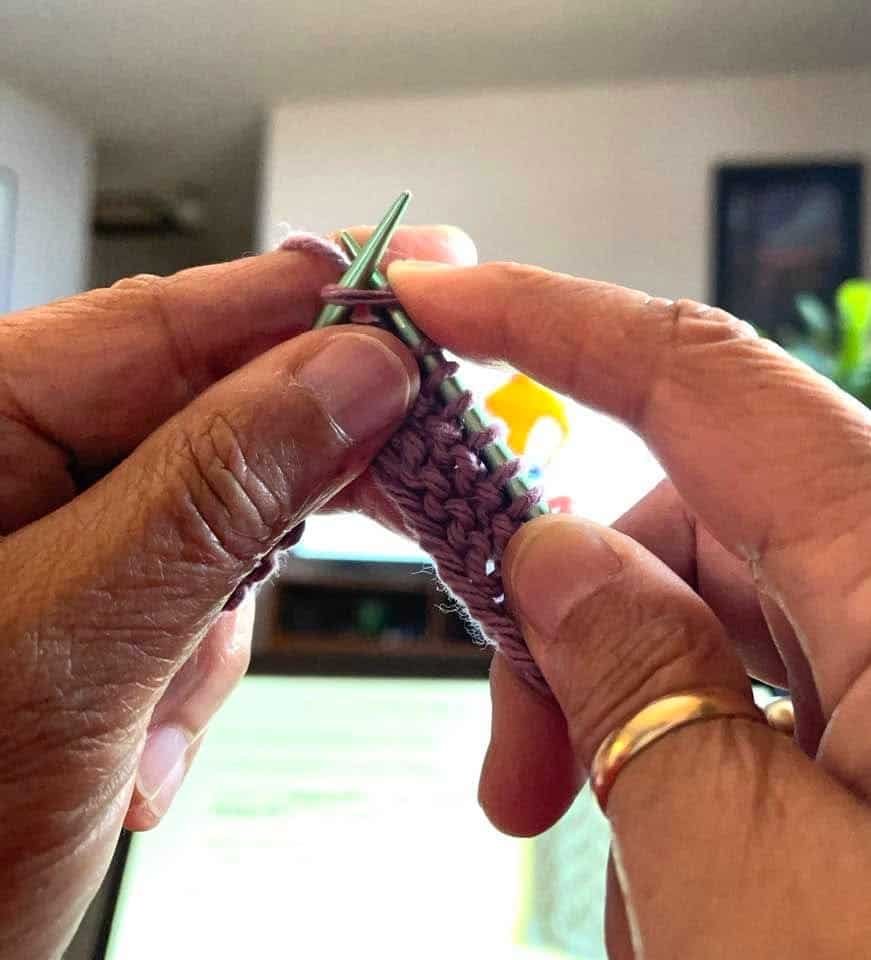
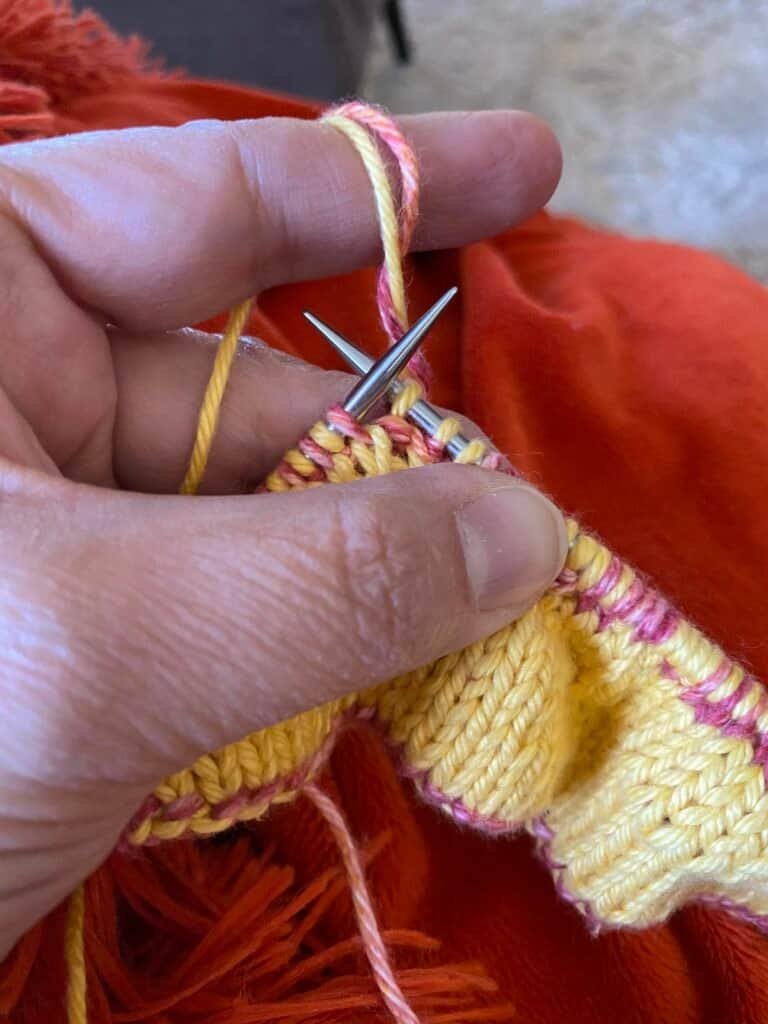
In Continental knitting, the working yarn is held in the left hand.
Clo explains that there are many ways to tension yarn, and the best method depends on the individual knitter.
Her preferred setup is to bring the yarn:
Over the index finger, under the two middle fingers, and over the little finger.
When she closes her hand, the yarn is held securely enough to create friction, but it can still flow smoothly.
Keep the Hand Relaxed
Clo used to wrap the yarn around her hand differently, but over time she discovered that a simpler setup gave her better tension.
She encourages knitters to experiment rather than assume there is one correct arrangement.
She also notices that some Continental knitters hold the index finger high in the air. For her, that creates less friction and may require extra yarn wrapping.
Instead, Clo keeps her index finger low and close to the rest of her hand, often resting near the middle finger.
That lower position helps create a relaxed, fluid motion.
Let the Index Finger Rest
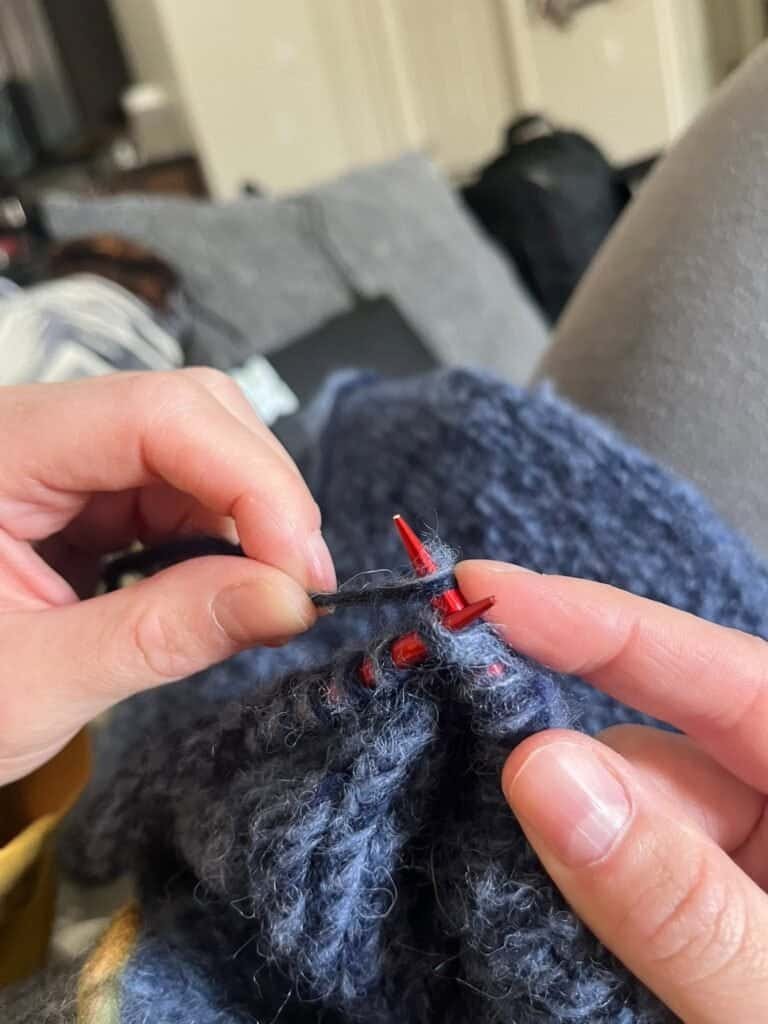
One of the main ideas in Clo’s knitting style is that the index finger does not need to perform a large movement with every stitch.
She keeps it relatively still.
The stitches are packed close to the tip of the needle, while the fabric is supported with the thumb and middle finger.
Then the right needle moves in to scoop up the yarn.
The Right Hand Does More Than You Might Expect
Clo points out that Continental knitting is sometimes described as ideal for left-handed knitters, while English knitting is associated with right-handed knitters.
She does not find that distinction very meaningful.
During her knit stitch, her left hand is mostly holding the yarn in position.
The right needle does the active scooping motion.
That is one reason she believes Continental knitting can work well regardless of which hand is dominant.
Use Small, Relaxed Movements
Comfort is central to Clo’s technique.
She says that holding the arms or hands in a strained position creates unnecessary muscle tension, especially in the forearm.
Her own knitting motion is small and relaxed.
Most of the movement happens through the wrists, with the hands sometimes moving slightly toward and away from each other.
She also uses the right hand to help finished stitches move away from the needle tip so the next stitches can be worked easily.
Speed Comes From Efficiency
The result can look fast, but Clo emphasizes that she is not forcing herself to knit quickly.
Because the movements are short and economical, the speed develops naturally.
This is an important distinction in her approach: smooth movement comes first, speed comes later.
How to Do Purls Continental Style
Purling is where many knitters struggle with Continental knitting.
Clo says there are several ways to do the purl stitch, but she prefers a method that uses both finger movement and wrist rotation.
She first brings the yarn to the front.
Then, after inserting the needle into the stitch, she lowers the index finger while rotating the wrists.
Use the Wrist to Trap the Yarn
Clo explains that trying to move the yarn with the index finger alone does not work well for her.
Instead, she lifts and rotates the wrist so the needle moves into a position where the yarn becomes trapped behind it.
Then she lowers the finger and rotates back, allowing the yarn to move through the stitch.
With practice, this becomes a smooth and repetitive motion.
Other Continental Purling Options
Clo also demonstrates and discusses several other ways to purl.
One is the Norwegian purl, where the yarn stays in the back and the needle moves around to pick it up and bring it through the stitch.
She acknowledges that this method works, but personally feels it requires more movement than her preferred purl.
Another option is using the middle finger to push the yarn while the index finger remains more stationary.
Again, she says this does not feel as comfortable for her, but recognizes that another knitter may prefer it.
Purl Tension Can Feel Different
Clo notices that the yarn sometimes flows more freely when she purls.
Because the hand opens slightly more during the purling motion, there can be less friction on the yarn.
Some knitters may respond by wrapping the yarn differently for purl stitches.
However, Clo points out that this can become complicated when knitting ribbing because the knitter is constantly switching between knit and purl stitches.
The Needle Determines Stitch Size
Her solution is to think differently about tension.
Clo says the size of her stitches should be determined primarily by the needle, not by how tightly the yarn is wrapped around her fingers.
That means the yarn only needs enough control to flow consistently.
The needle itself acts as the gauge that establishes the size of each loop.
Continental Knitting Makes Ribbing Flow Naturally
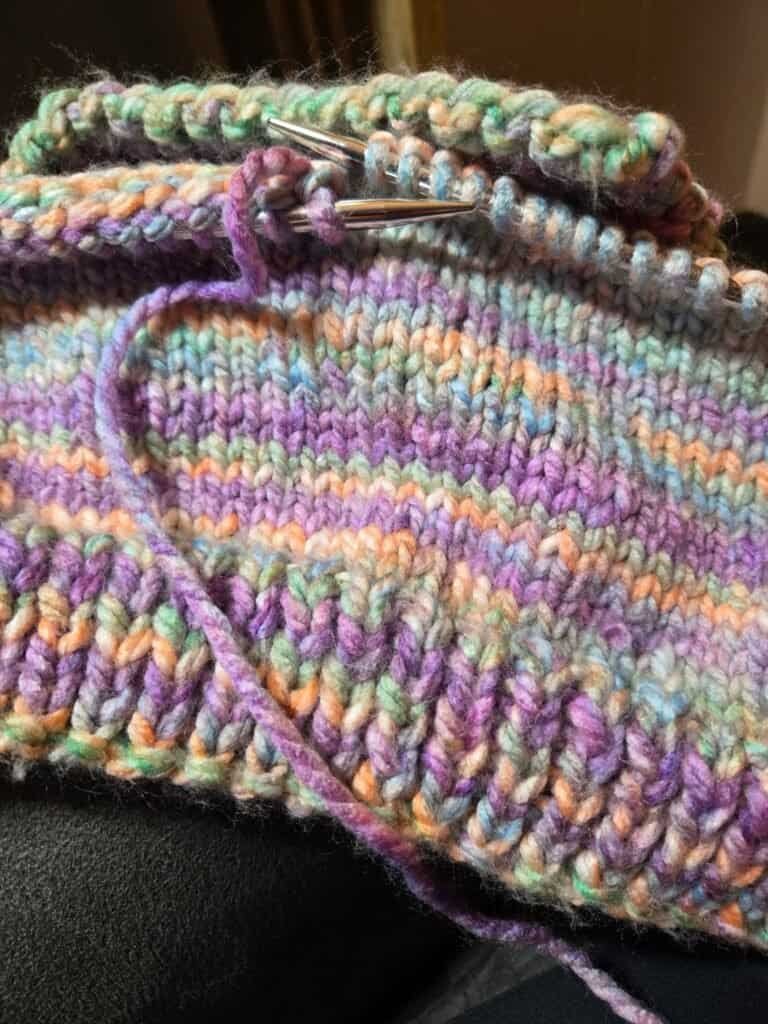
Once the purl movement is comfortable, alternating knit and purl stitches can become very fluid.
Clo demonstrates how easily she can switch between the two movements in ribbing.
Purl, knit, purl, knit.
She notes that her index finger sometimes moves slightly more during ribbing than it does in plain stockinette, simply because it is already shifting back and forth between positions.
Rather than trying to make every movement identical, she adjusts naturally according to the stitch and yarn.
There Is No Single Perfect Technique
One of the strongest messages in Clo’s tutorial is that knitting should remain personal.
She repeatedly explains that the exact method she uses is simply the one that works best for her.
Yarn tension, finger position, purling method, and hand movement can all vary between knitters.
Comfort Matters More Than Rules
Clo encourages experimentation.
A knitter might hold the yarn differently, use another purling method, or move the hands in a slightly different way.
What matters is whether the technique feels comfortable, produces a satisfying result, and allows the knitter to enjoy the process.
Nothing has to remain exactly the same with every yarn or every stitch pattern.
Conclusion
Continental knitting does not need to be about knitting as quickly as possible.
For Clo Knits, its biggest advantages are comfort, efficient movement, and a smooth knitting rhythm.
Her approach starts with a relaxed yarn hold in the left hand, with the index finger kept close rather than lifted high. The right needle performs much of the scooping motion, while the hands and wrists stay relaxed.
For purling, Clo combines index-finger movement with wrist rotation instead of relying on the finger alone. She also emphasizes that stitch size should come from the needle rather than excessive yarn tension.
Most importantly, she encourages knitters to experiment.
Continental knitting may become a favorite technique, or it may not. Either outcome is fine. The best knitting method is ultimately the one that allows the knitter to work comfortably, enjoy the process, and create the finished fabric they want.