Many crocheters look for alternatives to the traditional foundation chain because it can feel tight, uneven, or time-consuming, especially when working long rows. Chainless foundation techniques offer a smoother way to begin a project while creating a cleaner edge that’s easier to crochet into.
In this tutorial, Tuula Maaria from Crochet with Tuula Maaria introduces what she describes as one of the fastest chainless foundation methods. Positioned somewhere between the classic Foundation Single Crochet (FSC) and the crochet I-cord foundation, this simple technique eliminates one step from the traditional process while producing a tidy row of stitches that can support almost any crochet pattern.
Why Use a Chainless Foundation?
A traditional foundation chain requires crocheters to first create an entire row of chains before working back into them. This can sometimes lead to problems such as:
- A foundation that is tighter than the rest of the project
- Twisted chains that are difficult to work into
- Uneven tension along the first row
- Extra time spent creating and counting chains
Chainless foundations solve many of these issues by building the foundation edge one stitch at a time. Instead of returning to work into a completed chain, the foundation itself becomes part of the first stage of the project.
Tuula explains that this particular method sits between the standard Foundation Single Crochet and the crochet I-cord foundation, combining the simplicity of one with the neat appearance of the other.
How This Fast Foundation Differs from Standard FSC
The biggest advantage of this technique is its efficiency.
Unlike the traditional Foundation Single Crochet, which requires several movements to build both the chain and stitch, this method skips one of those stages by immediately using the loop that has just been created.
The result is a process that feels smoother and becomes very repetitive after only a few stitches.
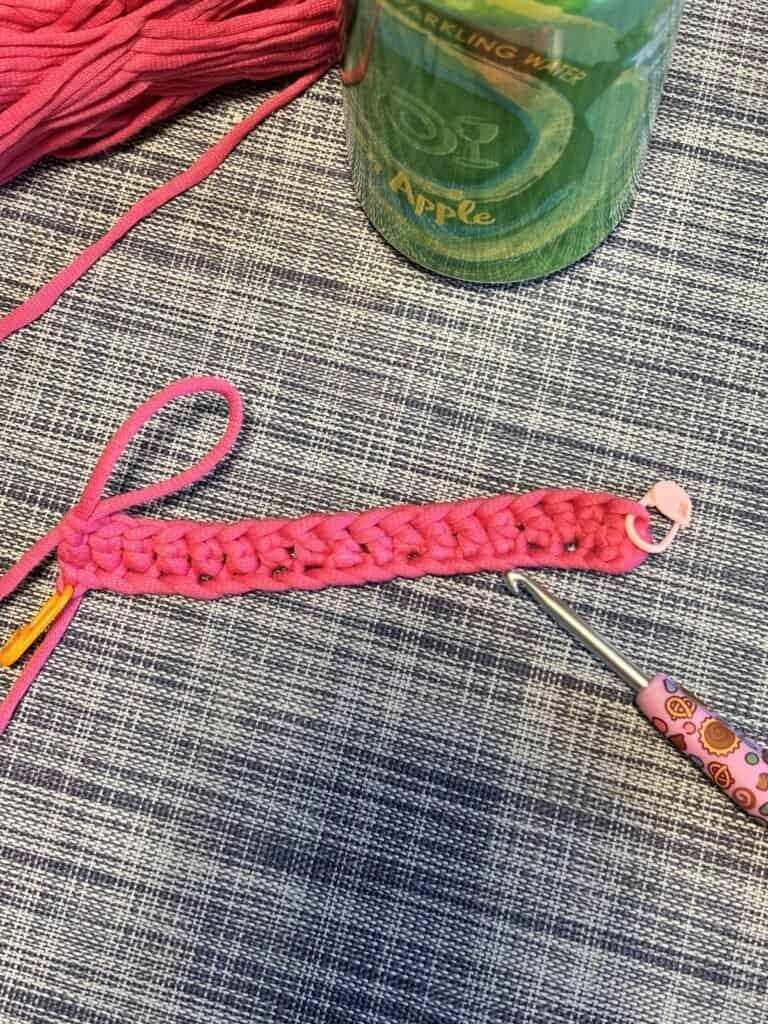
Although the movement is slightly different from a standard FSC, the finished edge still provides a clearly defined row of top loops that can easily support the first row of crochet.
Materials You’ll Need
One of the advantages of this method is its simplicity.
Only two basic supplies are required:
- Any crochet yarn
- A crochet hook that matches the yarn
In her demonstration, Tuula uses a 4 mm crochet hook with a wool yarn containing a subtle glitter thread. However, the technique works with many yarn types and weights.
As with any foundation method, selecting a hook that complements the yarn helps maintain even tension and creates a smooth, flexible edge.
How to Crochet the Fast Chainless Foundation
The technique follows a short repeating sequence that quickly becomes easy to remember.
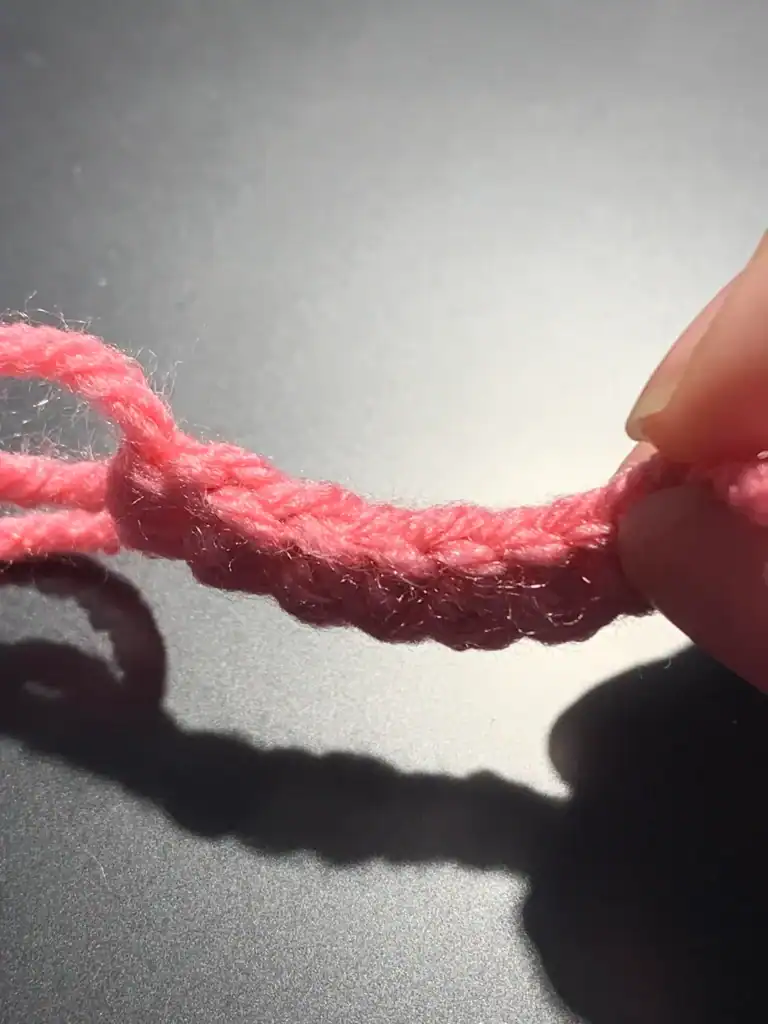
Step 1: Make a Loose Slip Knot
Begin with a slip knot, but leave it noticeably loose.
The extra looseness makes it easier to create the first stitches without tightening the yarn too soon.
Step 2: Create a Second Loop
Gently twist the slip knot to form a second loop.
Once both loops are on the hook, tighten the slip knot slightly so it sits securely without becoming tight.
Step 3: Work the First Single Crochet
With the two loops on the hook, complete a single crochet.
This establishes the starting point for the repeating foundation.
Step 4: Work Under the Left Loop
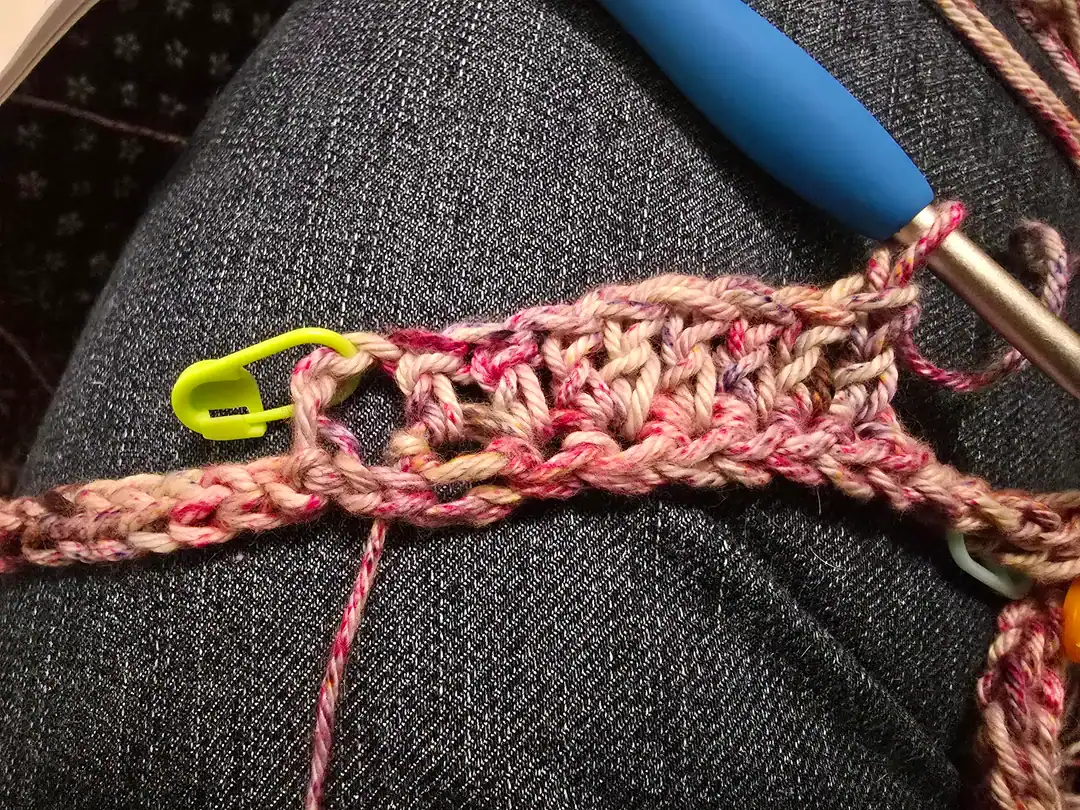
After the first stitch, two loops become visible.
Instead of creating a separate chain as in a standard foundation crochet, simply insert the hook under the left loop, pull up a loop, and complete another single crochet.
Step 5: Repeat the Same Motion
Continue repeating the exact same movement.
Every stitch follows the same sequence:
- Insert the hook under the left loop.
- Pull up a loop.
- Complete a single crochet.
Since the stitch just created immediately becomes part of the next foundation, the process flows naturally and requires fewer individual movements than traditional Foundation Single Crochet.
A Fast and Repetitive Rhythm
One reason this method works so efficiently is its consistency.
After the initial setup, every stitch is identical. There is no need to alternate between building a chain and completing a crochet stitch.
As the rhythm develops, crocheters can work surprisingly quickly while maintaining an even foundation.
Tuula demonstrates how effortlessly the stitches build into a neat row with clearly visible top loops.
Working the First Crochet Row
Once the desired number of foundation stitches has been completed, the foundation is ready to support the rest of the project.
Tuula demonstrates by:
- Chaining one.
- Turning the work.
- Crocheting single crochet stitches across the foundation.
The clearly defined top loops make stitch placement straightforward and easy to follow.
Although the demonstration uses single crochet, the same foundation can support many other stitches, including:
- Half double crochet
- Double crochet
- Treble crochet
- Textured stitch patterns
The foundation functions much like a traditional chain but often provides a cleaner starting edge.
Suitable for Flat and Round Crochet
This foundation is not limited to projects worked in rows.
Tuula notes that it also works well for projects crocheted in the round.
Once the desired number of foundation stitches has been created, the foundation can be joined into a ring before continuing the project.
This creates a neat, continuous starting edge for circular crochet designs.
Possible applications include:
- Hats
- Baskets
- Bags
- Containers
- Decorative bowls
- Amigurumi bases
The flexibility of the foundation makes it suitable for many different crochet styles.
An Alternative Use: Creating Decorative Crochet Ribbon
Toward the end of the tutorial, Tuula demonstrates an entirely different application for the same technique.
Instead of using a single strand of yarn, she combines five strands of different materials.
The yarn bundle includes fibers with different textures and stretch characteristics, including wool, cotton, bamboo, and a thick roving-style strand.
Using a much larger crochet hook, she repeats exactly the same foundation process.
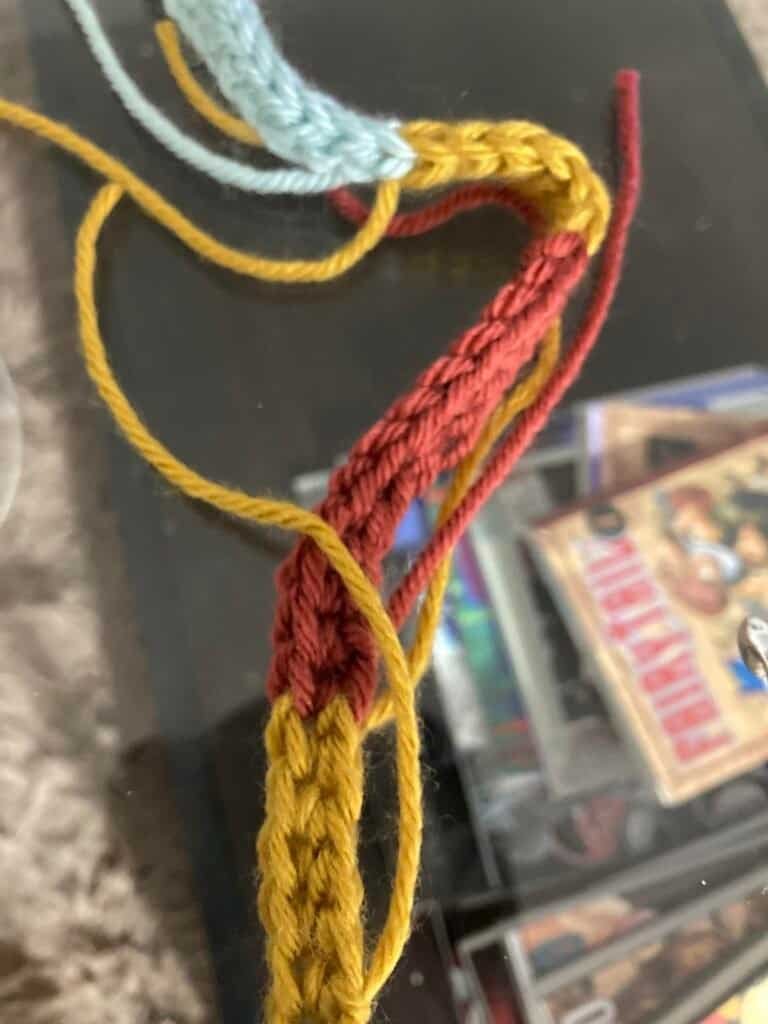
Working with Multiple Strands
When crocheting with several strands together, larger hand movements are needed because of the increased thickness.
The process itself remains unchanged:
- Make a loose slip knot.
- Form a second loop.
- Work the initial single crochet.
- Continue inserting the hook under the left loop.
- Complete a single crochet each time.
Although the thicker bundle can feel slightly awkward during the first few stitches, the movement becomes easier with practice.
Keeping all strands aligned helps create an even appearance throughout the ribbon.
The Finished Ribbon
Rather than serving only as a foundation, the completed piece becomes a decorative flat braid.
The large stitches create an attractive woven texture that can be used independently.
Possible uses include:
- Bag straps
- Decorative ribbons
- Handles
- Belts
- Home décor accents
- Craft embellishments
Because the technique works up quickly, long lengths can be created in a relatively short amount of time.
Different combinations of colors, fibers, and yarn thicknesses can dramatically change the final appearance.
Why This Technique Is Worth Learning
This fast chainless foundation offers several practical advantages.
It creates a neat row of foundation stitches while simplifying the movements required for each stitch. Since every repetition follows the same sequence, it becomes easy to memorize and maintain consistent tension.
In addition, the method is remarkably versatile. It works equally well as a foundation for flat crochet, projects worked in the round, and even decorative cords or ribbons made from multiple strands of yarn.
Learning one technique that can serve several purposes makes it a valuable addition to any crocheter’s skill set.
Conclusion
Starting a crochet project does not always require a traditional foundation chain. By using this fast chainless foundation method, crocheters can create a tidy, flexible edge while reducing the number of steps involved in the process.
As demonstrated by Tuula Maaria from Crochet with Tuula Maaria, this technique offers the speed of a simplified foundation crochet while maintaining a clean row of stitches that are easy to work into. Whether used as the beginning of a garment, a circular project, or even transformed into a decorative ribbon with multiple yarn strands, this versatile method provides another excellent option for creating strong, attractive crochet foundations.